1. Introduction
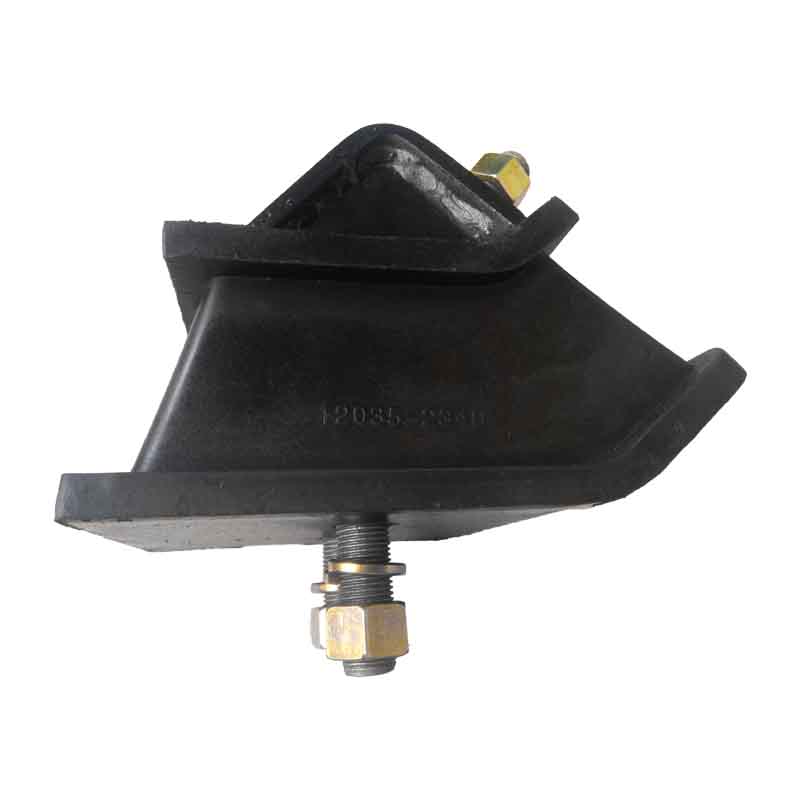
The engine mount is a critical rubber-to-metal anti-vibration component that connects the engine to the chassis frame. On Hino heavy-duty trucks such as the Profia and Super Dolphin series, healthy engine mounts determine cab comfort, driveline angle accuracy, and overall vehicle reliability. Engine mount OEM 12035-2340 serves two classic Hino power platforms — the K13C inline-six and the EF750 V8 — and is a high-demand replacement item for fleets, distributors, and OEM purchasers across Europe and North America. This guide covers its structure, materials, performance, fitment, and installation from a professional sourcing perspective.
2. Technical Details: Structure, Materials & Performance
2.1 Product Structure
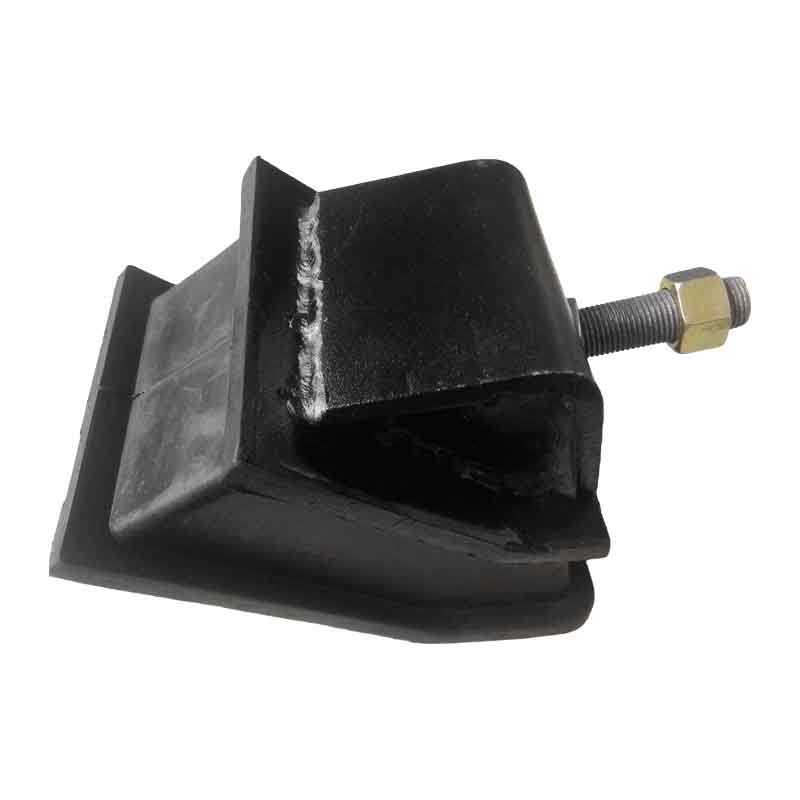
OEM 12035-2340 is a rubber-to-metal bonded engine mount consisting of a high-strength steel upper bracket, a natural rubber damping core, and a lower mounting base. The rubber core is vulcanized in-mold onto sandblasted, adhesive-coated metal armatures, forming a chemical bond that carries combined compression and shear loads. This design isolates high-frequency engine vibration while limiting engine displacement under hard acceleration and braking.
2.2 Materials & Process
The damping core uses a high-fatigue natural rubber (NR) compound with hardness of Shore A 60±5, tensile strength ≥17 MPa, and elongation at break ≥400%, maintaining a stable dynamic-to-static stiffness ratio from -40°C to +100°C. Metal parts are stamped from Q235B carbon steel or cast iron with e-coating corrosion protection. Rubber-to-metal bonding strength reaches ≥4.0 MPa, and in destructive testing the failure occurs within the rubber body rather than at the bonding interface — the key indicator of OEM-grade vulcanization quality.
2.3 About the Supplier
Hebei Tongsource International Trade Co., Ltd. is a wholly-owned subsidiary of Hebei Huami New Material Technology Co., Ltd., a Beijing Stock Exchange-listed manufacturer with over 20 years of experience in rubber damping and sealing components. Certified to IATF 16949 and ISO 9001, we supply commercial-vehicle OEMs and the global aftermarket, and can provide full PPAP documentation, material certificates, and durability test data for OEM 12035-2340 to support supplier audits by European and American OEMs.
3. Vehicle Application List
Representative aftermarket fitment of 12035-2340 is listed below. Always verify final fitment against the Hino EPC catalogue and vehicle VIN:
Series | Model Code | Engine | Year | Position |
Hino Super Dolphin Profia | FN / FR / FS series | K13C 13.3L inline-6 diesel | 1992–2003 | Rear engine mount |
Hino Profia tractor | SH / SS series | K13C / K13C-T turbo | 1994–2003 | Rear engine mount |
Hino Super Dolphin | FN2P / FS2P etc. | EF750 V8 diesel | 1985–1992 | Rear engine mount |
Hino heavy bus chassis | RU / RY (selected) | K13C series | 1990s | Engine mount |
4. Cross Reference Numbers
Buyers can consolidate SKUs in one order using the following cross-reference numbers:
Number | Type | Remark |
12035-2340 | Hino OEM | Main number of this product |
120352340 | OEM (no hyphen) | Catalogue search variant |
12035-1910 | Hino OEM related | K13C platform interchange number |
12035-1692 | Hino OEM related | Early EF750 number, interchangeable in aftermarket |
S120352340 | Aftermarket format | Used in some distributor catalogues |
5. Typical Failure Symptoms
If any of the following symptoms appear, inspect and replace the engine mounts promptly:
• Noticeably increased cab vibration and resonance noise at idle or take-off;
• Engine lurching or a clunking impact noise under hard acceleration and braking;
• Visible cracking, blistering, chunking of the rubber body, or separation at the rubber-metal interface;
• Engine sagging or left-right asymmetry, causing abnormal driveline angles and early U-joint wear;
• Exhaust pipes, intake ducts or wiring harnesses chafing against the frame due to excessive engine movement;
• Rubber softening and reduced load capacity caused by long-term oil or diesel contamination.
6. Installation Notes
1. Verify the OEM number and mounting position (rear, left/right) and the orientation mark before installation; never install reversed;
2. Replace mounts in pairs (left/right or front/rear) to avoid uneven load distribution caused by stiffness differences between new and old mounts;
3. Support the engine with proper lifting equipment before removing the old mount; never support it only by jacking the oil pan;
4. Tighten bolts crosswise in steps to the specified torque (reference M12: 85–105 N·m; follow the enclosed instructions) and always use new self-locking nuts;
5. Let the engine settle into its natural position before final tightening to eliminate rubber pre-stress, so the mount does not work under torsional preload;
6. After installation, check clearances of surrounding pipes and harnesses, then confirm no abnormal vibration at idle and during a road test;
7. Keep the rubber body away from engine oil, diesel and solvents; fix any leaks before fitting the new mount.
7. Key Specifications
Item | Specification |
OEM Number | 12035-2340 |
Product Name | Engine Mount / Engine Mounting |
Rubber Material | Natural rubber NR (NR/SBR blend optional) |
Rubber Hardness | Shore A 60±5 (customizable 55–70 per OEM requirement) |
Metal Material | Q235B stamped carbon steel / cast iron base, e-coating or spray anti-rust |
Tensile Strength | ≥ 17 MPa |
Elongation at Break | ≥ 400% |
Rubber-Metal Bonding Strength | ≥ 4.0 MPa (failure mode: rubber body tear) |
Temperature Range | -40°C ~ +100°C |
Durability | Dynamic fatigue ≥ 1,000,000 cycles, no debonding or cracks |
Quality System | IATF 16949 / ISO 9001, PPAP documentation available |
Net Weight | Approx. 2.1 kg (subject to actual product) |
Packing | Neutral box + export carton, branded packaging available |
8. FAQ
Q1: Which Hino models does 12035-2340 fit?
A: Mainly 1992–2003 Profia / Super Dolphin Profia trucks (FN/FR/FS/SH/SS series) with the K13C engine, and 1985–1992 Super Dolphin models with the EF750 V8 at the rear mount position. Please verify by VIN.
Q2: How does it relate to 12035-1910 and 12035-1692?
A: They are cross-reference numbers on the same platform. 12035-1910 is the K13C interchange number and 12035-1692 the earlier EF750 number; in the aftermarket they are generally interchangeable.
Q3: What are the symptoms of a worn engine mount?
A: Increased cab vibration at idle, clunking or engine movement during acceleration and braking, cracked or chunked rubber, and separation at the rubber-metal interface are typical replacement signals.
Q4: Can hardness and stiffness be customized?
A: Yes. Standard hardness is Shore A 60±5; we can tune the compound within Shore A 55–70 per OEM or fleet requirements and provide stiffness curve reports.
Q5: Are you a factory or a trading company?
A: Hebei Tongsource International Trade Co., Ltd. is the wholly-owned export subsidiary of Hebei Huami New Material Technology Co., Ltd., so pricing and quality control come directly from the factory.
Q6: What are the MOQ and lead time?
A: Existing-tooling items support trial orders from around 100 pieces, with a standard lead time of 15–25 days. Mixed-container consolidation is supported.
Q7: What quality documents can you provide?
A: IATF 16949 certificate, material test reports, dimensional inspection reports, salt-spray and fatigue test data, plus full PPAP submission packages for OEM audits.
Q8: Should engine mounts be replaced in pairs?
A: Strongly recommended. Mixing new and old mounts creates a stiffness imbalance that shifts load distribution, accelerates early failure of the new mount, and disturbs driveline angles.
9. Conclusion & Call to Action
An OEM-grade 12035-2340 engine mount means longer service intervals and lower total maintenance cost for your fleet or customers. Hebei Tongsource International Trade Co., Ltd. — the wholly-owned subsidiary of Beijing Stock Exchange-listed Hebei Huami New Material Technology Co., Ltd. — keeps this number and the full range of Hino engine mounts in production. Contact us today for a free sample, an FOB/CIF quotation, and complete technical documentation. Send us your OEM number list and receive a cross-referenced quote within 24 hours.


