1. Introduction
On a heavy tractor unit covering more than 120,000 km a year, the cab is not welded rigidly to the chassis. It floats on an elastic four-point mounting system, and the Mercedes-Benz cab suspension bushing is the most basic — and most frequently overlooked — element of that system.
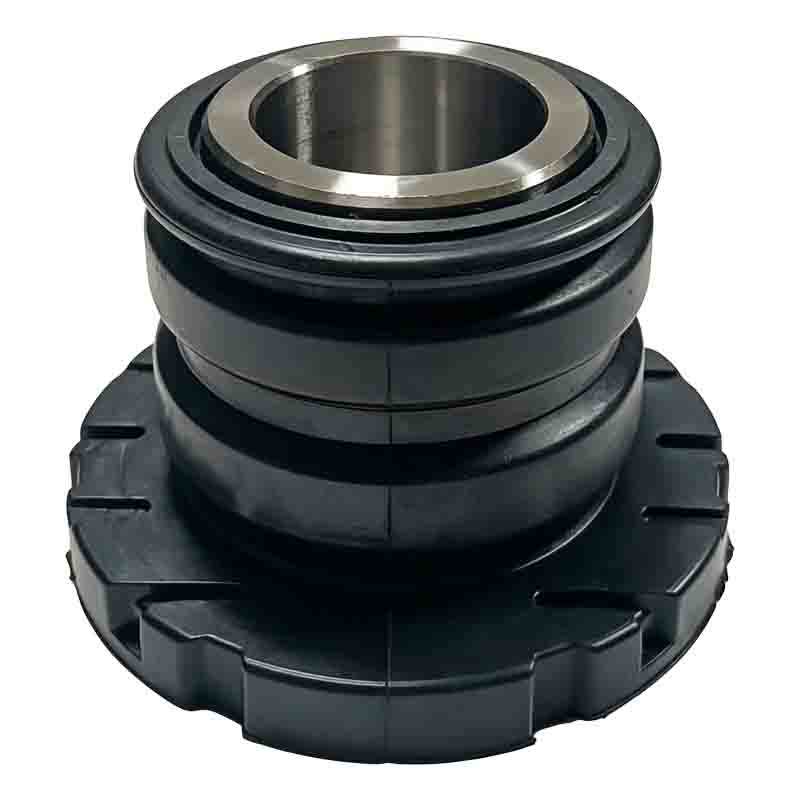
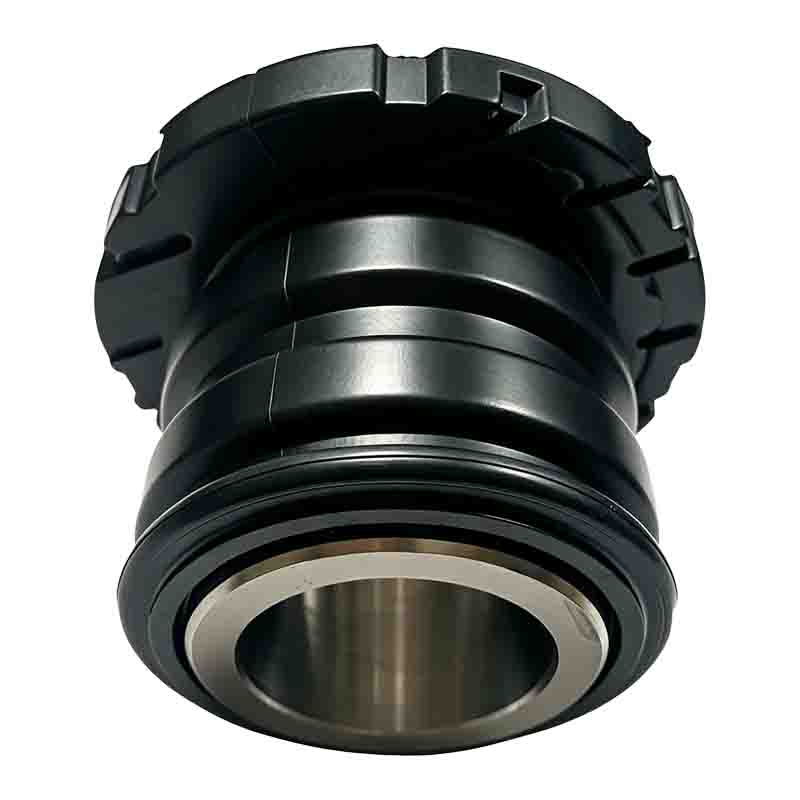
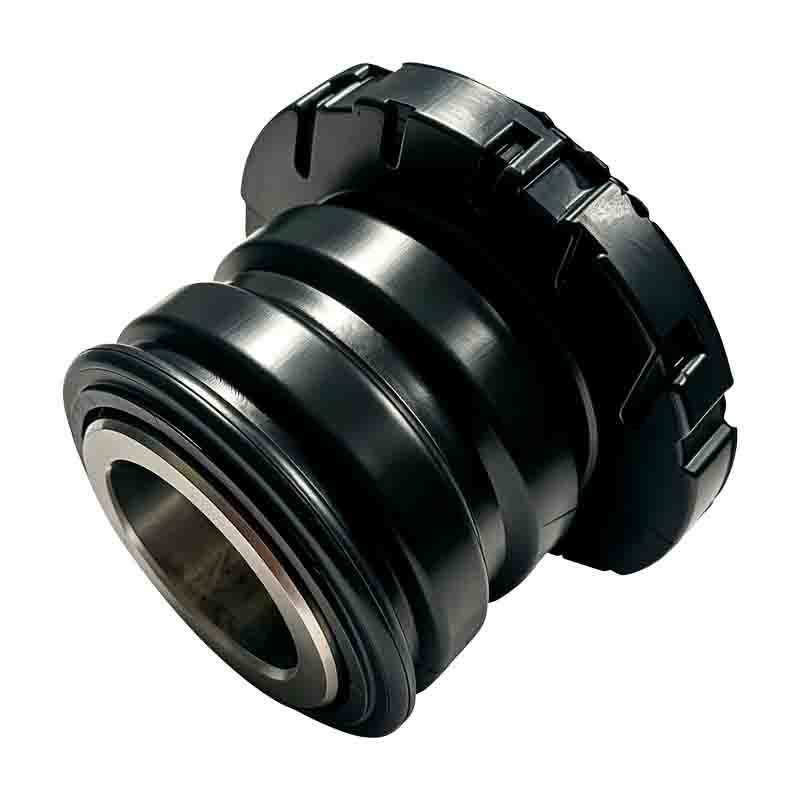
Once the bushing hardens or debonds, road input travels straight into the cab: steering wheel shake, seat resonance, a metallic knock over speed bumps. Driver fatigue rises, and door seals and trim panels start to crack earlier than they should. OEM number 9603170312 (A9603170312 / 960 317 03 12) covers the cab suspension bush used across the 963/964 platform — Actros MP4/MP5, Antos and Arocs — and is one of the highest-turnover wear items in the European truck aftermarket.
This guide covers the structure, materials, specifications, failure modes and fitting practice for the part, written for OEM buyers, wholesalers and fleet procurement engineers.
2. Technical Overview
2.1 Position and function
Part 9603170312 is the elastomeric bush inside the cab suspension (Fahrerhauslagerung) assembly, mounted at the joint between the cab mounting bracket and the stabiliser bar or trailing link. It carries three load types at once:
· Radial load — supports cab static weight and vertical dynamic impact; determines secondary isolation performance.
· Axial load — restrains longitudinal cab movement under braking and acceleration.
· Torsional deflection — allows angular displacement between a twisting chassis and the cab, preventing stress concentration in the cab frame.
In short, it has to be soft enough to filter 8–20 Hz road excitation, yet stiff enough to control cab roll attitude. That contradiction is what separates a cab bush from an ordinary rubber sleeve.
2.2 Construction
The part uses a classic metal–rubber–metal vulcanised sandwich:
· Inner steel sleeve — turned from 20# or Q235 seamless tube, bore finish-machined and phosphated for both fit accuracy and bonding.
· Rubber body — natural rubber (NR) based damping compound with a small SBR blend, compression moulded at around 165 °C and bonded to both sleeves in a single cure.
· Outer sleeve / flange — cold extruded, then necked down to pre-compress the rubber, which materially extends fatigue life.
· Bonding system — Chemlok 205 primer plus Chemlok 220 cover coat; the acceptance criterion is rubber tear (R-type failure), never interfacial separation.
2.3 Material advantages
Cab bushings rarely fail by abrasion. They fail by dynamic fatigue and ozone ageing, so the compound is designed around those two mechanisms:
· High-purity NR base — lower heat build-up and higher rebound than full-SBR or reclaimed-rubber compounds, with a markedly slower fatigue crack growth rate.
· Antidegradant package — 4020 combined with microcrystalline wax and antiozonant; no cracking after static ozone exposure at 50 pphm, 40 °C, 72 h.
· Steel corrosion protection — phosphating as standard, with Dacromet or e-coating optional; 480 h neutral salt spray without red rust, suited to salted European winter roads.
Hebei Tongsource International Trade Co., Ltd. is a wholly-owned subsidiary of Hebei Huami New Material Technology Co., Ltd., a manufacturer of rubber damping, sealing and engineering plastic components listed on the Beijing Stock Exchange. In-house mixing lines mean compound, mixing and moulding are all controlled internally — which is why we can commit to batch-to-batch dynamic stiffness variation within ±12%.
3. Vehicle Applications
The list below covers the Mercedes-Benz 963/964 platform. Always confirm final fitment against the chassis number (FIN/VIN) and the removed original part.
Series | Platform | Model Years | Position |
Actros MP4 | 963 | 2011–2018 | Cab mounting, rear left / right |
Actros MP5 | 963 | 2018–present | Cab mounting, rear left / right |
Actros L / Actros F | 963 | 2021–present | Cab mounting, rear left / right |
Antos | 963 | 2012–2021 | Cab mounting, rear left / right |
Arocs | 964 | 2013–present | Cab mounting, rear left / right |
Atego III | 967 | 2013–present | Cab mounting, verify by VIN |
Econic | 956 / 957 | 2013–present | Cab mounting, verify by VIN |
Typical models covered: 1840 LS, 1845 LS, 1848 LS, 1851 LS, 2545 L, 2551 L, 3243 K, 3363 LS, Arocs 3245 and 4145 tractor and tipper chassis.
4. Cross-Reference Numbers
Brand | Part Number |
MERCEDES-BENZ (OE) | 9603170312 / A9603170312 / 960 317 03 12 |
DT Spare Parts (Diesel Technic) | 4.81543 / 9603170312 |
SAMPA | 205420 / 205.420 |
AUGER | 84782 |
SEM LASTIK | 13548 |
SUPORTE REI LTDA | 9603170312 |
EAN | 4057795407985 / 4057795570016 |
Related, NOT interchangeable | 9603170712, 9603171353, 9603172412 |
Note: 9603170712 and 9603171353 belong to the same cab suspension system but sit in different positions. Do not substitute.
5. Typical Failure Symptoms
1. A metallic knock or clunk from the rear of the cab over speed bumps and manhole covers, most noticeable when cold.
2. Pronounced steering wheel and seat resonance at idle or between 1,200 and 1,600 rpm.
3. Longitudinal cab nod or fore-aft shuffle under hard braking and pull-away.
4. Visible circumferential cracking, chunking of the rubber body, or a visible gap between rubber and steel sleeve (debonding).
5. Uneven cab height causing stiff door closing, locally crushed door seals or water ingress.
6. Collapsed bushing lets the cab settle, raising stress in the windscreen aperture and cab frame; in severe cases trim rattles and dash cracking follow.
7. Collateral damage — cab shock absorbers weeping oil, stabiliser bushes wearing prematurely.
6. Specification Table
Values below are the technical specification and acceptance criteria. Dimensional figures are indicative; production orders are governed by the mutually approved drawing and the First Article Inspection report.
Item | Value | Notes / Test Method |
Rubber compound | Natural rubber NR (NR/SBR blend) | Damping grade; EPDM available on request |
Hardness | 60 ± 5 Shore A | ISO 7619-1; 55–70 range available per stiffness target |
Tensile strength | ≥ 16 MPa | ISO 37, type 2 dumbbell |
Elongation at break | ≥ 400 % | ISO 37 |
Compression set | ≤ 25 % (70 °C × 22 h) | ISO 815 |
Bond strength | Rubber tear (R-type failure) | ISO 813 |
Ozone resistance | No cracking, 50 pphm, 40 °C, 72 h | ISO 1431-1 |
Operating temperature | -40 °C to +80 °C | Short-term peak +100 °C |
Sleeve material | 20# / Q235 seamless steel tube, phosphated | Dacromet or e-coat optional |
Salt spray | 480 h NSS, no red rust | ISO 9227 |
Inner diameter (I/D) | Ø24 mm (indicative) | Per approved drawing |
Outer diameter (O/D) | Ø78 mm (indicative) | Per approved drawing |
Overall length / height | approx. 60–70 mm (indicative) | Per approved drawing |
Net weight | approx. 0.75–0.85 kg | Including metal parts |
Static radial stiffness | 2,800 N/mm ± 15 % | Calibrated to customer duty cycle |
Fatigue life | ≥ 1,000,000 cycles, stiffness loss ≤ 15 % | Bench radial fatigue test |
Quality system | IATF 16949 / ISO 9001 | Parent company listed on Beijing Stock Exchange |
7. Installation Notes
1. Before tilting the cab, lock the tilt mechanism and fit the support strut. Never rely on hydraulic pressure alone to hold position.
2. Remove the old bush with a hydraulic press or a purpose-made puller. Never flame-cut it out or hammer it directly — that distorts the sleeve and damages chassis coating.
3. Press only on the metal outer sleeve. Load must never pass through the rubber body, or the vulcanised interface will tear.
4. Lubricate with neutral soap solution or a dedicated rubber assembly fluid only. Mineral oil, grease and silicone-bearing lubricants cause swelling and must not be used.
5. Replace in pairs. Left and right bushings must be changed together to keep cab attitude even and avoid overloading one side.
6. Torque strictly to the vehicle workshop manual (M16 fasteners in this area are typically in the 190–210 N·m range — always verify against the official manual), and final-tighten with the cab lowered and loaded.
7. Inspect cab shock absorbers, stabiliser bushes and the tilt cylinder at the same time to avoid a second workshop visit.
8. Road test for 20 km, re-torque once, and confirm there is no knock and no water ingress.
8. Frequently Asked Questions
Q1: How does your bushing compare with the genuine MB part in service life?
We benchmark on a bench rig against the vehicle duty cycle. After 1,000,000 radial cycles, stiffness loss stays within 15% — the same acceptance band as the OE part. The real difference is price and lead time, not performance. We recommend running a comparative trial on samples first.
Q2: Can you produce to our drawing or sample?
Yes. The parent company operates its own rubber mixing lines and tool room, so drawing-based and sample-based development are both standard. Typical tooling lead time is 20–25 days, with first samples inside 30 days.
Q3: What is the MOQ?
Standard references start at 200 pieces per item. Custom parts requiring new tooling normally start at 500 pieces. Trial quantities are negotiable for a first order.
Q4: How is rubber-to-metal bond quality verified?
Every batch is sampled for peel testing. The pass criterion is failure within the rubber body rather than at the bond line. Inspection reports ship with the goods, and third-party testing by SGS or TÜV can be arranged on request.
Q5: What packing and private-label options are available?
Neutral packing (PE bag plus moisture-resistant carton) is standard. We print customer brand, barcode, country-of-origin labels and colour boxes on request, and can match the pallet dimensions and stacking patterns European buyers normally specify.
Q6: What is the lead time and which shipping terms do you support?
Standard orders complete in 20–25 days after deposit. We quote FOB Tianjin or Qingdao, CIF Rotterdam, Hamburg or Antwerp, and can arrange full containers direct to your warehouse. Air-freight samples arrive in 5–7 days.
Q7: Do you supply EU compliance documentation?
We provide material declarations covering REACH SVHC and RoHS conformity, MSDS, and copies of our quality system certificates. IMDS material data sheets can be submitted where required.
Q8: How do I know batch quality stays consistent?
Each batch is logged with its compound lot number, cure curve and measured hardness, and a Certificate of Conformity is supplied. Traceability records are retained for long-term customers, so any anomaly can be traced back to a specific mixing batch.
Q9: Does this reference apply to the North American market?
This number covers European-specification Actros, Antos and Arocs. North American Freightliner Cascadia trucks use a different cab mounting architecture; we carry a separate range for those and can send that list on request.
9. Conclusion and Next Step
A cab suspension bushing is a low-value line item that directly governs driver comfort, cab frame fatigue life and aftersales reputation. For distributors it is a fast-turning, repeat-purchase cash-flow item. For fleets it is one of the cheapest ways to cut driver fatigue and complaint rates.
Hebei Tongsource International Trade Co., Ltd. is a wholly-owned subsidiary of Hebei Huami New Material Technology Co., Ltd., and focuses on supplying rubber damping and sealing components to overseas markets. We offer:
· Free samples (freight collect) for physical comparison against your current supply;
· A complete quotation covering FOB/CIF pricing, packing proposal and committed lead time;
· Annual framework agreements and stocking plans for distributors.
Send us your OEM number list or drawings and you will have a quotation and technical confirmation within 24 hours.


