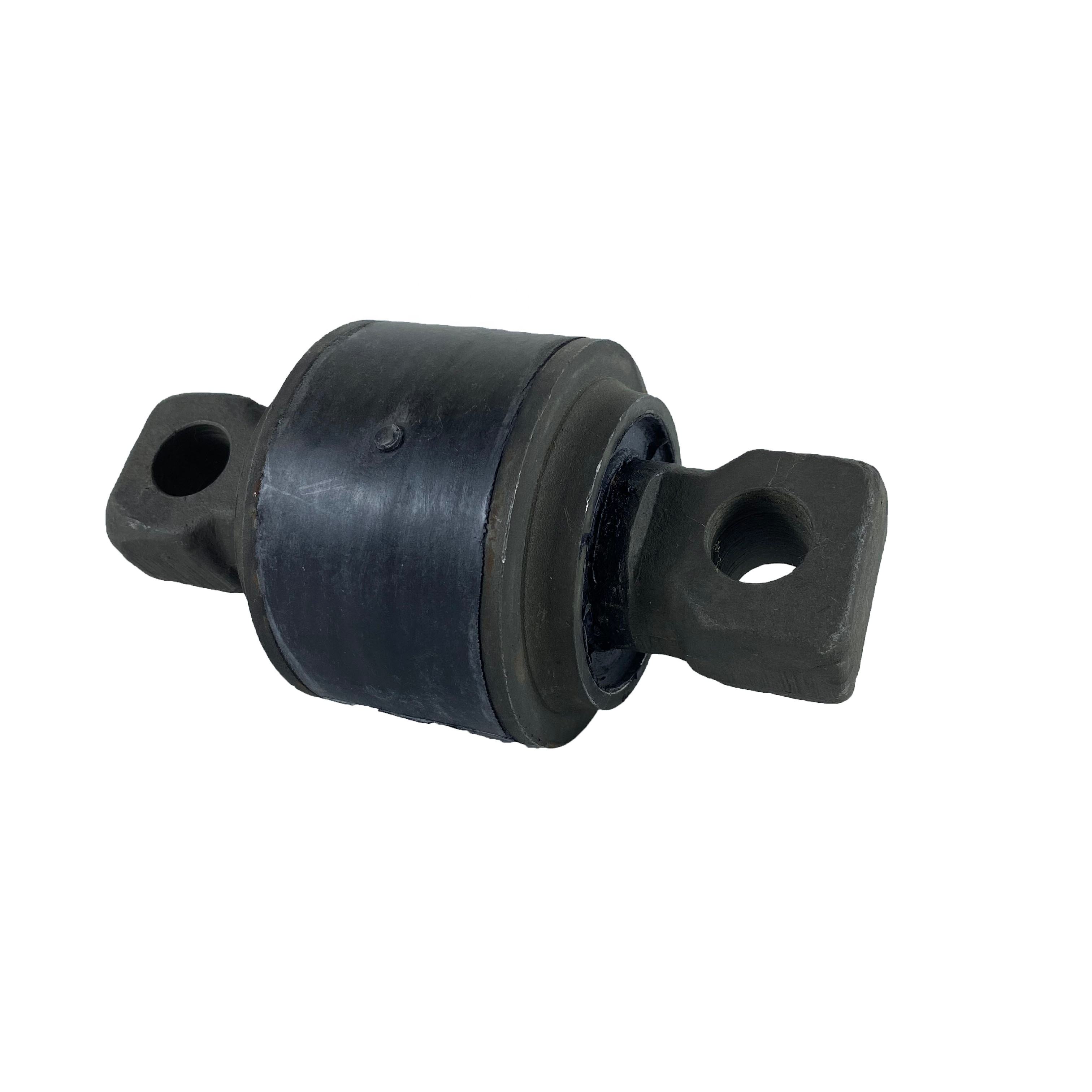
Truck Suspension Control Arm Bushing | Rear Axle | Triangular Control Arm (CV) | Steel Elastomer | With Retaining Ring
Rear-axle control/trailing arm bushings are mission-critical rubber-metal components in heavy-duty truck suspension. They stabilize axle geometry under high loads, isolate vibration and impact, and help control NVH. This article focuses on Truck Suspension Control Arm Bushing OEM 0003502805, commonly searched and supplied for Mercedes-Benz Trucks, Scania, and MAN, with cross references 0003500506 / 0003300075 / 1515981. You will find complete dimensions, failure symptoms, and installation best practices—built for B2B buyers (distributors, workshops, fleets) and SEO performance.
1. What a Rear Axle Control Arm Bushing Does in Heavy Truck Suspension
1.1 Keeps Rear Axle Geometry Stable
On heavy trucks, the rear axle sees continuous longitudinal, lateral, and torsional loads (traction, braking torque, uneven roads). A control/trailing arm bushing provides an engineered elastic connection that:
Maintains the axle’s position relative to the chassis
Limits unwanted movement and “rear-end steer”
Supports stable handling and predictable tracking
1.2 Absorbs Vibration and Impact Under Heavy Loads
In real-world duty cycles—overloading, potholes, curb hits, and harsh braking—the bushing must dissipate energy safely. A high-quality steel elastomer suspension bushing:
Converts impact energy into internal damping within the elastomer
Reduces shock transfer to brackets, arms, and the cab
Protects the trailing/control arm joints from fatigue
1.3 Improves NVH (Noise, Vibration, Harshness)
NVH performance depends on rubber compound, bushing stiffness curve (radial/axial/torsion), and bonding quality. Properly designed bushings reduce:
Low-frequency droning and vibration in the rear axle area
Clunking noises caused by joint play
Harshness when crossing rough surfaces
1.4 Why It Matters for Triangular Control Arm (CV) Layouts
For Triangular Control Arm (CV) designs, the bushing is central to axle location. Once it degrades, symptoms often cascade:
Axle geometry drift → abnormal tire wear
Increased rear axle “tail sway” under braking/acceleration
Higher loads on arms, brackets, and fasteners → fatigue risk
2. OEM 0003502805 Product Overview
2.1 OEM Number and Common Formatting
You may see the part written as:
For search coverage and quotation accuracy, include keywords like “0003502805 bushing” and “Mercedes truck rear axle bushing.”
2.2 Interchange / Cross References
This bushing is widely cross-referenced as compatible/interchangeable with:
0003500506
0003300075
1515981
In practice, interchangeability should be confirmed by dimensions + fitting position + control arm type + retaining ring feature.
2.3 Why It Appears Across Mercedes / Scania / MAN Searches
Mercedes, Scania, and MAN share similar engineering requirements in rear axle suspension joints:
High load capacity and long fatigue life
Controlled compliance for stability and comfort
Corrosion resistance for harsh environments
This is why Scania MAN control arm bushing and Mercedes rear axle bushing searches often overlap in the aftermarket.
2.4 Typical Application Location
Fitting Position: Rear Axle
Control / Trailing Arm Type: Triangular Control Arm (CV)
Common naming: Rear Axle Triangular Control Arm Bushing / Trailing Arm Bushing
3. Structure & Materials (Professional Breakdown)
3.1 Steel–Elastomer Construction Explained
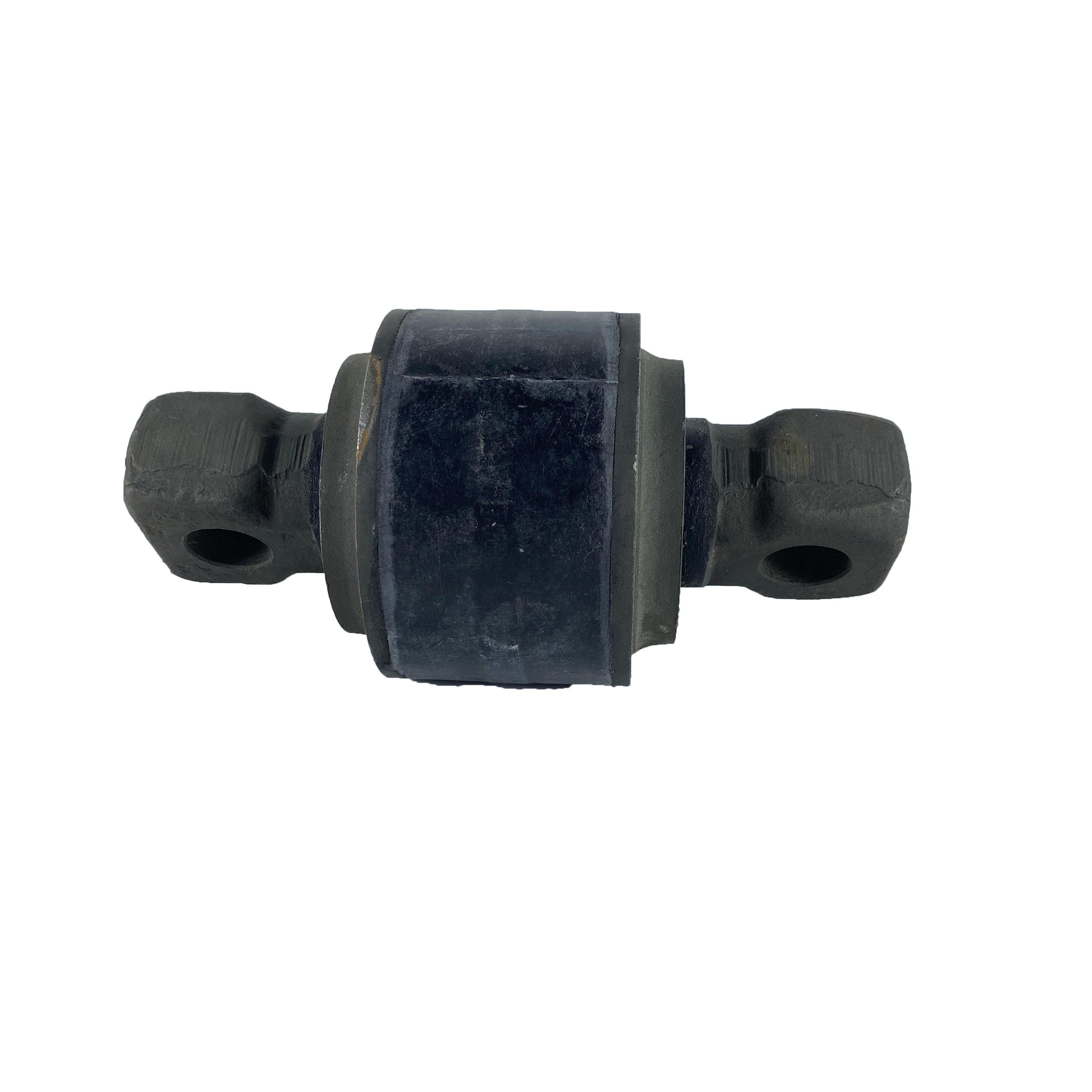
OEM 0003502805 is a Steel Elastomer rubber-metal bushing consisting of:
Outer steel shell: press-fit into the arm or housing, carries outer loads
Inner steel sleeve (inner shell): interfaces with bolt/pin clamping forces
Elastomer layer: provides compliance, damping, and fatigue resistance
3.2 How Inner/Outer Sleeves Work with the Elastomer
In heavy truck service, the bushing sees:
Radial loads (road impacts, payload changes)
Axial and torsional deflection (braking/traction torque, arm rotation)
The elastomer works mainly in shear + compression, dissipating energy and preventing metal-to-metal contact. Steel sleeves maintain assembly precision and load transfer integrity.
3.3 Elastomer Performance Requirements
Rear axle environments expose bushings to water, salt spray, temperature swings, and oil contamination. The rubber compound should provide:
Fatigue resistance for long-term cyclic loading
High shear and tear strength to avoid cracking
Weathering/ozone resistance to prevent surface checks and hardening
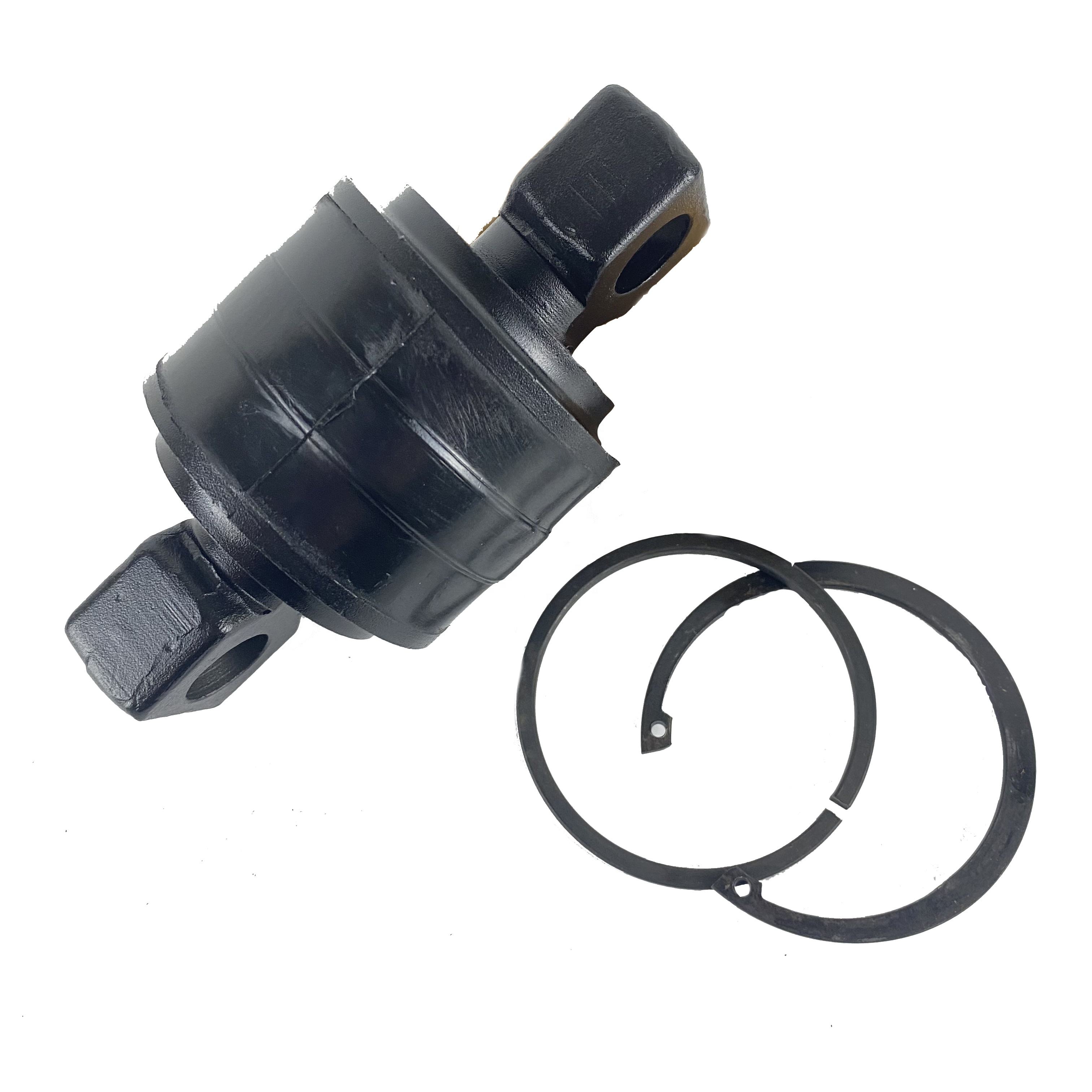
3.4 What the Retaining Ring Does (With Retaining Ring)
A key feature is with retaining ring:
Helps axial positioning and prevents migration under vibration
Improves installation security and repeatability
Provides a clear mechanical confirmation that the bushing is seated correctly
3.5 Why Vulcanized Bonding Quality Drives Service Life
Bonding between rubber and steel is a common failure boundary. Strong, consistent vulcanization bonding helps prevent:
Early debonding and internal slip
Noise issues caused by micro-movement
Premature cracking from stress concentration
Controlled surface preparation, primer systems, and curing windows are essential.
4. Full Dimensions & Specification Table (Dedicated Section)
These dimensions are crucial for correct fitment across platforms and for avoiding rework. For cross-brand sourcing, verify OD + inner sleeve OD + hole spacing + retaining ring.
| Specification | Value |
| OEM | 0003502805 |
| Replace / Cross Ref | 0003500506 / 0003300075 / 1515981 |
| Fitting Position | Rear Axle |
| Control / Trailing Arm Type | Triangular Control Arm (CV) |
| Material | Steel Elastomer |
| Retaining Ring | With retaining ring |
| Length | 172 mm |
| Outer Diameter | 85 mm |
| Outer Diameter (inner shell) | 63 mm |
| Thickness | 24 mm |
| Width | 58 mm / 76 mm |
| Mounting points diameter | 25 mm |
| Hole spacing | 130 mm |
Why these numbers matter:
OD 85 mm controls press-fit stability and anti-rotation behavior
Inner sleeve OD 63 mm relates to clamping load transfer and slip prevention
Hole spacing 130 mm and mounting points Ø25 mm are key geometry checks for the arm joint
Width 58/76 mm may reflect design variants or spacer/bracket differences—always confirm against the arm design
5. Common Failure Modes & Replacement Signals (High-Value SEO Content)
5.1 Rear Axle Noise and Rear-End Sway
Typical symptoms:
Clunking/knocking over bumps
Rear “tail wag” feeling during acceleration or braking
Often linked to rubber cracking, debonding, or sleeve offset.
5.2 Abnormal Tire Wear
If rear axle geometry drifts, you may see:
5.3 Increased Control Arm Play
Common workshop checks show:
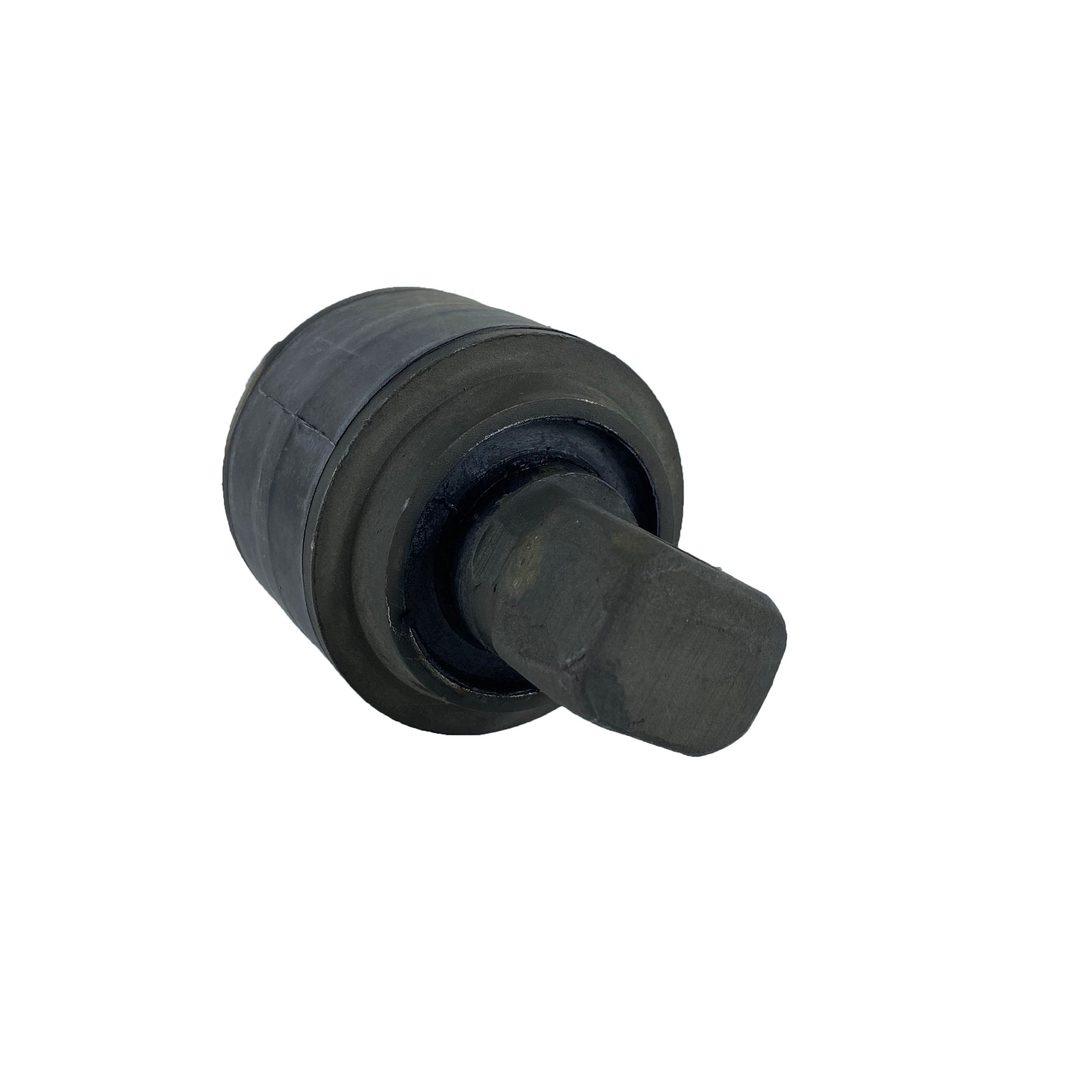
5.4 Rubber Aging, Debonding, Sleeve Misalignment
Frequent failure appearances:
Surface checking/cracks, hard glossy rubber
Rubber-to-metal separation (debonding)
Inner/outer sleeve eccentricity (offset)
5.5 Quick Diagnosis: Does It Need Replacement?
A practical 3-step approach:
Visual check: cracks, debonding, offset
Pry test: excessive play or clunk
Road confirmation: braking/acceleration/bumps reproduce noise or sway
If 2+ conditions are present, replacement is usually recommended.
6. Installation & Maintenance Guide
6.1 Removal and Press-Fit Tips
Use proper press tools and alignment sleeves—avoid hammering that deforms steel shells
Follow the correct installation direction per arm design
Prevent rubber damage from sharp edges during assembly
6.2 Retaining Ring Installation Points
6.3 Alignment and Hole Spacing Verification (130 mm)
6.4 Bolt Tightening Torque (Placeholder)
Torque varies by axle and vehicle configuration. Follow the OEM service manual:
6.5 Tips to Extend Service Life
Inspect rear axle joints for corrosion and contamination periodically
If the arm bore or bracket is worn/deformed, repair it—otherwise new bushings may fail early
Fleets should build maintenance intervals by mileage + road severity to reduce tire cost and downtime
7. Why Choose Hebei Huami New Material (Manufacturing Advantages)
Hebei Huami New Material Technology Co., Ltd. delivers consistent, verifiable supply for heavy-duty rubber-metal suspension components like 0003502805 bushing:
7.1 Proven Heavy-Duty Experience
30 years in rubber-metal parts manufacturing
Deep understanding of heavy-load fatigue, impact, and NVH requirements
7.2 Quality Systems and Trade Compliance
IATF16949 quality management mindset for process control and consistency
TÜV certification framework
AEO Advanced Certification supporting compliant and stable international deliveries
7.3 In-House Compound and Damping Design Capability
Proprietary rubber formulations optimized for fatigue, shear, weathering
Heavy-duty damping tuning to reduce debonding and noise risks
7.4 Stable Tooling and Automated Production
Controlled tooling accuracy and key dimension stability for OD 85 mm / inner shell 63 mm / hole spacing 130 mm
Standardized manufacturing reduces batch variation—ideal for distributors and fleet programs
7.5 Full-Process Testing and Validation
Quality checks can cover:
Hardness / tensile / tear / compression set / bonding strength
Durability tests: fatigue life, salt spray, weathering, oil resistance (per project requirements)
7.6 Flexible Cooperation
OEM/ODM, drawing or sample-based development
Small-batch customization with stable lead times and scalable supply
8. FAQ
Q1: What is the 0003502805 bushing used for?
A: It is typically a rear axle control/trailing arm bushing for Triangular Control Arm (CV) suspension layouts on heavy-duty trucks.
Q2: What numbers can replace 0003502805?
A: Common cross references include 0003500506, 0003300075, and 1515981. Confirm by dimensions, position, and the retaining ring feature.
Q3: Is 0003502805 compatible with Mercedes, Scania, and MAN?
A: It is commonly supplied and searched for these brands in the aftermarket. Final fitment depends on matching Rear Axle position, Triangular Control Arm (CV) type, and key dimensions.
Q4: What are the key dimensions?
A: Length 172 mm; OD 85 mm; inner shell OD 63 mm; thickness 24 mm; width 58/76 mm; mounting points Ø25 mm; hole spacing 130 mm.
Q5: Why does “with retaining ring” matter?
A: The retaining ring improves axial positioning and reduces the chance of bushing migration, helping prevent noise and repeat failures.
Q6: What are typical failure symptoms?
A: Rear axle clunking, rear-end sway, abnormal tire wear, increased joint play, rubber cracking, debonding, and sleeve offset.
Q7: What are common installation mistakes?
A: Wrong press tools (shell deformation), retaining ring not seated, and skipping alignment checks (especially hole spacing 130 mm) which can preload the rubber.
Q8: What is the tightening torque?
A: It varies by truck model and axle. Use the OEM manual: Torque: ___ N·m and apply final torque at specified ride height.
Q9: How can fleets extend bushing life?
A: Prevent corrosion/contamination, repair worn bores/brackets, and set maintenance intervals based on mileage and road severity.
Q10: Can Hebei Huami supply OEM/ODM and small batches?
A: Yes—Hebei Huami supports OEM/ODM, drawing/sample development, small-batch production, and stable lead times for global customers.


