1. Working Principle & Value (Location/Comfort/NVH)
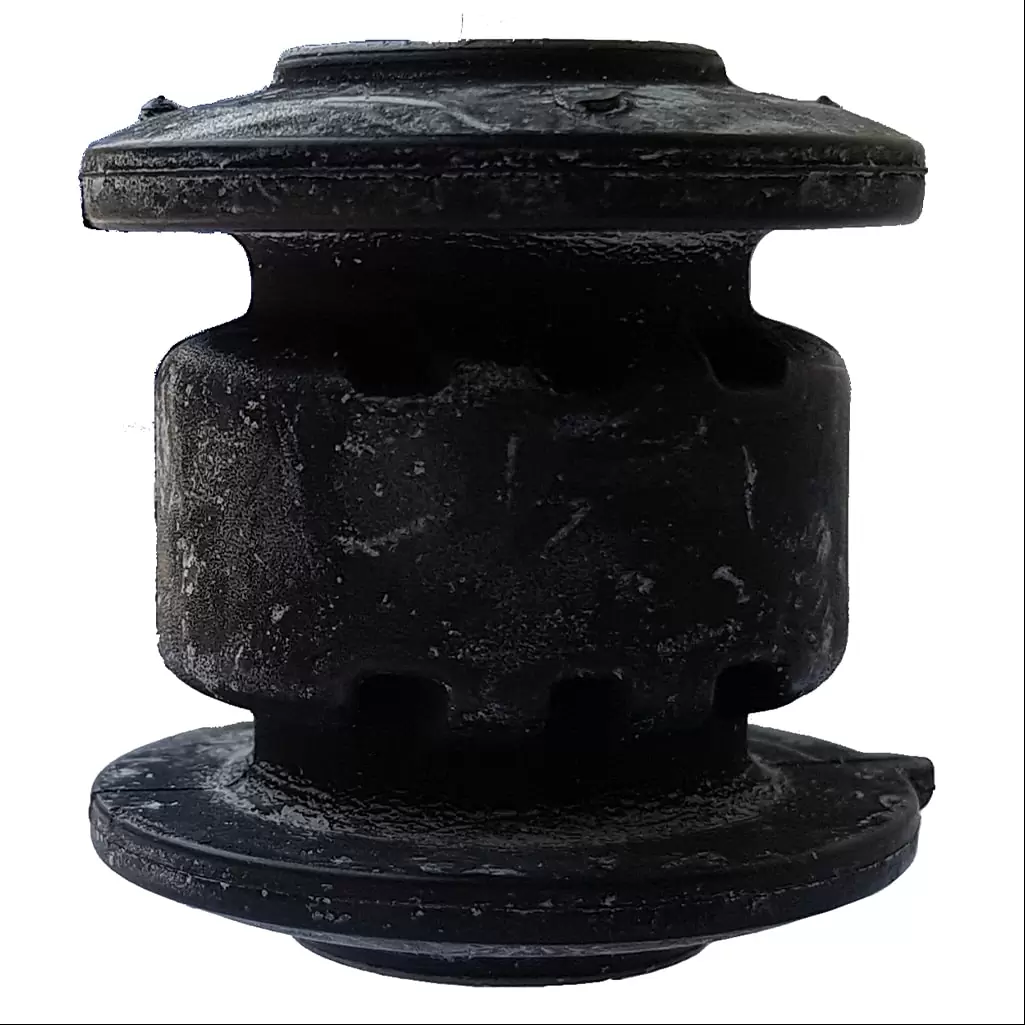
Control arm bushings sit between the control arm and the subframe/body. As a rubber–metal composite, they deliver three core functions:
1. 1) Location & guidance – constrain control-arm DOF under steering, braking, and acceleration to maintain camber/caster geometry.
2. 2) Ride comfort – the rubber layer provides axial/radial compliance to filter fine road inputs and harshness.
3. 3) NVH – properly tuned dynamic stiffness and internal damping attenuate structure-borne noise; robust bonding and formulation prevent low-temperature squeal or knock after thermal aging.
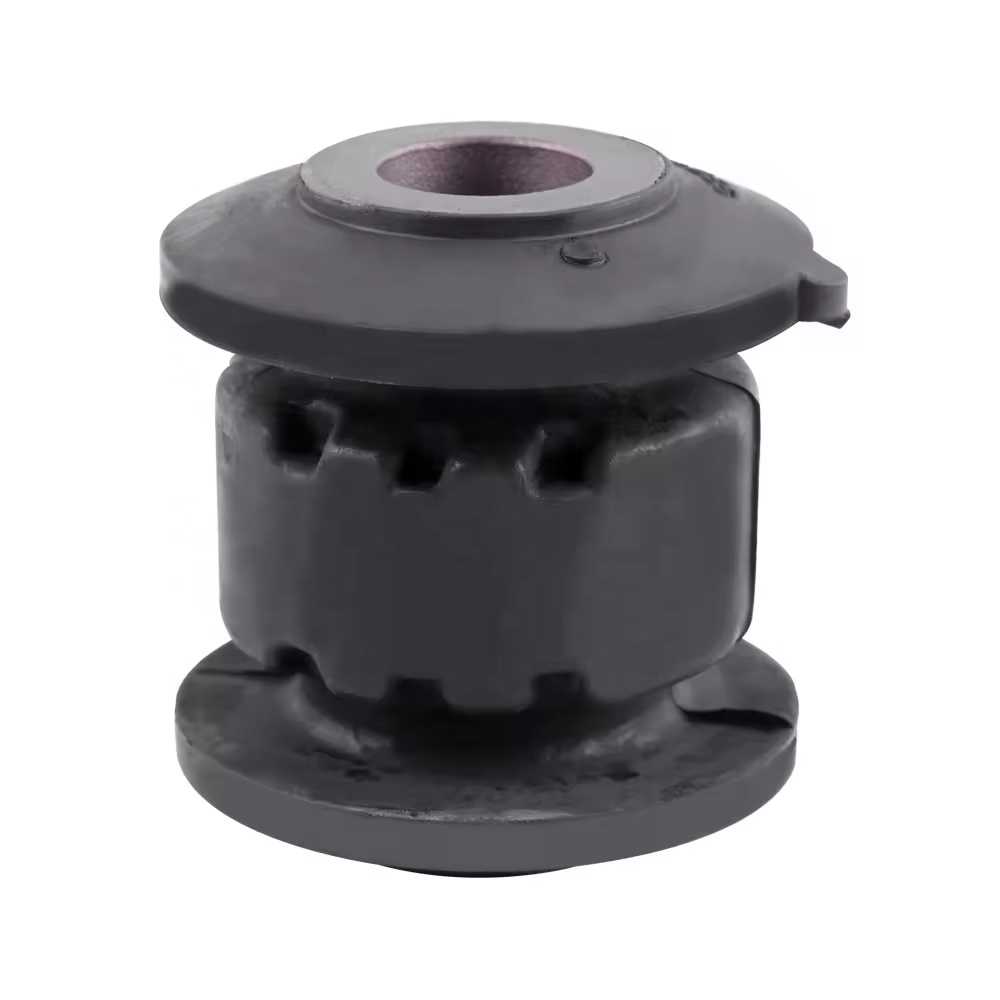
2. Structure & Materials (Inner/Outer Sleeve + Rubber + Vulcanized Bond)
· Inner sleeve: precision-machined steel tube or cold-drawn tube; phosphate/zinc for corrosion protection; clamps with the bolt and carries torque.
· Rubber layer: NR/NBR/HNBR/PU per duty; compound & hardness govern dynamic stiffness, hysteresis, and media resistance.
· Outer sleeve: roll-formed steel; blasted + primered surface to ensure OD retention and concentricity during press-fit.
· Vulcanized bonding: one-shot rubber-to-metal chemical bond; primer/adhesive/topcoat tri-layer with peel strength meeting/exceeding ASTM D429; resistant to oil and hot water shock at the interface.
3. Material / Hardness / Temperature Comparison
Material | Typical Hardness (Shore A) | Continuous Temp | Oil/Fuel Resistance | NVH Behavior | Typical Use |
NR (Natural Rubber) | 55–70 | −40 to +90 °C | ★ | Compliant, quiet | Mainstream comfort |
NBR (Nitrile) | 60–75 | −30 to +110 °C | ★★★ | Slightly firmer | Light oil exposure / service |
HNBR (Hydrogenated NBR) | 60–80 | −40 to +150 °C | ★★★★ | Stable | High temp / oily |
PU (Polyurethane) | 70–85 | −40 to +120 °C | ★★ | High stiffness | Sport/heavy-duty/mods |
Recommendation: for comfort-oriented daily use choose 60–65A NR/HNBR; for heavy load or rough roads choose 70–75A HNBR/PU. Optional thickened outer sleeve or stiffened rubber versions are available to balance poor suburban roads and highway operation common in Latin America.
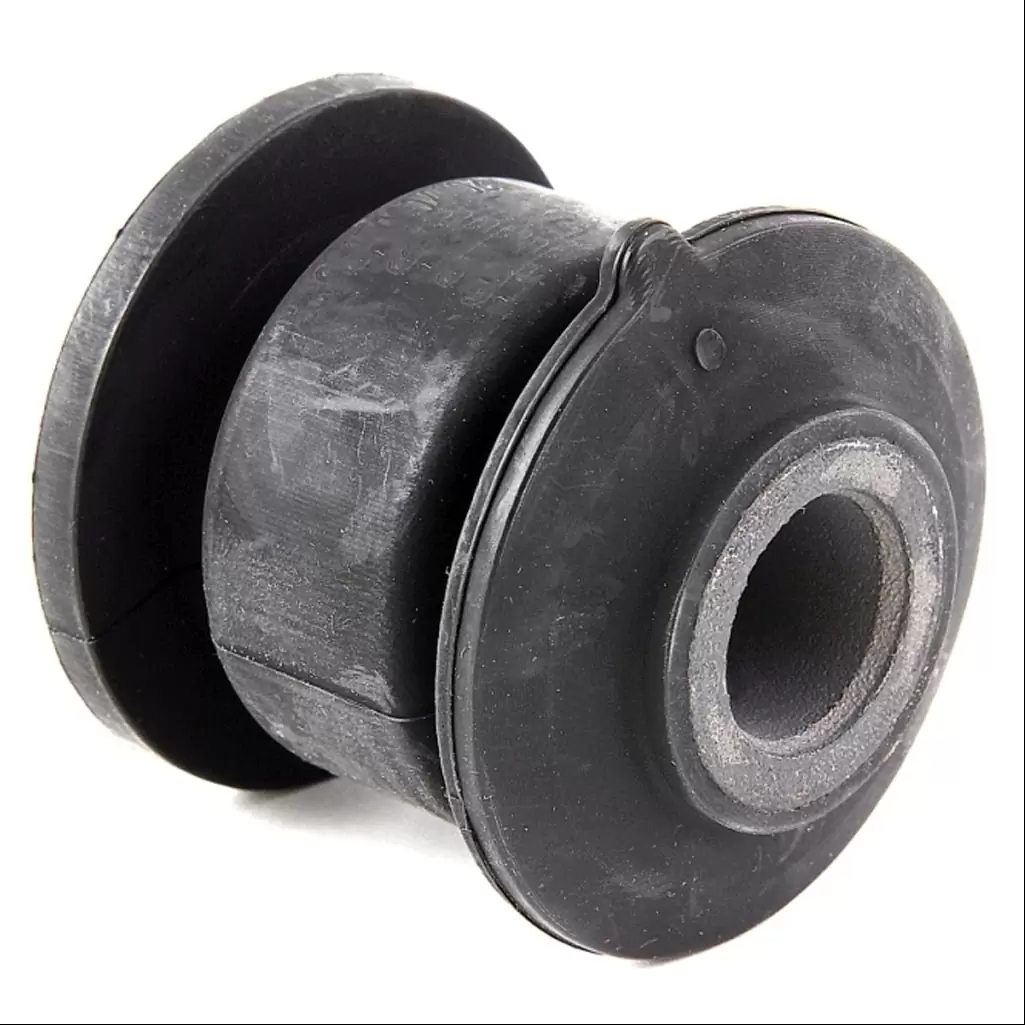
4. Part Number & Fitment: Correct Spelling and Common Mistypes
Correct PN: KD35-34-470
Common mistypes/SEO variants: KD3534470 (no hyphens); KD35 34 470 (spaces); KD35-34470 (one hyphen missing); KD35-34-470A / KD35-34-470B (suffix letters on aftermarket/revisions—verify dimensions).
Fitment: Mazda CX-5 across multiple model years/positions (e.g., front lower control arm rear bush). Verify by VIN and on-vehicle measurement. Platform updates may change OD/width slightly.
5. Dimensions & Tolerance Quick Reference (mm/inch)
Variant | Outer Ø OD | Inner Ø ID | Overall Width W | Flange T | Tolerance (typ.) |
A | 60.0 mm (2.362 in) | 14.2 mm (0.559 in) | 50.0 mm (1.969 in) | 3.0 mm (0.118 in) | OD/ID ±0.20 mm, W/T ±0.15 mm |
B | 62.0 mm (2.441 in) | 14.2 mm (0.559 in) | 50.0 mm (1.969 in) | 3.0 mm (0.118 in) | Same as above |
C | 63.0 mm (2.480 in) | 14.2 mm (0.559 in) | 50.0 mm (1.969 in) | 3.0 mm (0.118 in) | Same as above |
If interference fit is too loose/tight: choose +0.05 / +0.10 mm OD micro-adjust versions, or share subframe bore data so we can match tolerance bands.
6. Selection Steps (Road/Load/Temperature/Oil → Hardness)
4. 1) Confirm position & OD variant: remove old part / measure subframe bore; check the table above.
5. 2) Road condition: Smooth urban → 60–65A; Rough/unpaved → 70–75A (PU optional).
6. 3) Load: frequent full load/towing → +5A hardness; consider thickened outer sleeve.
7. 4) Temperature: hot climate/under-hood heat → HNBR recommended.
8. 5) Oil exposure: seepage/fuel contact → NBR/HNBR.
9. 6) NVH target: noise-sensitive cabins → NR 60–62A, dynamic stiffness tolerance ≤ ±10%.
10. 7) Lead time & MOQ: stock/samples MOQ 50–100 sets; customization 20–30 days (excluding new tooling).
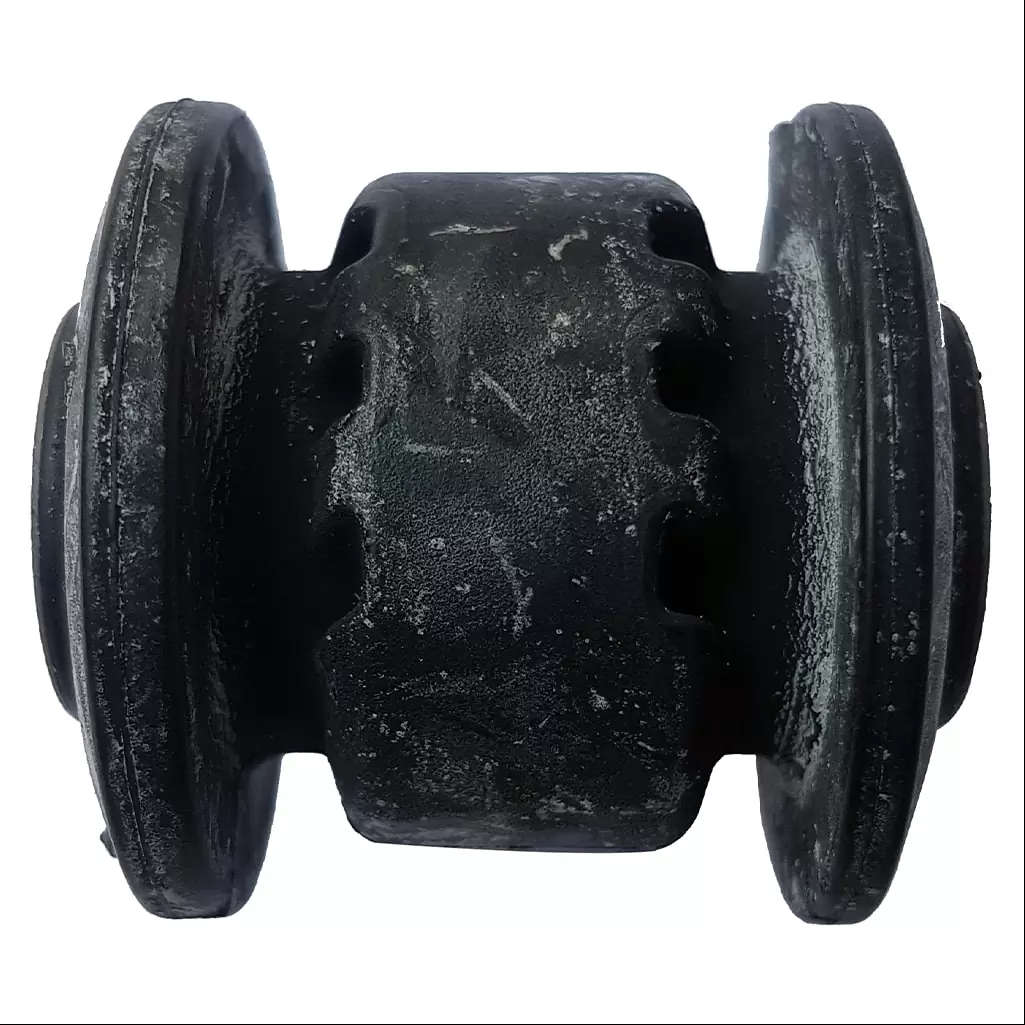
7. Installation Steps, Torque & Re-torque Interval
Tools: Hydraulic press & cups, torque wrench, marker, cleaner, oil-resistant assembly lube (metal interfaces only; never on rubber/bondline).
Procedure:
11. Lift vehicle, remove wheel; support the lower arm; mark original ride-height position.
12. Remove arm fasteners and ball joint; extract old bushing; clean bore.
13. Orientation: follow index notch/arrow on shell if present; avoid eccentric install.
14. Press new bushing to shoulder stop; ensure coaxiality and flush seating.
15. Reassemble arm & bolts; snug only. Lower vehicle to ride height before final torque to prevent rubber pre-twist.
16. Road-test and recheck.
Reference torque and interval:
· Control-arm front/rear bushing main bolt: 130 N·m (±10)
· Bushing bracket to subframe bolts: 95 N·m (±10)
· Re-torque interval: inspect/re-tighten after 800–1,200 km; reinspect after severe pothole impacts.
8. Common Mistakes & How to Avoid Them
· Final torque with wheels hanging → rubber pre-twist & early cracks → always torque at ride height.
· Lubricant on rubber → bondline slip/migration → lube metal interfaces only.
· Wrong orientation/eccentricity → NVH abnormality, pull → follow marks/arrows.
· Corroded bore untreated → loose press fit → repair bore and choose micro-oversize OD.
· Under/over-torque → clunking/stripping → use a calibrated torque wrench.
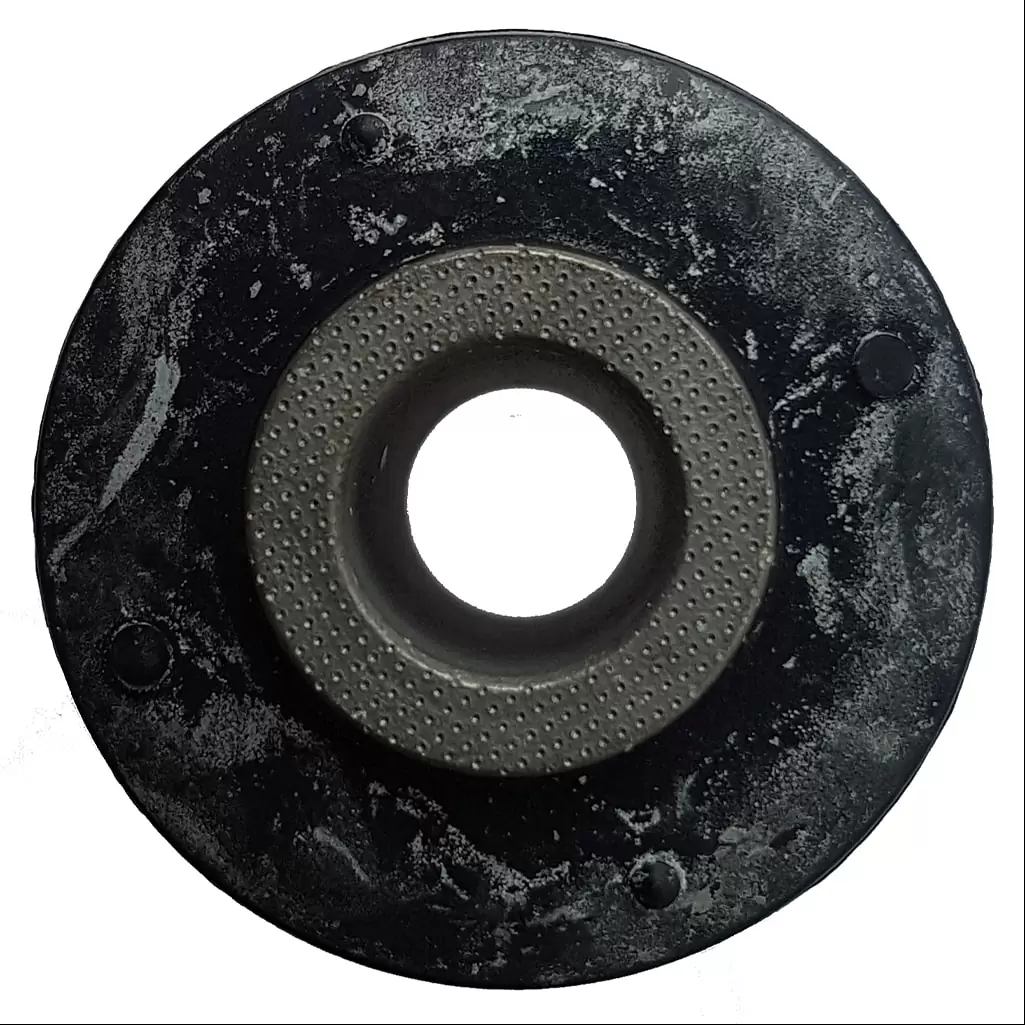
9. Troubleshooting (Symptom → Cause → Fix)
Symptom | Possible Cause | Solution |
Thump on stop/go | Rubber debonding/hardening | Replace; choose higher bonding grade |
Pulling / tire wear | Eccentric install / loose OD fit | Reinstall & align; select +0.05 mm OD |
Cold-start squeal | Rubber too hard / poor low-temp loss | Switch to NR 60–62A or low-temp-optimized HNBR |
Braking shudder | Dynamic-stiffness deviation | Choose NVH-tuned version (±10% dynamic stiffness) |
Early crazing | Oil/high temp/swelling | Switch to NBR/HNBR; fix oil leaks |
Press-fit scars | Tooling misalignment | Use dedicated press cups & guide sleeves |
10. Quality, Testing, Certification & Traceability; Differentiators & Cases
· Systems & certifications: TÜV, AEO Advanced (2025-01-09); processes aligned to IATF 16949 (PPAP/IMDS on request).
· Lab capabilities: ASTM D2240 hardness, ISO 37 tensile, ISO 815 compression set, ASTM D429 rubber-to-metal peel, ozone/heat aging, salt spray, NVH rig dynamic stiffness.
· Traceability: unique barcode per piece; full trace for compound/batch and key operations.
· Differentiators: OD micro-tuning, custom hardness, thickened outer sleeve, oil-resistant/high-temp compounds.
· Case: LATAM distributor using 70–75A HNBR version reported improved durability and lower noise claim rate on broken suburban roads (aggregated customer-authorized data; details available under NDA).
FAQ
· Q: Is KD35-34-470 the same as KD3534470?
A: Yes—KD3534470 is the hyphen-less spelling; still verify size and position.
· Q: Is wheel alignment necessary after replacement?
A: Recommended to restore suspension geometry and tire wear.
· Q: How do I pick comfort vs heavy-duty?
A: Smooth roads: 60–65A; heavy load/rough roads: 70–75A or PU.
· Q: Which material for oil or high temperature?
A: Prefer NBR/HNBR; choose HNBR when high temperature and oil coexist.
· Q: Can I use lubricant during press-fit?
A: Apply a thin film on metal interfaces only; never on rubber/bondline.
· Q: Do you offer OD micro-oversize versions?
A: Yes—+0.05 / +0.10 mm OD micro-oversize and tailored tolerance bands.
· Q: Do you support PPAP and batch traceability?
A: Yes—barcode traceability; PPAP and lab reports available.


