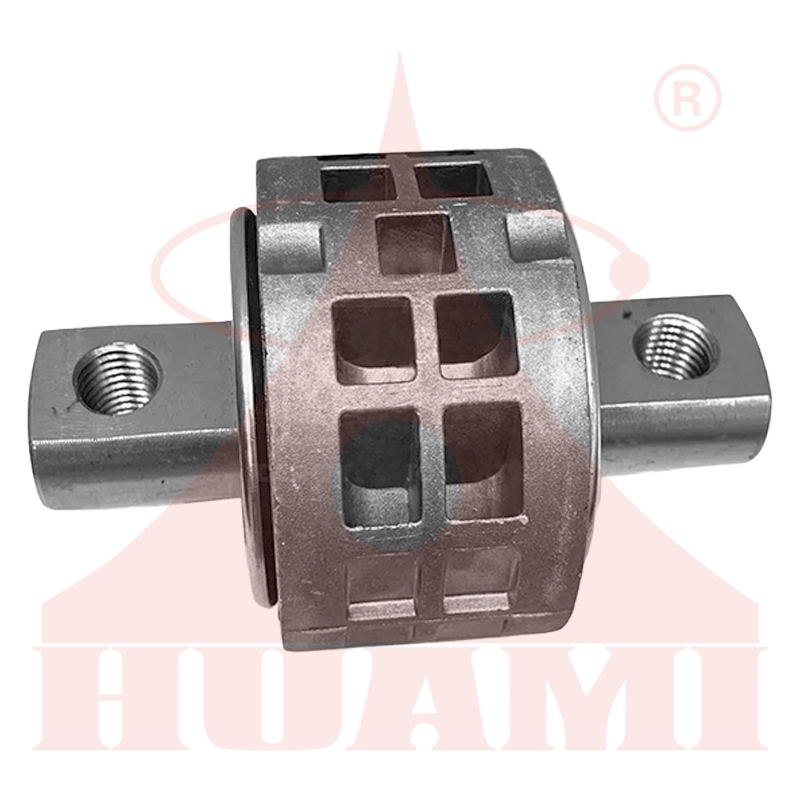
1. The Role of the DAF Truck Cab Support Bushing in the Cab Suspension System
In commercial vehicle cab suspension systems, a cab support bushing (Cab Support Bushing / Cab Mount) is not a “simple rubber part.” It carries both structural-connection and comfort-control functions—especially critical under heavy load, long-haul operation, and harsh road conditions.
1) Supporting cab weight and connecting the cab to the frame
The cab connects to the frame through front and rear support points. The bushing at the front axle cab support position (Front Axle Cab Support) must carry the cab’s static load and withstand dynamic loads and shear forces during acceleration, braking, cornering, and road impacts—ensuring “controlled displacement” between cab and frame.
2) Absorbing road shocks and engine/driveline vibrations
During operation, road impacts travel through the frame to the cab support points. Meanwhile, engine, transmission, and driveline vibrations also propagate structurally. High-damping rubber elastomers dissipate vibration energy as heat, significantly reducing vibration amplitude transmitted to the cab.
3) Reducing NVH
Within the “source–path–cabin” NVH pathway, cab suspension is a key isolation link. A quality DAF truck cab support bushing helps reduce resonance and structure-borne noise, improving overall quietness at idle, during steady cruising, and on rough roads.
4) Improving driving comfort and overall vehicle stability
Cab pitch, roll, and vertical bounce directly influence driver fatigue. With well-matched stiffness and damping, cab posture is more stable; otherwise, symptoms such as shaking, vibration, and abnormal noise may occur, and even cab alignment can shift.
5) Importance under heavy-load and long-haul duty cycles
Line-haul logistics, heavy-load transport, and long-distance operation typically mean higher mileage, tougher roads, and frequent temperature/load cycles. Fatigue resistance, shear durability, and bonding reliability of the cab support bushing directly determine replacement intervals and operating cost.
2. OEM 1911932 Product Overview
1) OE number and common writing formats
The OE number is 1911932, commonly searched/recorded as:
1911932 / 1 911 932 / 191-1932
DAF 1911932 / OE 1911932
For sourcing and cross-referencing, using 1911932 + cab support bushing + DAF truck helps cover typical procurement search habits.
2) Why it is used on DAF trucks
DAF cab suspension systems have defined requirements on geometry, rubber stiffness, and damping windows at the front support point—balancing cab positioning accuracy and isolation performance. The essence of a DAF cab mount bushing is “dimensional match + compound formulation + bonding strength,” not merely a similar appearance.
3) Typical application scenarios
Line-haul logistics: higher demand for comfort and stability during long cruising
Heavy-load transport: larger impact and shear loads, more fatigue-sensitive
Long-haul operation: stronger temperature/aging cycles, higher weather/oil/bonding reliability requirements
4) Structural features of the front axle cab support bushing
A front axle cab support bushing typically sees combined loads (vertical compression + lateral shear + minor torsional displacement). A typical construction includes inner steel sleeve / outer steel sleeve / high-damping rubber elastomer, vulcanized and bonded as an integrated part to prevent debonding and migration over time.
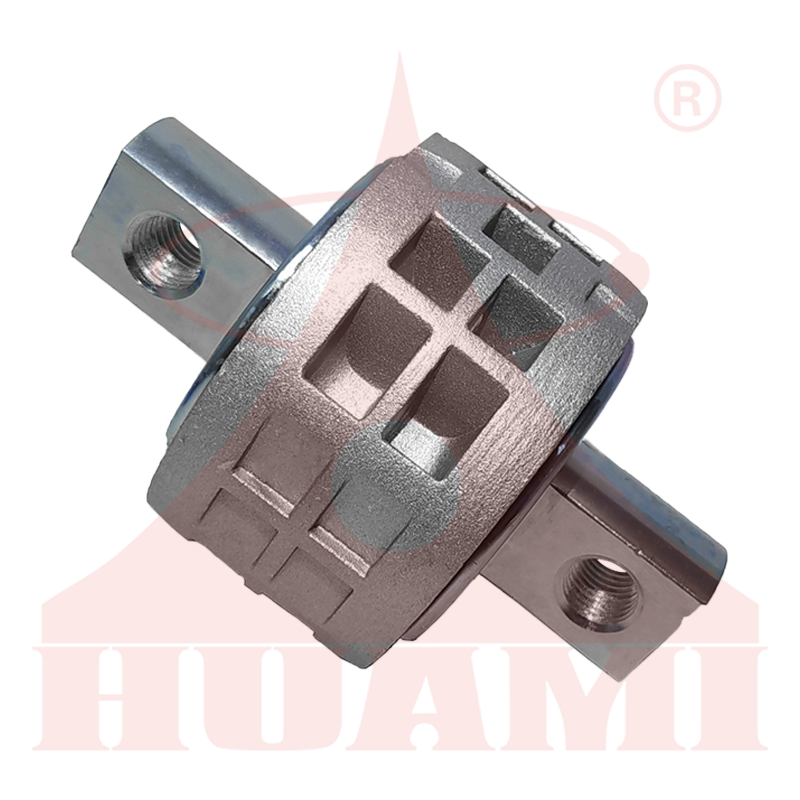
3. Installation Position and Dimensional Parameters
Installation position
Dimensions (must be confirmed)
How dimensional accuracy affects stability and service life
Inner Diameter (33 mm) governs fit with the bolt/inner sleeve: excessive clearance can cause micro-movement wear and noise; overly tight fit may introduce assembly stress and uneven wear.
Outer Diameter (90 mm) and Width/Thickness (90 mm) determine press-fit interference and positioning in the bracket bore: improper fit can lead to outer sleeve slipping, rubber shear concentration, or early cracking.
Length (102 mm) influences axial location and load distribution: deviation may cause eccentric support and abnormal cab posture.
For a front axle cab support bushing, fleet procurement is recommended to require dimensional consistency and process capability control (e.g., key-dimension sampling and batch traceability) to reduce rework and repeat repairs.
4. Structure and Materials Explained
1) Construction: inner sleeve / outer sleeve / high-damping rubber elastomer
Inner steel sleeve: provides the base for fastening and axial load transfer
Outer steel sleeve: forms a reliable fit with the bracket and ensures positioning/anti-migration
Rubber elastomer: provides isolation damping and controlled displacement, defining NVH performance
2) Rubber material options (NR / NBR / EPDM)
NR (Natural Rubber): excellent resilience and dynamic fatigue performance; suitable for many isolation applications
NBR (Nitrile Rubber): better oil resistance; suitable where oil/fluids contamination risk is higher
EPDM: strong weathering and ozone resistance; suitable for large temperature swings and outdoor exposure
Hebei Huami can optimize compound formulation based on operating conditions (temperature, media exposure, load spectrum) to balance isolation and durability.
3) Shore A hardness range and its impact on damping
A common hardness window is 55–75 Shore A (customizable):
Lower hardness: better comfort, but reduced positioning/anti-deformation ability
Higher hardness: better positioning, but isolation performance may decrease
Proper stiffness and damping matching is key to NVH reduction.
4) Key performance: fatigue resistance, shear resistance, oil resistance, weather resistance
Cab support bushings face long-term cyclic loads and shear deformation; the rubber needs:
Fatigue crack resistance for high-mileage cycles
Shear/tear resistance for lateral loads from cornering and impacts
Oil/contamination resistance to reduce swelling and softening
Weather/ozone resistance to avoid surface cracking and elastic decline
5) Metal corrosion protection processes
To improve durability in salt spray and humid environments, corrosion protection can include zinc plating, phosphating, Dacromet, or e-coating (as required), reducing the risk of bonding-interface failure caused by corrosion.
6) How vulcanized bonding affects long-term reliability
The core of rubber-to-metal parts is the bonding system. Stable surface preparation, adhesive system control, and vulcanization window control help reduce early failures such as debonding, voids, and interface peeling, ensuring long-term reliability and batch consistency.
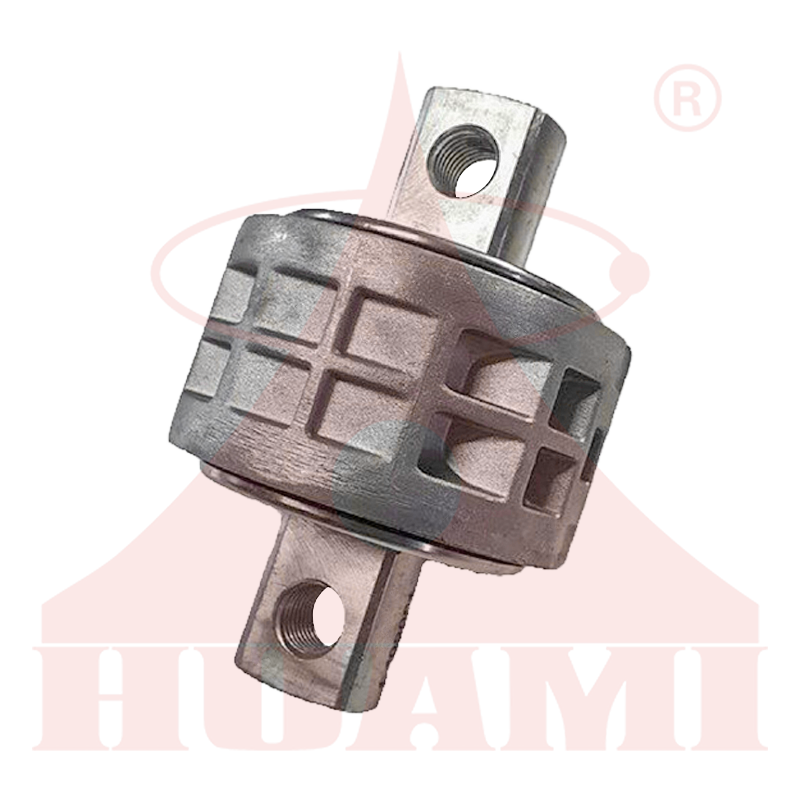
5. Common Failure Modes and Replacement Signs
Typical failures and symptoms
Cab rocking or abnormal noise: “squeak/knock” over bumps, during start/stop
Noticeably increased vibration while driving: stronger vibration felt at steering wheel, seat, or pedals
Cab tilt or abnormal position: left/right height mismatch, shifted cab posture
Rubber aging, cracking, debonding: surface cracking, edge tearing, rubber separating from sleeves
Outer sleeve looseness/migration: bracket fit failure leading to positioning drift
Quick checks to determine if replacement is needed
Visual inspection: cracking, tearing, bulging, debonding
Clearance and posture: compare left/right support height and gaps
Dynamic check: gently rock the cab and observe abnormal movement/noise at support points
Mileage/operation assessment: high mileage + heavy load + poor roads → shorten inspection interval
6. Installation and Maintenance Guide
1) Removal and installation precautions
Use proper press tools to avoid impact damage to sleeves and bonding layers
Clean bracket bores and contact surfaces to prevent misalignment and wear from debris
If corrosion/burrs exist, repair before installation to ensure reliable outer-sleeve fit
2) Centering installation and avoiding rubber pre-stress
Press-fit must maintain coaxial alignment to prevent initial torsional stress in the rubber
Before final tightening, ensure the cab is at normal posture/working height to reduce early fatigue caused by assembly pre-twist
3) Ways to extend service life
Avoid prolonged oil soaking; clean contamination promptly
Control overload and reduce repeated high-impact driving over poor roads
Address noise/posture issues early to prevent secondary damage to other suspension parts
7. Manufacturing Advantages of Hebei Huami New Material Technology Co., Ltd.
30 years of rubber products and rubber-to-metal manufacturing experience: long-term validation across commercial vehicle chassis and cab suspension conditions
Multi-brand commercial vehicle application experience: covering Mercedes-Benz, Volvo, Scania and more
IATF16949, TÜV, AEO Advanced certification: quality and compliance for international customers
In-house rubber compound R&D: NR/NBR/EPDM options optimized for temperature, media exposure, and load spectra in cab suspension duty cycles
Precision tooling and automated production: high batch consistency, stable key dimensions, suitable for distributor and fleet long-term supply
Full-process quality inspection: hardness / tensile / tear / compression set / bonding strength control
Reliability validation capabilities: fatigue life, weathering, oil resistance, high/low temperature tests for typical operating environments
Supports OEM/ODM, small-batch customization, and stable lead time; neutral packaging and flexible MOQ (project-based) available—well-suited for overseas distributor stocking and trial orders
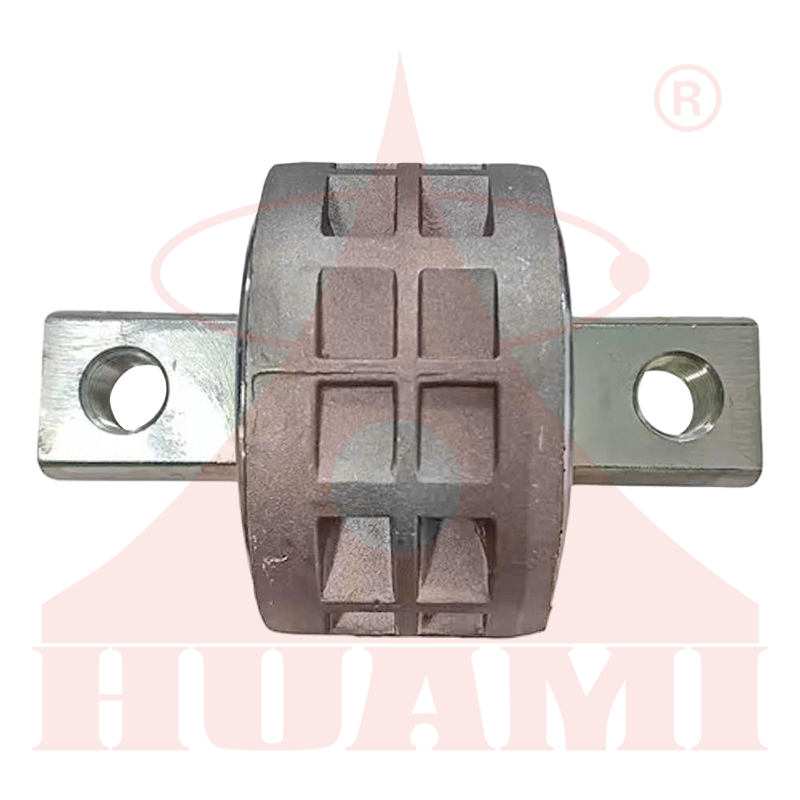
8. Parameter and Specification Table
| Item | Specification |
| Product Name | DAF Truck Cab Support Bushing / Rubber-Metal Cab Mount |
| OEM No. | 1911932 |
| Installation Position | Front Axle Cab Support |
| Inner Diameter (ID) | 33 mm |
| Outer Diameter (OD) | 90 mm |
| Length | 102 mm |
| Thickness | 90 mm |
| Width | 90 mm |
| Applicable Vehicles | DAF Trucks (specific models/years subject to actual fitment) |
| Materials | Rubber (NR / NBR / EPDM optional) + Steel |
| Shore A Hardness | 55–75 (customizable) |
| Corrosion Protection | Zinc/Phosphate/E-coat/Dacromet (as required) |
9. FAQ
1) What does OEM 1911932 fit?
It is used as a front axle cab support bushing in the cab suspension system for DAF trucks (exact models/years should be confirmed by application).
2) What are the dimensions of the 1911932 cab support bushing?
ID 33 mm, OD 90 mm, Length 102 mm, Thickness 90 mm, Width 90 mm, installation position: Front Axle Cab Support.
3) What is the function of a DAF cab mount bushing?
It supports cab load, connects cab to frame, and isolates road shock and vibration to improve NVH and driving comfort.
4) What materials are available?
Typical rubber options include NR / NBR / EPDM with steel inner/outer sleeves. Material selection depends on temperature, oil exposure, and duty cycle.
5) What Shore A hardness is recommended?
Common range is 55–75 Shore A. Softer improves isolation; harder improves positioning. The best range depends on cab suspension tuning and load spectrum.
6) What are common failure symptoms?
Cab rocking, abnormal noise, increased vibration, cab tilt/misalignment, visible rubber cracks, or rubber-to-metal debonding.
7) Do I need special tools for installation?
Yes. Proper press-fit tools are recommended to avoid damaging sleeves and bonding layers. Ensure coaxial alignment and avoid rubber pre-stress.
8) Can you support OEM/ODM and small batch orders?
Yes, OEM/ODM is supported; MOQ and packaging can be flexible based on the project (placeholders can be finalized during quotation).
9) How do I confirm the correct part before ordering?
Confirm OEM number 1911932, installation position (Front Axle Cab Support), and key dimensions; cross-check with a sample or drawing if available.


