1. Introduction
On high-speed trains, metros and regional EMUs, the exterior ventilation system faces constant airflow pulsation, car-body vibration and temperature cycling, along with rain, snow, oil mist and UV. The flexible connectors and compensators that link fans, air ducts and the car body are small parts, but they directly affect airflow, noise and fire safety.
When the material cracks, air leaks, whistling and HVAC losses follow. When it fails fire requirements, it can become a path for flame spread and toxic smoke. That is why rolling stock OEMs in Europe and worldwide require EN45545-2 compliance for non-metallic exterior materials.
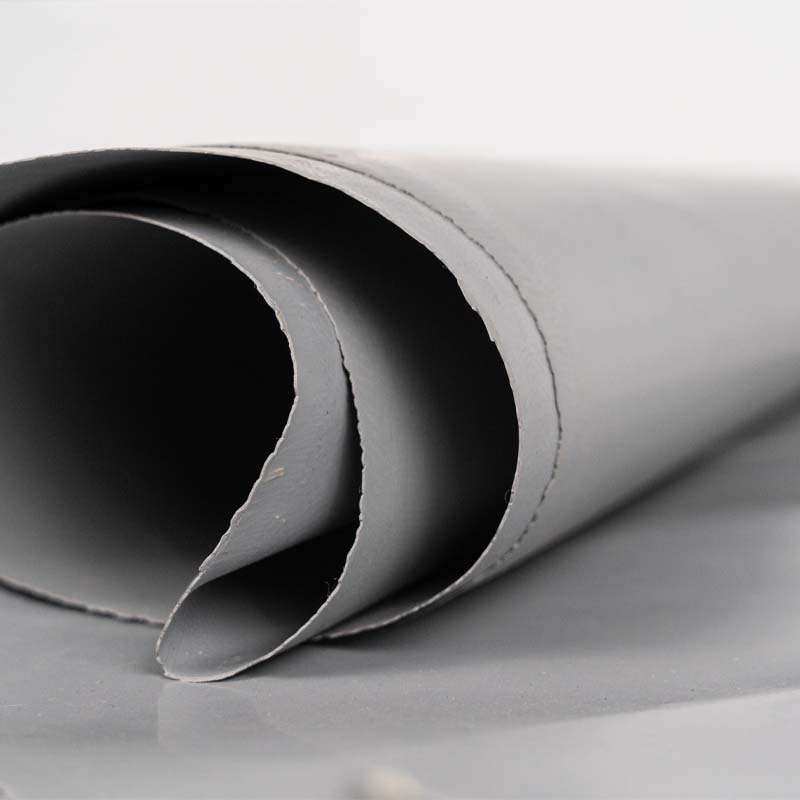
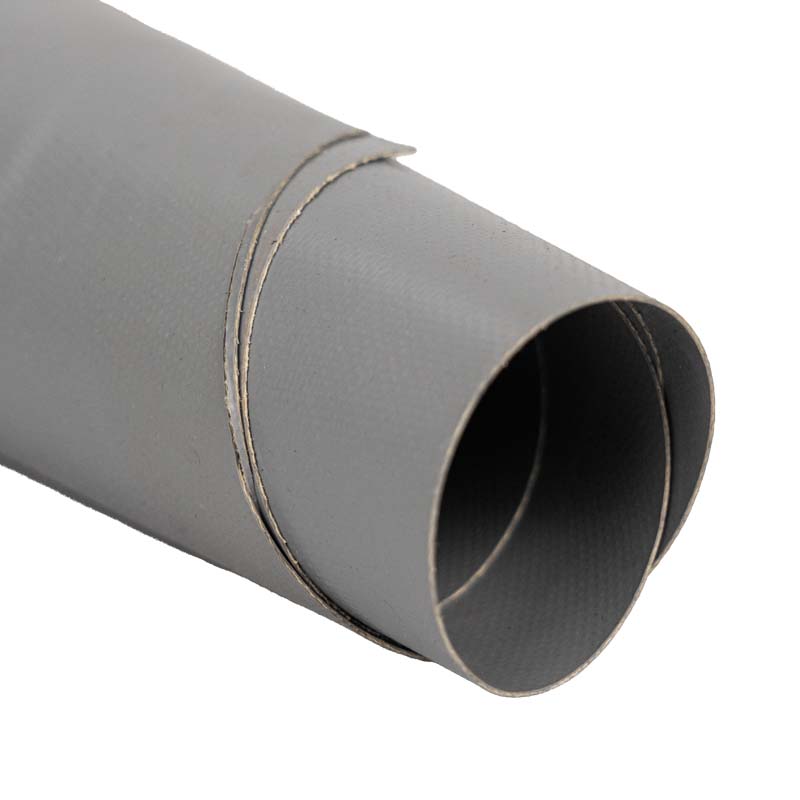
Huami's EN45545-2 R7 HL2 aramid silicone coated fabric is produced in-house and backed by a complete third-party test report on the finished fabric, a certification few Chinese producers hold. It is engineered for railway ventilation duct flexible connectors, duct compensators and exterior protective parts.
Hebei Tongsource International Trade Co., Ltd. is a wholly-owned subsidiary of Hebei Huami New Material Technology Co., Ltd. (listed on the Beijing Stock Exchange, stock code 920247), and handles global export, customs clearance and order delivery for Huami's railway products.
2. Technical Overview
2.1 Structure
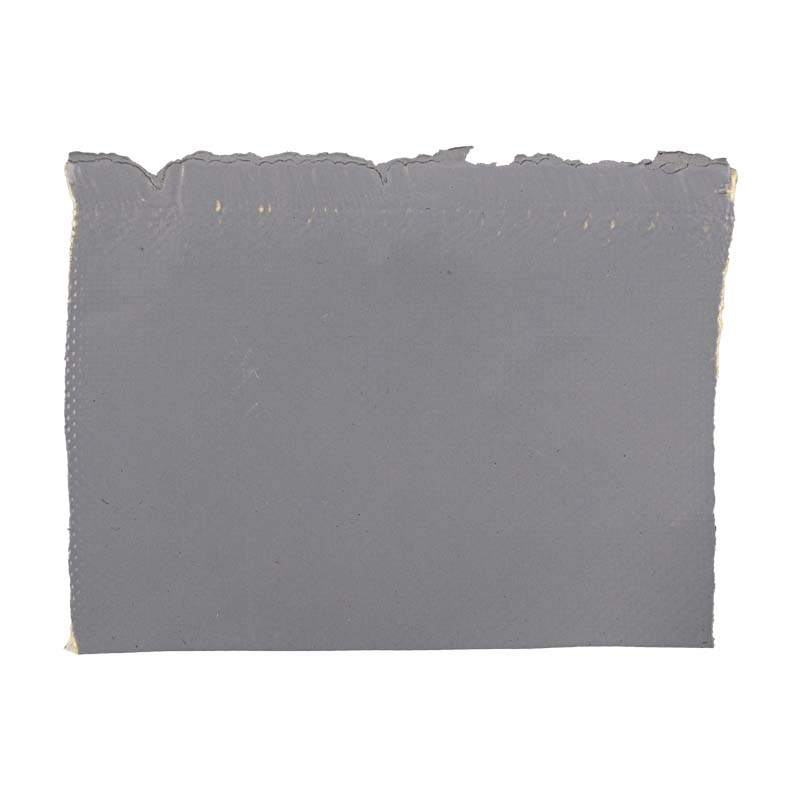
• Load-bearing carrier: woven aramid fiber fabric, providing tensile and tear strength.
• Functional coating: Huami's own flame-retardant silicone rubber compound, applied on one or both sides and vulcanized onto the fabric.
• End form: a flexible, airtight composite that can be cut, sewn, bonded or heat-sealed into connectors, expansion joints and sleeves.
2.2 Materials
• Aramid fiber: high strength-to-weight, inherently flame resistant, no melting or dripping, dimensionally stable at elevated temperature and resistant to repeated flexing.
• Flame-retardant silicone: wide service temperature range, excellent resistance to weather, ozone and UV, and flexibility at low temperature. Huami's formulation is designed specifically for flame retardancy and low smoke.
2.3 Fire Performance to EN45545-2 R7 HL2
EN45545-2 groups vehicle products into requirement sets (R1–R26). Requirement set R7 covers exterior parts such as external body shell components and certain air ducts. It assesses flame spread, heat release, smoke density and smoke toxicity.
Hazard levels (HL1–HL3) depend on the vehicle's operation and design categories, with HL3 the most demanding. This fabric meets HL2 under R7, which also covers HL1 projects. All four criteria are met; the limits are listed in Section 5.
2.4 Performance Advantages
• Finished-product certification: the finished aramid silicone fabric was tested, not just the rubber compound, so no extra material-level testing is needed for approval.
• Exterior-ready: withstands temperature cycling, weathering and oil contamination on roof and underframe locations.
• Flexible and fatigue resistant: the aramid carrier absorbs fan vibration and car-body movement over long service.
• Controlled quality: compound formulation and coating are both done in-house for batch consistency and full traceability.
• Custom options: thickness, width, coating type and finished-part design can follow your drawings.
3. Applications
The fabric is designed for exterior flexible protection, ventilation and expansion parts on high-speed trains, EMUs, metros and regional trains. Typical uses include:
3.1 Flexible connectors for high-speed train ventilation ducts
Link roof-mounted HVAC units, fans and ducts, isolate vibration, absorb installation tolerances and keep the system airtight.
3.2 Exterior air duct compensators and expansion joints
Absorb thermal expansion and relative movement between car body and equipment, preventing cracks at rigid duct joints.
3.3 Underframe heat protection sleeves
Wrap underframe pipes, cable harnesses or equipment for heat shielding, mechanical protection and flame retardancy.
3.4 Exterior flame-retardant, weather-resistant wrapping
Cover and protect non-metallic exterior parts where both fire performance and long-term weathering matter.
4. Typical Failure Symptoms
Inspect exterior duct connectors and compensators promptly if any of the following symptoms appear:
# | Symptom | Likely cause | Recommended action |
1 | Surface cracking, hardening, brittleness | Aging of non-rail-grade coating under heat, ozone or UV | Replace with EN45545-certified silicone fabric parts |
2 | Coating peeling or delaminating | Poor coating adhesion, flex fatigue | Use integrally vulcanized aramid silicone fabric |
3 | Air leaks, whistling, reduced airflow | Holes, loose clamps or split seams | Check clamps and seams; replace if needed |
4 | Abrasion holes, frayed edges | Rubbing on structure or sharp edges, too little clearance | Re-route, add protection, deburr edges |
5 | Vibration and noise reaching the cabin | Over-stretched installation or hardened material | Verify installed length; replace hardened parts |
6 | Swelling, softening, oil stains | Long-term exposure to grease or oil mist | Clean and trace the oil source |
7 | Collapse or deformation under suction | Wrong thickness or stiffness, no support rings | Review design and material specification |
8 | Failed fire audit, missing documents | Replacement made from uncertified material | Use traceable material with a finished-product report |
5. Key Parameters
Item | Specification |
Product | EN45545-2 R7 HL2 aramid silicone coated fabric |
Base fabric | Woven aramid fiber |
Coating | Huami's own flame-retardant silicone rubber |
Coating type | Single or double side (custom) |
Fire standard and level | EN45545-2, requirement set R7, HL1 / HL2 |
Certification | Complete third-party test report on the finished fabric |
Flame spread T02 (ISO 5658-2) | CFE ≥ 20 kW/m² |
Heat release T03.01 (ISO 5660-1) | MARHE ≤ 90 kW/m² (HL2) |
Smoke density T10.03 (ISO 5659-2) | Ds max ≤ 600 (HL2) |
Smoke toxicity T11.03 | CIT ≤ 1.8 (HL2) |
Service temperature | Typical for silicone systems: approx. -60 °C to +200 °C (see TDS) |
Thickness / width / color | Customized to project specification and drawings |
Supply form | Rolls, cut pieces, or finished connectors, compensators and sleeves |
Documents | EN45545-2 test report, material certificate, performance test report, export customs documents |
Vehicle types | High-speed trains, EMUs, metros, regional and light rail vehicles |
Note: fire values shown are the EN45545-2 R7 HL2 limits. Measured values and physical properties such as thickness, weight, tensile and tear strength follow Huami's latest test report and technical data sheet (TDS).
6. Installation Notes
1. Check documents and batch: Match the delivered batch to the test report and material certificate, and file them in the vehicle parts record.
2. Clean flanges and duct ends: Remove burrs and sharp edges before fitting so the coating is not cut.
3. Install at design length: Do not over-stretch, over-compress or twist; keep axial and lateral offsets within the design allowance.
4. Tighten clamps evenly: Use smooth-edged band clamps tightened evenly to the specified torque to avoid local crushing.
5. Orient and seal seams: Point overlaps downward or away from the airflow to shed water. Adhesives and sealants used must also meet EN45545.
6. Keep safe clearances: Keep away from moving parts, sharp structures and heat sources above the rated temperature.
7. Store and handle properly: Store rolls flat and dry; avoid sharp objects, hard creases and dragging.
8. Inspect after installation: Leak-check the duct, re-inspect after run-in and add the part to the routine maintenance plan.
7. Frequently Asked Questions (FAQ)
7.1 What does EN45545-2 R7 HL2 mean, and which parts does it cover?
R7 is the EN45545-2 requirement set for exterior parts such as external body shell components and certain air ducts. HL2 means the material meets the Hazard Level 2 limits. It applies to exterior duct connectors, compensators, protective sleeves and similar flexible non-metallic parts.
7.2 What is the difference between a compound certificate and a finished-product certificate?
A compound certificate covers only the silicone rubber. The finished fabric also includes the base fabric, coating thickness and process, which can change fire behavior. OEMs and test bodies usually require the finished product as used. Huami provides a complete report on the finished fabric.
7.3 Can it be used on HL3 projects?
The current report covers HL1 and HL2 under R7. For HL3 projects, share the vehicle operation category and part location, and our engineers will evaluate a solution and confirm feasibility.
7.4 Which documents and samples can you provide?
We provide the EN45545-2 test report, material certificate, performance test report and TDS, along with samples for testing or trial fitting.
7.5 Can you make connectors or compensators to our drawings?
Yes. Send drawings or flange dimensions, installed length, movement and operating temperature. We handle drawing development, prototyping and series production.
7.6 How does aramid silicone fabric compare with fiberglass silicone fabric?
Fiberglass silicone fabric costs less, but glass fibers are brittle and tend to break under repeated flexing and vibration. Aramid silicone fabric is tougher and more fatigue resistant, which suits duct connectors and compensators under constant vibration.
7.7 How does it handle oil, weather and aging? What is the service life?
The silicone coating resists weather, ozone and UV and has good resistance to oil contamination. Actual life depends on temperature, movement and maintenance, so we recommend inspection at each maintenance interval.
7.8 How are MOQ, lead time and trade terms set?
MOQ and lead time depend on specification and quantity, and we confirm them clearly with each quotation. Common Incoterms such as FOB, CIF and DAP are supported, with customs clearance and export handled by Tongsource.
8. Conclusion and Next Steps
Exterior duct connectors and compensators must be flexible, airtight, weather resistant and EN45545-2 compliant at the same time. Huami's EN45545-2 R7 HL2 aramid silicone fabric is certified as a finished product, made entirely in-house and already proven in overseas rail projects.
Hebei Huami New Material Technology Co., Ltd. is listed on the Beijing Stock Exchange (stock code 920247), recognized as a national specialized "Little Giant" enterprise and AEO advanced-certified by China Customs,Certified by IATF 16949, ISO 9001, ISO 14001 and ISO 45001,with a CNAS-accredited laboratory and a provincial special rubber and plastics R&D platform. Its wholly-owned subsidiary, Hebei Tongsource International Trade Co., Ltd., serves rail customers worldwide.
OEMs, system integrators and buyers in Europe, the USA, the Middle East and South America are welcome to contact us. Share your drawing or dimensions, hazard level and estimated volume to receive free samples, the TDS and a formal quotation.


