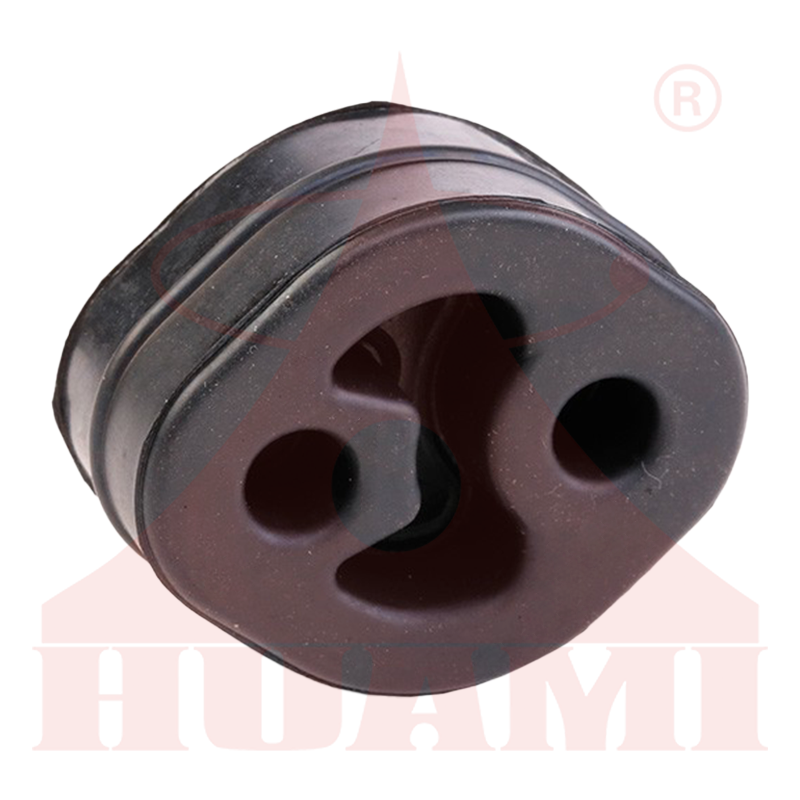
1. Function of the Control Arm Bushing
The suspension control arm bushing is a key rubber-metal component connecting the body (or subframe) to the control arm. It directly affects NVH (Noise, Vibration, Harshness), handling stability, and suspension durability.
1.1 Absorbing Vibration and Noise (NVH Improvement)
During driving, road unevenness, braking, and acceleration all generate high- and mid-frequency vibrations. If the control arm were rigidly connected to the subframe or body, these vibrations and impacts would be transmitted directly to the cabin.
The rubber-metal control arm bushing, via its rubber damping layer:
Absorbs fine road vibrations, reducing steering wheel and body shake;
Filters high-frequency tire–road noise, lowering in-cabin noise levels;
Converts impact energy into heat through rubber deformation, improving ride comfort and quietness.
For Volvo vehicles that emphasize comfort and safety, a well-matched Volvo suspension bushing is crucial to overall NVH performance.
1.2 Maintaining Suspension Geometry and Handling
The control arm bushing is not just a “soft connector”. It provides designed stiffness in longitudinal, lateral, and torsional directions:
Keeps critical suspension geometry (caster, camber, toe, etc.) from deviating excessively under dynamic loads;
Reduces excessive control arm movement during braking and acceleration, improving straight-line stability;
Ensures a more predictable suspension kinematic path during compression and rebound, enhancing steering precision and road feel.
When a Volvo control arm bushing is worn, cracked, or debonded, suspension geometry can “wander”, leading to steering play, pull, and irregular tire wear.
1.3 Reducing Metal-to-Metal Contact and Protecting Suspension Parts
A typical control arm bushing consists of inner metal sleeve, rubber layer, and outer metal sleeve. Relative movement is achieved through rubber deformation rather than metal sliding:
Prevents direct metal-to-metal contact and friction;
Reduces clearance impact and knocking noises;
Protects the control arm, bolts, and mounting points on the body, extending the life of the entire front suspension system.
1.4 Impact on Front Suspension Durability
A high-quality control arm bushing must withstand not only frequent compression and shear cycles, but also:
Long-term low- and high-temperature conditions;
Exposure to water, mud, and salt spray;
Extreme longitudinal loads from hard braking and acceleration.
Rubber formulation, structural design, and vulcanization bonding technology directly determine the durability and reliability of the front suspension. This is exactly where Hebei Huami New Material has strong technical advantages.
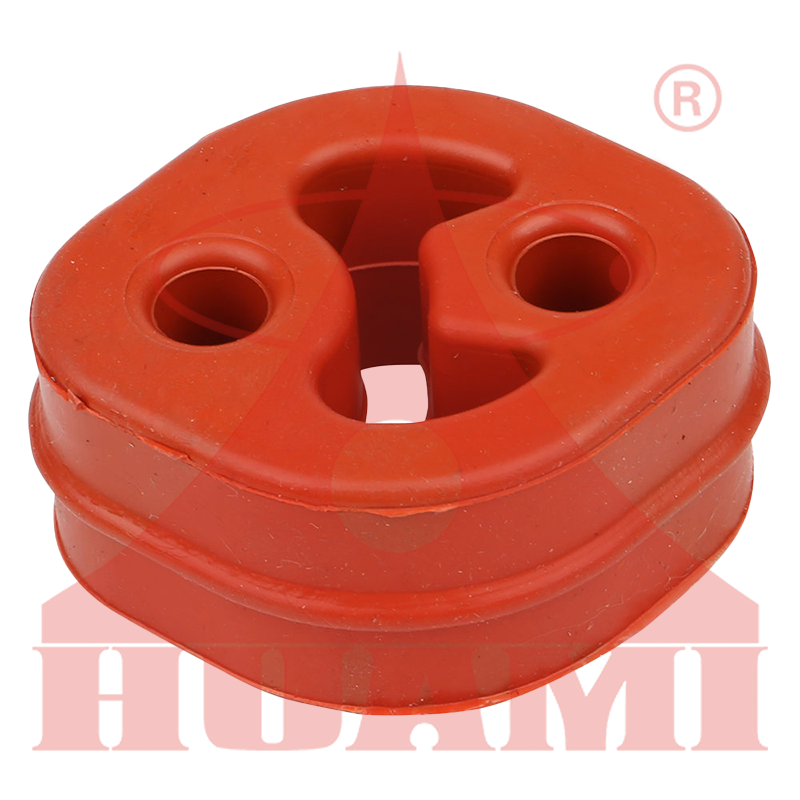
2. OEM 30657360 Product Overview
2.1 Applicable Models and Position
This article focuses on rubber-metal suspension control arm bushings related to OEM: 30657360, primarily used in the following Volvo platforms:
Volvo C70
Volvo S40
Volvo V50
Volvo S60
On these models, this type of bushing is typically installed at:
Actual positions and quantities should be verified against the specific suspension layout and OE parts diagram of the vehicle.
2.2 Typical Year Range
Based on common aftermarket parts data, part number 30657360 is often associated with Volvo P1 platform vehicles. Typical application years include approximately:
Exact fitment must be confirmed using VIN, chassis number, and OE bushing dimensions.
2.3 Note on the Original Function of 30657360
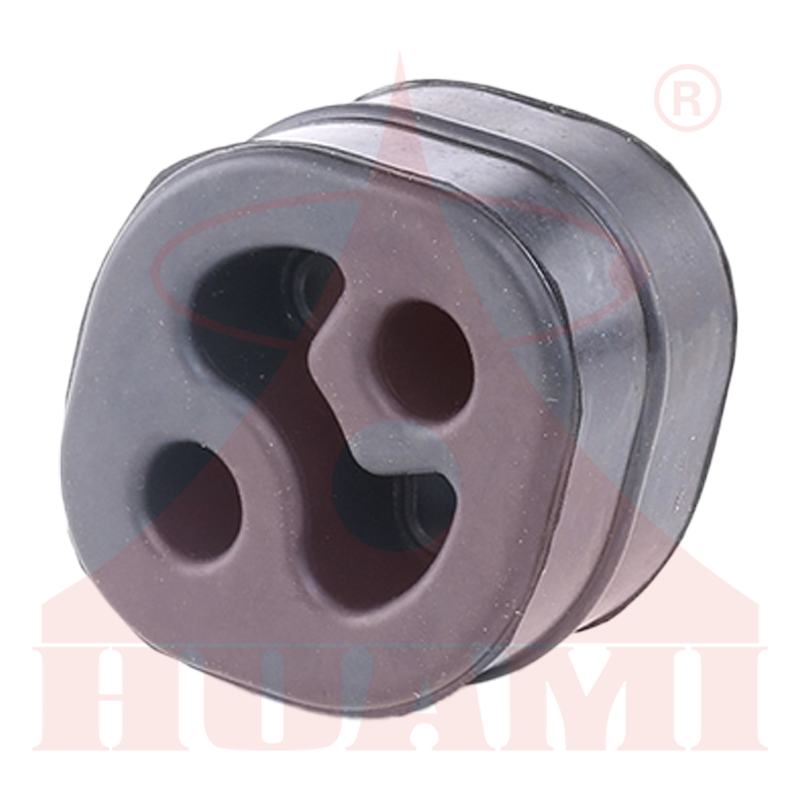
In some Volvo OE and replacement catalogs, 30657360 is classified under the exhaust system as Muffler & Pipe Upper Insulator / Exhaust System Hanger.
In the aftermarket, many rubber-parts suppliers use OEM number + physical dimensions to map this number to specific Volvo suspension bushing references (including exhaust and suspension rubber-metal components).
Hebei Huami New Material can produce rubber-metal control arm bushings that match the dimensions of 30657360, based on customer-supplied samples or drawings, for suspension upgrade and replacement applications.
2.4 Cross Reference and Interchange Numbers
Different aftermarket brands may use their own references compatible with OEM 30657360:
Aftermarket Ref.: placeholderforbrandP/N,canbefilledinbasedonyourtargetmarketplaceholder for brand P/N, can be filled in based on your target marketplaceholderforbrandP/N,canbefilledinbasedonyourtargetmarket
Other cross references: placeholderplaceholderplaceholder
For accurate cross-reference mapping, we recommend providing a full list of alternative part numbers or physical samples so that Hebei Huami’s engineering team can verify compatibility.
3. Structure and Materials
3.1 Structure of a Rubber-Metal Control Arm Bushing
A typical suspension rubber-metal bushing consists of three main parts:
Inner Sleeve
Bolted to the control arm or subframe;
Usually made from high-quality carbon steel or alloy steel, with precision-machined bore for concentricity.
Rubber Damping Layer
Outer Sleeve
3.2 Rubber Materials Used by Hebei Huami
Depending on application conditions and customer requirements, Hebei Huami uses multiple rubber families:
In practice, Huami can fine-tune compound recipes to balance damping, hardness, and durability according to specific markets and performance targets.
3.3 Shore A Hardness, Temperature, and Oil Resistance
Typical hardness range: 60–75 Shore A (tunable for comfort vs. handling)
Working temperature range: -40°C to 100/120°C (depending on compound system)
Oil resistance: improved significantly when using NBR or oil-resistant modified compounds, providing stability against mineral oils and underbody contamination
Tear resistance: enhanced through reinforcing fillers and structural design, preventing rubber tearing under large shear displacements
3.4 Corrosion Protection for Metal Parts
To ensure long-term resistance to rust and debonding, Hebei Huami offers:
Phosphating + rust-preventive oil;
Electrophoretic coating / powder coating / painting;
Salt-spray resistance can be tailored according to OEM requirements (e.g., 240h / 480h or beyond).
3.5 Vulcanization and Rubber-Metal Bonding
Huami has extensive know-how in surface treatment, adhesive systems, and vulcanization window control for rubber-metal bonding:
Accurate control of metal surface roughness and cleanliness to enlarge effective bonding area and strength;
Dedicated primer and adhesive systems to ensure long-term bond strength under fatigue and thermal cycling;
Peel strength and shear fatigue life can meet or exceed many OEM specifications.
4. Common Failures and Symptoms
4.1 Vehicle Vibration and Steering Play
Steering wheel shimmy at medium–high speeds;
Noticeable “dead zone” or play when turning the wheel;
Blurry road feel and lack of confidence when changing lanes or cornering.
When the bushing rubber becomes soft, cracked, or deformed, the control arm can no longer guide the wheel precisely, and these symptoms start to appear.
4.2 Noise During Acceleration and Braking
Knocking or clunking noises when starting off or accelerating hard;
Sharp impact noises from the front suspension during heavy braking;
Pronounced noises when crossing speed bumps or rough sections.
These are typical signs of relative movement and impact between internal metal parts due to degraded bushings.
4.3 Pulling, Nose-Dive, and Abnormal Handling
Vehicle pulls to one side while driving straight and needs frequent correction;
Obvious nose-dive during braking and excessive weight transfer to the front;
Irregular or one-sided tire wear.
When control arm bushings fail, suspension geometry cannot stay stable. Owners of S40, V50, and S60 often search for “S40 V50 S60 bushing replacement” on forums to fix exactly these problems.
4.4 Visible Rubber Cracks, Debonding, and Eccentric Wear
When the vehicle is lifted, you may observe:
Visible cracks or crazing on the rubber surface;
Debonding or separation between rubber and metal sleeves;
Significant eccentricity, with one side of the rubber compressed or worn flat.
Once such conditions appear, the Volvo suspension bushing should be considered for replacement.
4.5 How to Judge When a Control Arm Bushing Needs Replacement
You can assess this from several angles:
Mileage: after 80,000–100,000 km, the front suspension bushings should be inspected carefully.
Road and driving conditions: frequent bad roads, heavy loads, or aggressive driving accelerate bushing wear.
Visual inspection: check for cracks, debonding, and eccentricity when the car is lifted.
Pry-bar test: gently pry the control arm and observe whether the bushing shows excessive movement or noise.
Tire wear and alignment data: abnormal toe or camber readings often point to bushing issues.
5. Installation and Replacement Guide
The following is a generic procedure based on a typical MacPherson front suspension. Actual steps on C70 / S40 / V50 / S60 may vary. Always refer to Volvo factory service information and safety guidelines.
5.1 Tools and Safety
2- or 4-post lift / jack + safety stands;
Socket set, spanners, and torque wrench;
Dedicated bushing press tools or hydraulic press;
Marker pen, penetrating oil.
Important: Before any S40 V50 S60 bushing replacement, disconnect ignition as required, apply parking brake, and ensure the vehicle is safely supported.
5.2 Removing the Control Arm and Old Bushing
Remove the front wheel.
If necessary, disconnect the anti-roll bar link and loose the ball joint nut.
Remove the control arm mounting bolts from the subframe/body, noting the bolt orientation and any shims.
Take out the entire control arm. Mark the original bushing angle/position on the arm to ensure the new part is installed in the same orientation.
Use a hydraulic press or special tools to press the old bushing out of the arm.
5.3 Pressing and Positioning the New Bushing
Hebei Huami’s control arm bushings typically include:
Key points during pressing:
Confirm the correct pressing direction to avoid reversed installation;
Apply a suitable assembly lubricant on the metal mating surfaces (do not contaminate rubber/adhesive interfaces);
Ensure the bushing is pressed in straight, with symmetric protrusion on both sides and no twist or damage.
5.4 Bolt Torque and Static Pre-Load
Refit the control arm with the new bushing to the vehicle.
Pre-tighten all fasteners but do not torque them to final values yet.
Lower the vehicle onto its wheels or use a lift with axle stands to simulate normal ride height.
At this height, torque with a calibrated wrench according to OE data:
Front control arm bushing bolt: XX–XXNm,placeholderXX–XX Nm, placeholderXX–XXNm,placeholder
Rear control arm bushing bolt: XX–XXNm,placeholderXX–XX Nm, placeholderXX–XXNm,placeholder
Ball joint nut: XX–XXNm,placeholderXX–XX Nm, placeholderXX–XXNm,placeholder
Exact torque values must follow Volvo’s official service information or trusted repair databases.
The purpose of static pre-load is to ensure that, at normal ride height, the bushing is in a neutral position without unnecessary torsion. This significantly increases service life.
5.5 Common Installation Mistakes and How to Avoid Them
Fully tightening bolts with the suspension hanging
Ignoring orientation marks
Hammering the outer sleeve directly
“Tightening by feel” or using an uncalibrated torque wrench
After replacement, a four-wheel alignment is highly recommended to restore proper suspension geometry.
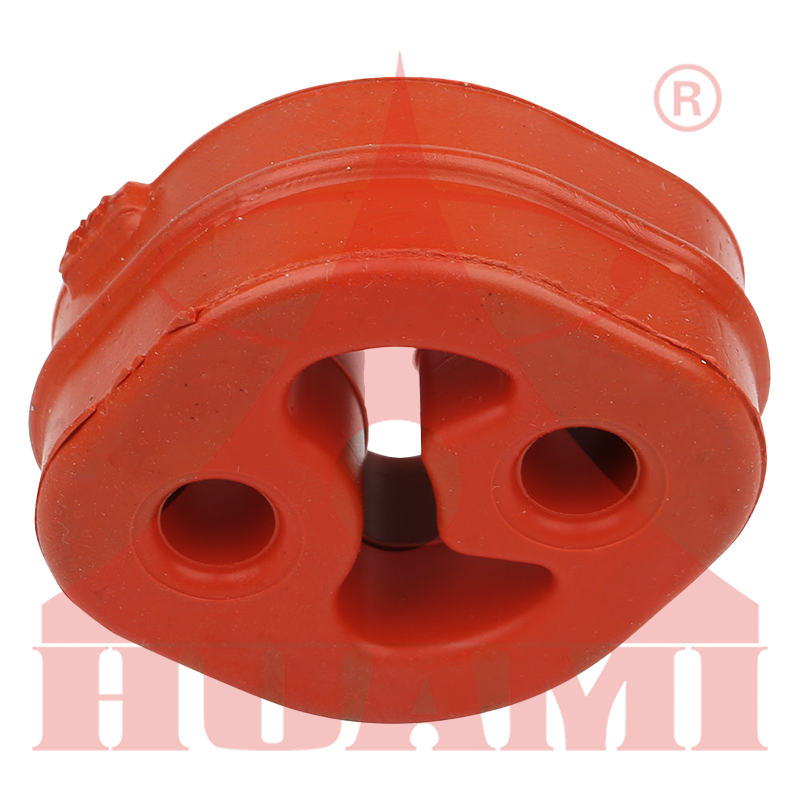
6. Manufacturing Advantages of Hebei Huami New Material
Hebei Huami New Material Technology Co., Ltd. was founded in 1998. It integrates special rubber compounds, engineering plastics, and finished parts, and is listed on the Beijing Stock Exchange (stock code: 920247). It has been recognized as a national “Little Giant” specialized and innovative enterprise in China.
6.1 Extensive Industry Experience and Customer Base
Nearly 30 years of experience in rubber products;
Long-term supply of sealing, damping, and bushing products for automotive, construction machinery, rail transit, high-speed rail, petroleum equipment, and aerospace;
Long-term cooperation with multiple well-known OEMs, with capabilities for synchronous development of suspension rubber parts;
Able to support both OEM and global aftermarket requirements with tailored Volvo suspension bushing solutions.
6.2 Robust Quality and Certification System
Hebei Huami has obtained multiple certifications including:
IATF 16949 automotive quality management system;
ISO 9001, ISO 14001, ISO 45001;
Military quality standard GJB9001C and aerospace AS9100D;
China Customs AEO Advanced Certification for trusted exporter status;
TÜV-related certifications can be provided as required by different markets.
This means Huami can ensure consistent quality and smooth export procedures for both large batch deliveries and long-term supply programs.
6.3 In-House Rubber Compounding: High Damping, Durable, and Tunable
A strong R&D team with over one hundred technical staff and multiple proprietary formulations and process patents;
Ability to tune stiffness and damping of Volvo control arm bushings for varying targets such as comfort, sportiness, or heavy-duty use;
Different formulas can be optimized for cold climate, tropical high-temperature regions, or coastal high-salt environments.
6.4 Advanced Tooling and Machining Capability
In-house mold shop enables complex bushing geometries for modern control arms;
Tight dimensional tolerances ensure stable press-fit characteristics and reduce installation scrap rates;
Reverse engineering and 3D scanning are available for customers who have samples but no drawings.
6.5 Comprehensive Testing and Validation
Huami offers a full testing suite for rubber-metal bushings:
Basic properties: hardness, tensile strength, tear strength, compression set, density, etc.;
Bonding: peel strength and shear fatigue life;
Environmental and reliability: weathering, oil resistance, salt-spray, and thermal cycling;
Durability under load: multi-axis durability rigs to simulate real-world road load spectra.
6.6 Flexible Supply Modes
Support for sample prototypes, pilot batches, and mass production;
Neutral packaging or customer-branded packaging;
Stable lead times, ideal for long-term cooperation in European, American, and South American markets and beyond.
7. Example Specification Table
The following is a template for a Volvo control arm bushing compatible with OEM 30657360. Exact values can be confirmed and customized based on actual drawings or samples.
| Item | Description / Typical Configuration |
| OEM Number | 30657360 |
| Product Name | Volvo control arm bushing / suspension rubber-metal bushing |
| Applicable Models | Volvo C70 / S40 / V50 / S60 |
| Mounting Position | Front lower control arm bushing (front/rear, depending on model) |
| Design | Inner sleeve + rubber damping layer + outer sleeve |
| Rubber Material | NR / NBR / EPDM (chosen according to application) |
| Shore A Hardness (typical) | 65 ± 5 (customizable on request) |
| Working Temperature Range | -40 to 100/120 °C (depending on compound) |
| Inner Sleeve Material | High-quality carbon steel / alloy steel with anti-corrosion treatment |
| Outer Sleeve Material | High-strength steel with electrophoretic / powder / paint coating |
| Oil / Weather Resistance | Designed for long-term exposure to underbody oil, salt, water, UV |
| Test Items | Hardness, tensile, tear, compression set, bond strength, fatigue |
| Packaging | Neutral bag + carton; private label available |
| Minimum Order Quantity (MOQ) | According to order confirmation; small trial batches supported |
For precise dimensions (ID/OD/width/shoulder height), Hebei Huami can measure from 3D models, 2D drawings, or physical samples, and lock them in the technical agreement.
8. FAQ
Q1: What is the difference between OEM 30657360 and a generic Volvo control arm bushing?
A1: OEM 30657360 corresponds to specific geometry and load conditions for Volvo C70, S40, V50, and S60 platforms. Hebei Huami can keep the same installation envelope while optimizing rubber formulation and hardness to balance NVH and handling, and can enhance durability for aftermarket demands.
Q2: How do I know if my S40/V50/S60 needs a bushing replacement?
A2: If you notice vibration, steering play, nose-dive during braking, front suspension noise, or irregular tire wear, and visual inspection reveals cracked, debonded, or eccentric bushings, it is time to consider bushing replacement.
Q3: Do I really need a wheel alignment after replacing the Volvo suspension bushing?
A3: Yes, a four-wheel alignment is strongly recommended. Control arm bushings directly affect toe and camber. Without alignment, you may experience pulling or abnormal tire wear.
Q4: What are the advantages of Hebei Huami bushings compared with OE parts?
A4: While keeping OE dimensions and fitment, Hebei Huami can adjust hardness and damping according to local road conditions and customer preference, offering an optimized balance of comfort and life. Supported by IATF 16949 and other systems, Huami delivers consistent quality suitable for professional distributors and workshops.
Q5: Can you develop a matching product if I only have an old bushing sample and no drawings?
A5: Yes. Hebei Huami offers reverse engineering services. By measuring dimensions and rubber hardness from your sample, we can quickly develop a compatible control arm bushing and even upgrade the rubber formulation if desired.
Q6: Can hardness and packaging be customized?
A6: Absolutely. We can tune hardness typically within 60–75 Shore A and offer neutral packaging or fully customized branding, labels, and boxes—ideal for building your own aftermarket brand.
Q7: Can the same OEM number be used on different Volvo models?
A7: Some Volvo platforms share the same bushing dimensions or bracket interfaces, but fitment must always be confirmed using VIN, chassis number, and actual dimensions. We recommend checking the final application list with your supplier before ordering.


