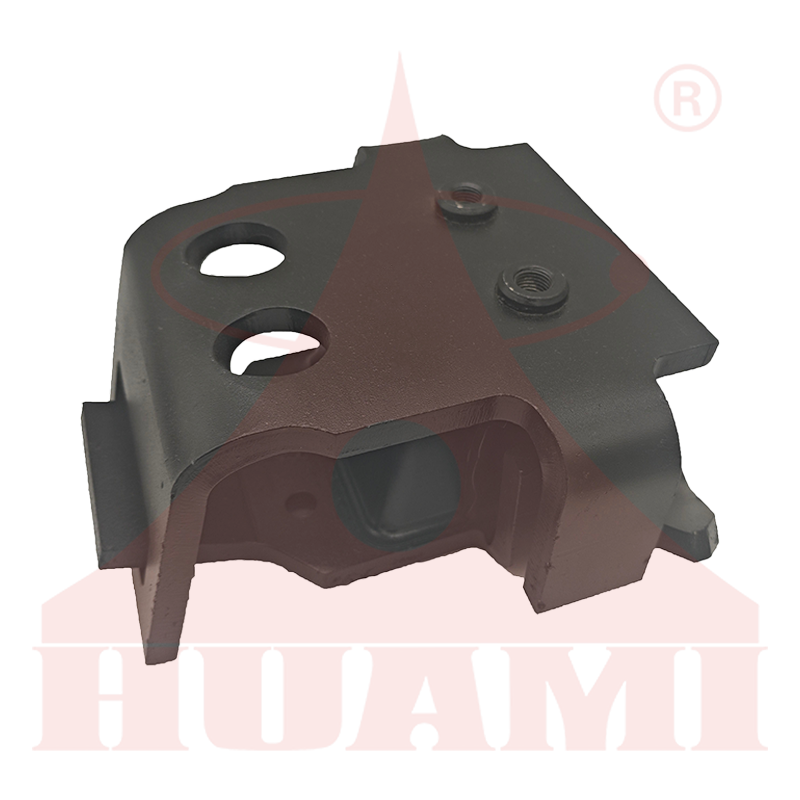
1. What Does a HINO Truck Engine Mount Do?
An engine mount is not just a “mounting bracket”—it is a critical component for powertrain reliability and ride comfort. For HINO trucks, engines often operate under heavy loads, long duty cycles, frequent stop-and-go, and repeated heat/cool cycles. The engine mount directly affects:
1.1 Supporting Engine Weight & Securing the Engine to the Frame
The engine mount supports and locates the powertrain on the chassis, keeping the relative position between the engine, transmission, driveline and surrounding systems stable—helping prevent hose/pipe tension, interference wear, and misalignment.
1.2 Absorbing Vibration & Shock Generated During Operation
At idle, acceleration, gear shifts and climbs, the engine produces vibration across multiple frequency bands and torque reactions. The rubber damping body deforms elastically and dissipates energy through internal damping, reducing vibration transfer to the frame and cab.
1.3 Reducing NVH
A high-quality engine mount noticeably reduces steering wheel/seat/pedal buzz, lowers cab resonance, and helps prevent squeaks and rattles—improving driver comfort and safety on long-haul routes.
1.4 Reliability Impact Under Heavy-Duty, Long-Hour Operation
Truck “reliability” is often about details: once engine mount performance declines, powertrain movement increases, which can trigger a chain of issues such as exhaust/intake fatigue, coolant hose leaks, belt system mis-wear, and bracket cracking, leading to higher downtime and maintenance costs.
2. OEM: 12371-E0150 Overview
2.1 OE Number & Common Writing Formats
Common formats you may see include:
For sourcing and search accuracy, use combinations like “12371-E0150 engine mount” and “HINO truck engine mount”.
2.2 Why It Fits HINO Trucks
HINO trucks typically emphasize durability and stability, so engine mounts must combine load support with vibration isolation. Engine mounts like 12371-E0150 generally need to deliver:
Multi-axial load handling (vertical support + longitudinal/lateral control)
Balanced performance for idle isolation and acceleration torque shock resistance
Oil resistance, heat-aging resistance, and fatigue durability
2.3 Common Mounting Positions
An engine mount may be located as:
Front / rear mount (controls longitudinal powertrain posture)
Left / right mount (primary load-bearing and lateral control)
Because layouts vary by model/year, we recommend confirming by mounting photos, old-part measurement, drawings, or samples
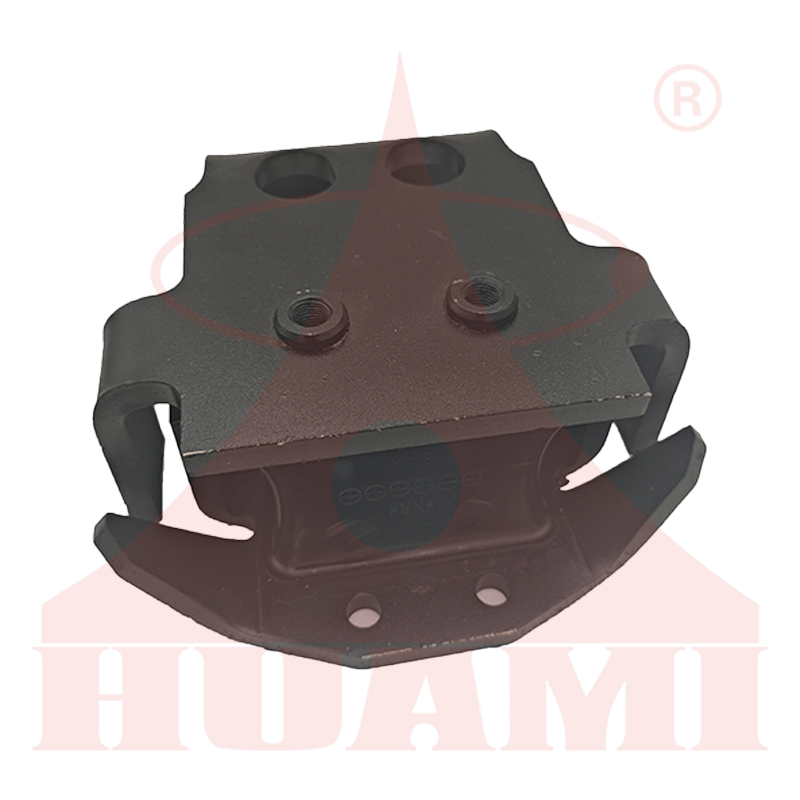
3. Structure & Materials
3.1 Basic Structure: Metal Bracket + Rubber Damping Body
A typical Rubber-Metal Engine Mount consists of:
Metal bracket/skeleton: provides stiffness, mounting geometry, and load transfer path
Rubber damping body: provides elasticity and damping, and is integrated with metal through vulcanized bonding
3.2 Rubber Material Options
Hebei Huami can select or compound materials based on operating conditions and customer requirements:
NR (Natural Rubber): excellent rebound and dynamic performance, ideal for high isolation needs
NBR (Nitrile Rubber): strong oil resistance, suitable for oil-exposure environments
EPDM: better heat-aging and ozone resistance, suitable for harsher thermal/environmental aging
Final selection depends on temperature, oil media, dynamic load frequency, and target lifetime.
3.3 Shore A Hardness Range & Its Effect on Vibration Isolation
Typical hardness ranges for engine mounts can cover Shore A 45–80 .
Lower hardness: better isolation, but may reduce impact resistance and shape stability
Higher hardness: stronger load and shock resistance, but may reduce isolation
Huami optimizes compound and structure together to balance isolation and durability for heavy-duty operation.
3.4 Heat, Oil & Fatigue Performance
Engine bay environments involve heat sources, oil mist, water/mud, and salt exposure. A robust engine mount requires:
Heat-aging resistance to reduce hardening and cracking
Controlled oil swell to prevent dimension changes and bonding failure
Dynamic fatigue life to resist crack initiation and propagation under cyclic loads
3.5 Metal Corrosion Protection
To enhance anti-corrosion capability, options include coating, zinc plating/electroplating, phosphating, etc., reducing rust-related strength loss and assembly issues.
3.6 How Vulcanized Bonding Affects Service Life
Rubber-to-metal bonding strength directly determines the risk of “debonding failure.” A mature surface treatment + bonding system + vulcanization curve control significantly improves long-term durability and batch consistency—core for engineering-grade engine mounts.
4. Common Failure Modes & Replacement Signs
When the following symptoms appear, a HINO engine mount replacement inspection is often recommended:
4.1 Typical Failure Symptoms
Noticeable vibration at idle or while driving: stronger cab/steering wheel/pedal vibration
Stronger shock during start, acceleration, or shifting: harsher “thump” or driveline shock
Engine sag or misalignment: abnormal powertrain posture and clearance changes
Rubber aging, cracking, debonding: visible cracks, separation, or delamination
Abnormal noise: more obvious on rough roads or during hard accel/decel
4.2 Quick Checks to Decide Whether Replacement Is Needed
Visual inspection: cracks, bulges, debonding, severe corrosion
Symptom reproduction: idle in gear / launch / shift shock behavior
Movement observation: under safe conditions, check whether torque reaction displacement is excessive
Compare with a healthy vehicle of the same model when possible, or confirm with professional technicians to avoid misdiagnosis.
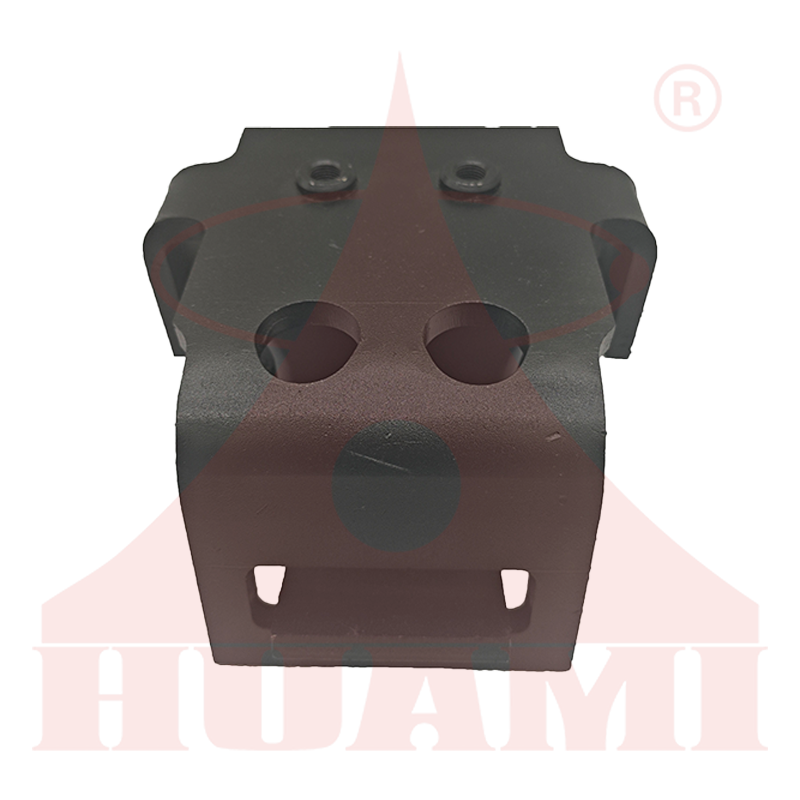
5. Installation & Maintenance Guide
5.1 Safe Support & Precautions Before Replacement
Park safely, apply parking brake, use wheel chocks if needed
Use appropriate jacks/stands to safely support the powertrain
Avoid direct lifting on weak points such as the oil pan; use proper pads to distribute load
5.2 Key Removal & Installation Steps
Mark original mount position and any shims/limit structures
Gradually unload mount stress (support first, then loosen fasteners)
Remove the old part and inspect related items (bolts, brackets, interference, hoses)
Install the new mount and pre-tighten step-by-step in a balanced sequence
Release support load and recheck alignment/clearances
5.3 Post-Installation Checks & Road Test
Idle check: vibration improvement and abnormal noise
Road test: launch/accel/shift shock reduction
Re-torque check: follow specifications if a secondary check is required
5.4 Maintenance Tips to Extend Service Life
Control oil leaks: oil exposure can accelerate compound deterioration
Avoid chronic overloading and aggressive driving: shock peaks reduce fatigue life
Periodic inspection: fleets can implement preventive schedules to reduce downtime
6. Hebei Huami New Material Manufacturing Strengths
As a global truck engine mount supplier, Hebei Huami New Material Technology Co., Ltd. offers verified capabilities for heavy-duty rubber-metal components:
30 years of experience in rubber products and rubber-metal components
Serving high-reliability sectors: commercial vehicles, construction machinery, high-speed rail, aerospace, etc.
Systems & certifications: IATF16949, TÜV certification, AEO Advanced Certification
In-house rubber compound R&D: high damping, durable, reinforced mounts for heavy-duty duty cycles
Precision tooling and automated production: stable mass consistency for long-term supply
Full-process quality inspection: hardness / tensile / tear / compression set / bonding strength
Validation capability: oil resistance, heat aging, salt spray, high/low temperature, fatigue life tests
OEM/ODM and small-batch customization support: drawing/sample development, stable lead time
If you are sourcing a stable supply for HINO truck engine mount (12371-E0150) and need customization or development support, share photos, mounting information, drawings, or a sample for fast technical evaluation and quotation.
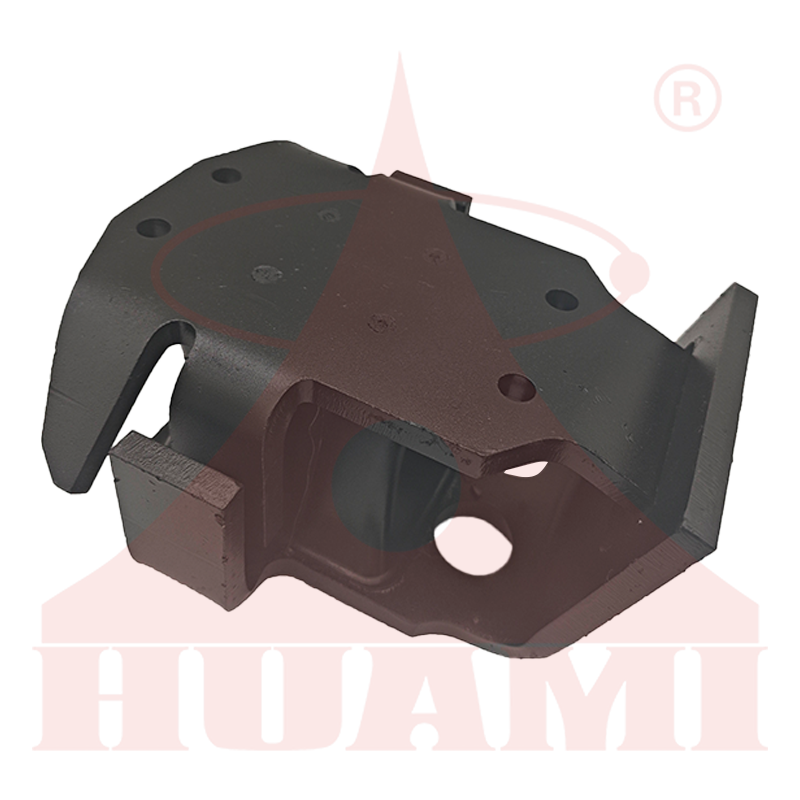
7. Specification & Parameter Table
| Item | Specification / Notes |
| OEM Number | 12371-E0150 |
| Product Name | HINO Truck Engine Mount / Rubber-Metal Engine Mount |
| Rubber Material | NR / NBR / EPDM (customizable) |
| Hardness (Shore A) | 45–80 (customizable; tuned for isolation & load target) |
| Metal Surface Treatment | Coating / Plating (optional) |
| Vehicle Fitment | HINO Trucks (year & position to be confirmed by OE catalog) |
| Mounting Position | Front / Rear / Left / Right (depends on vehicle layout) |
8. FAQ
Q1: What is OEM 12371-E0150 used for?
A: 12371-E0150 is used as a HINO truck engine mount to support the powertrain, control movement, and reduce vibration transfer to the frame/cab.
Q2: How do I confirm fitment for my HINO truck?
A: Confirm by VIN/OE catalog, installation position, and comparing dimensions & hole spacing. Sharing photos or an old sample helps ensure accuracy.
Q3: What are common signs I need a HINO engine mount replacement?
A: Increased vibration at idle, stronger shock during start/shift, engine sag/misalignment, visible rubber cracks, or rubber-to-metal separation.
Q4: What rubber materials are available?
A: Common options include NR, NBR, EPDM. Selection depends on temperature, oil exposure, and durability targets.
Q5: What Shore A hardness should I choose?
A: Hardness typically ranges 45–80 Shore A. Softer improves isolation; harder improves load & impact resistance. We tune hardness with structure and compound.
Q6: Do you support OEM/ODM and small batches?
A: Yes. We support OEM/ODM, prototype sampling, and low MOQ options depending on the project scope.
Q7: How is bonding strength ensured?
A: Through controlled metal surface treatment + adhesive system + vulcanization process, plus bonding strength inspection and durability validation.
Q8: What tests do you perform for engine mounts?
A: Hardness, tensile/tear, compression set, bonding strength, plus optional oil resistance, heat aging, salt spray, low/high temp, fatigue life tests.


