1. The Role of Heavy-Duty Engine Mounts in the Powertrain
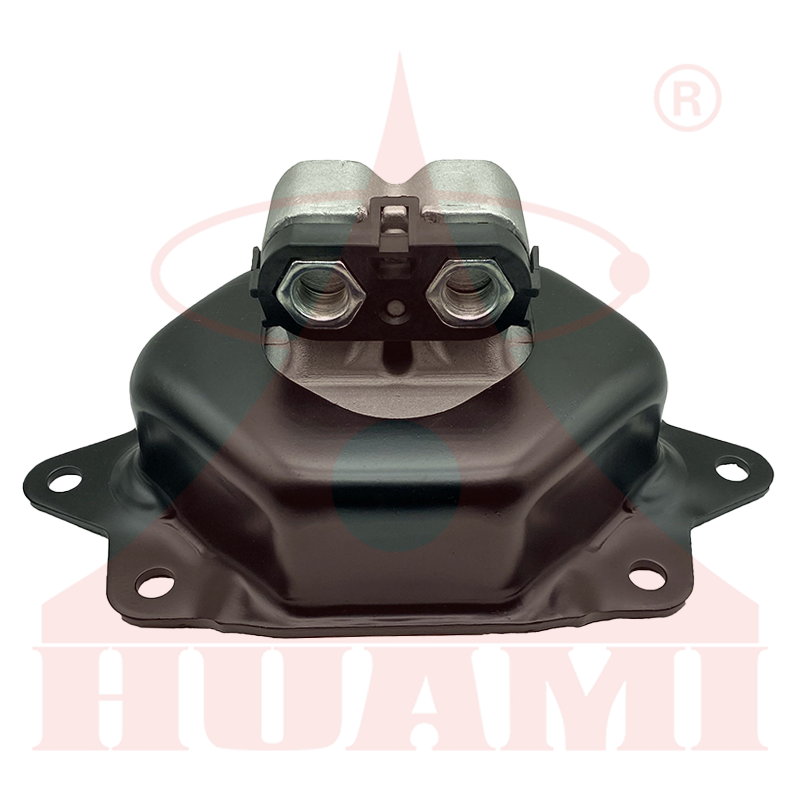
An engine mount is a critical component that connects the powertrain (engine + transmission) to the chassis/subframe. For heavy-duty trucks such as Volvo FH / FM / FMX, operating under high torque, heavy loads, and long duty cycles, the engine mount is not just a comfort part—it is a structural and durability component that affects reliability and total cost of ownership.
1.1 Supporting Engine Weight and Securing the Powertrain
The engine, transmission, and accessories form a high-mass assembly with large inertia. A rubber-metal engine mount works through a combination of metal structure and rubber damping element to:
Carry static load and keep correct engine height and alignment
Control dynamic movement during acceleration, braking, climbing, and shifting
Maintain driveline alignment, reducing misload on prop shafts, U-joints, and couplings
1.2 Absorbing Vibration and Road Shocks
Heavy-duty engines generate multi-frequency vibration at idle and under low-speed high-torque conditions. Road impacts (potholes, rough roads, fully-loaded bouncing) further increase transient loads. A high-quality rubber-metal mount dissipates energy through rubber viscoelasticity:
Provides support against low-frequency, large displacement events (start-up/shifting shock)
Isolates mid-to-high frequency vibration (engine pulsation, structural resonance)
Buffers instant shocks from harsh road conditions and sudden torque changes
1.3 Reducing NVH (Noise, Vibration, Harshness)
NVH is not only about comfort—it is a top aftermarket complaint driver:
Worn mounts cause cab shake, steering wheel vibration, and more noise
Excess powertrain movement increases stress fatigue on exhaust, boost pipes, coolant hoses
Long-term vibration accelerates wear on rubber parts, fasteners, brackets, and weld points
1.4 Importance Under Heavy Load and Long Operation
Fleet operators focus on lifecycle cost. Incorrect selection or inconsistent quality can lead to:
Frequent replacements and downtime losses
Secondary damage to driveline, exhaust system, and accessories
Increased claims and workshop rework rates
2. OEM 21416526 / 7421416526 Product Overview
2.1 OEM Number and Common Writing Variations
2.2 Replacement and Cross-Reference Relationship
In the aftermarket, 7421416526 engine mount replacement is commonly treated as a cross reference to 21416526. For accurate purchasing:
Confirm dimensions, mounting geometry, structural type, and hardness grade
The same physical part may be assigned different numbers across brand systems
2.3 Why One Mount Can Apply to Volvo, Renault Trucks, and PSA Platforms
Cross-brand compatibility typically comes from supply-chain realities:
Group/platform sharing across brands and powertrain architectures
Modular supplier design, covering multiple vehicles with tuning via compound/hardness
Aftermarket cross-OEM mapping, grouping interchangeable parts under reference chains
If you see Volvo FH FM FMX engine mount, Renault Trucks engine mount, and PSA/DS/Citroën/Peugeot compatibility together, the best practice is always: drawing/sample matching + key dimensions + hardness confirmation.
2.4 Typical Mounting Positions (Depending on Vehicle Layout)
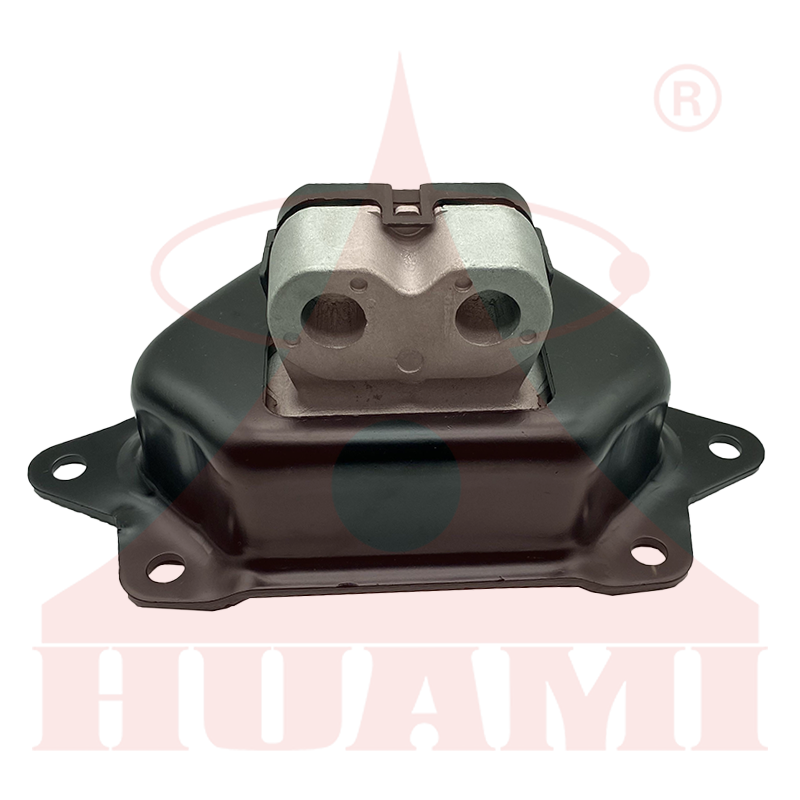
This type of rubber-metal engine mount is often installed as:
Left/right engine side mount
Front or rear powertrain support
Working together with transmission mount(s) as the complete “powertrain mounting system”
3. Structure and Materials
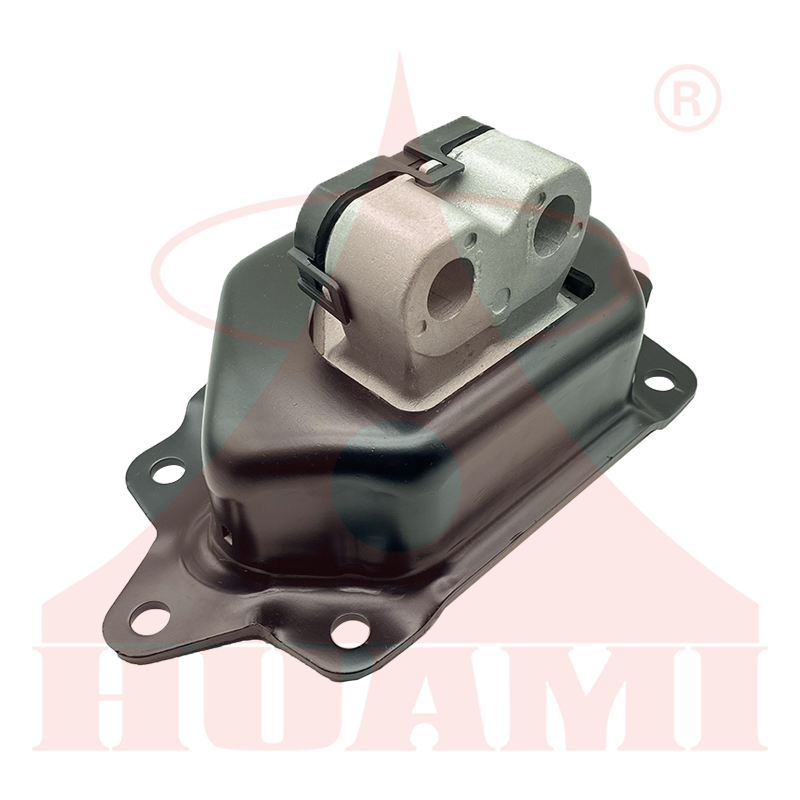
3.1 Construction: Metal Bracket + Rubber Damping Element
A typical rubber-metal engine mount consists of:
Metal components (housing/bracket/plates) for strength and mounting reference
Rubber damping core for isolation, cushioning, rebound, and durability
Good design balances load stiffness and isolation: too stiff increases vibration transfer; too soft increases powertrain displacement and harshness.
3.2 Rubber Materials Available
Depending on duty conditions, common rubber systems include:
NR (Natural Rubber): excellent dynamic properties and vibration isolation
NBR (Nitrile Rubber): superior oil resistance for oily environments
EPDM: strong heat/ozone/weather resistance for high-temperature aging conditions
In production, blended compounds are also used to balance isolation and resistance needs.
3.3 Shore A Hardness and Its Impact
Typical hardness selection range (example): 55–75 Shore A (customizable).
Lower hardness: better isolation, but may allow larger displacement under torque
Higher hardness: stronger support, but more NVH transmission
Fleets usually prioritize stable load control + fatigue durability, while urban operations may favor comfort. Huami can tune both compound and structure to achieve the target balance.
3.4 Heat, Oil, and Fatigue Resistance
Engine-bay heat, oil mist, salt spray, moisture, and long cyclic loads are major aging factors. A reliable compound should maintain:
Stable hardness after heat aging
Controlled swelling and stable bonding after oil exposure
Resistance to crack growth and permanent deformation under cyclic loading
3.5 Corrosion Protection for Metal Parts
Heavy-duty environments require corrosion control that supports both appearance and bonding durability:
Surface pretreatment (e.g., blasting/phosphating) for adhesion
Coating/e-coating/plating solutions per customer specification
Corrosion affects not only looks but also long-term bonding interface reliability.
3.6 Vulcanized Bonding Process: A Decisive Factor for Service Life
Many mount failures originate from debonding rather than rubber bulk tearing. Service life depends heavily on:
Consistent metal surface preparation
Proper adhesive system selection
Stable vulcanization window control (temperature/pressure/time)
Hebei Huami New Material ensures durability through mature rubber-to-metal bonding and process control for stable batch consistency.
4. Common Failure Modes and Replacement Symptoms
If you observe the following symptoms, inspect the engine mount first (especially for Volvo truck engine mount 21416526 positions):
Excessive vibration at idle or while driving (cab/seat/pedal vibration)
Harsher start-up, acceleration, or shifting impacts (amplified powertrain movement)
Engine sag, offset, or abnormal noise (metal contact or reduced rebound)
Rubber aging, cracking, or debonding (visible cracks, separation, powdering)
Related issues such as exhaust stress or hose/pipe rubbing due to excessive movement
Quick Diagnosis Tips
Visual inspection: cracks, debonding, corrosion
Lever test (with safe support): check for abnormal movement
Road test comparison: symptoms concentrated on a certain side or RPM band
Workshops should check mounts together with transmission mount and related bushings to avoid replacing one part while the root cause remains.
5. Installation and Maintenance Guide
5.1 Safe Support and Precautions Before Replacement
Use reliable lifting equipment and a proper engine/transmission support tool
Never support directly under the oil pan without correct protection
Mark original position and any shims/limit structures to avoid misalignment
5.2 Key Removal and Installation Steps
Relieve stress from related pipes/brackets if needed
Unload mount gradually; avoid removing bolts under load
Clean mating surfaces; inspect threads and seats
Install and tighten in stages to ensure natural stress-free alignment
5.3 Post-Installation Checks and Road Test
Confirm engine alignment and no interference/pulling
Test at low-speed start/accel/decel and shifting conditions
Re-check fasteners per workshop procedure
5.4 Practical Tips to Extend Service Life
Avoid repeated aggressive low-RPM high-torque launches
Fix oil leaks and overheating early (oil exposure accelerates aging for some compounds)
Inspect surrounding mounts to prevent overload and early failure of the new mount
6. Hebei Huami New Material Technology Co., Ltd. Manufacturing Advantages
As an original manufacturer of rubber-metal NVH components, Hebei Huami New Material provides stable mass production and validation capability for both heavy-duty trucks and passenger-car aftermarket:
30 years of rubber product & rubber-metal part manufacturing experience
Broad industries served: heavy-duty trucks, commercial vehicles, construction machinery, high-speed rail, aerospace
Quality systems & trade strength: IATF16949, TÜV certification, AEO Advanced Certification for reliable export delivery
In-house compound R&D: high damping, durable, heavy-duty reinforced mount solutions available
Precision molds & automated production: high batch consistency for distributors and fleet procurement
Full-process quality inspection: hardness / tensile / tear / compression set / bonding strength
Reliability validation: oil resistance, heat aging, salt spray, low/high temperature, fatigue life tests (per customer standards)
Flexible cooperation: OEM/ODM, small-batch customization, stable lead time
Choosing a reliable rubber metal engine mount supplier reduces warranty risk, improves batch consistency, and ensures long-term supply stability.
7. Specification Table (Structured)
Note: The table below is for aftermarket identification and selection. Final fitment should be confirmed by drawing/sample and OEM data.
| Item | Specification / Notes |
| Product Name | Volvo Truck Engine Mount (Rubber-Metal Engine Mount) |
| OEM | 21416526 |
| Replacement / Equivalent OEM | 7421416526 |
| Rubber Material | NR / NBR / EPDM (compound customizable) |
| Hardness (Shore A) | 55–75 (customizable: comfort / heavy-duty / oil-resistant) |
| Metal Parts | High-strength steel; corrosion protection per specification |
| Typical Mounting Position | Engine side mount / front-rear support (depends on FH/FM/FMX layout) |
| Applications (Trucks) | Volvo FH / FM / FMX; RENAULT TRUCKS C / T / K |
| Applications (Passenger Cars) | DS 7 Crossback; DS 3 Convertible; CITROËN DS3 / C4 / C5; PEUGEOT 308 / 508 / 3008 / 5008 |
8. FAQ
Q1: Is 7421416526 a replacement for Volvo engine mount 21416526?
A: Yes, 7421416526 is commonly listed as a cross reference/replacement for 21416526 in aftermarket systems. Final confirmation should be made by checking dimensions, mounting points, and hardness.
Q2: Which Volvo trucks fit engine mount 21416526?
A: Primary applications include Volvo FH, Volvo FM, and Volvo FMX. Fitment can vary by model year and mounting position—confirm with VIN or sample.
Q3: Does it fit Renault Trucks C/T/K?
A: It is commonly listed as compatible with Renault Trucks C, T, and K in cross-reference catalogs. Confirm mounting geometry and spec for your application.
Q4: Why is it also listed for DS/Citroën/Peugeot passenger cars?
A: Cross-OEM catalogs may group parts by structural equivalence. Always verify dimensions, mounting design, limit stops, and hardness before using it on passenger cars.
Q5: What are common symptoms of a failing engine mount?
A: Excessive idle vibration, harsher shifting/acceleration impacts, abnormal noises, engine sag/offset, and visible cracking or debonding.
Q6: What Shore A hardness is recommended?
A: Typical specification is 55–75 Shore A, depending on vehicle and duty cycle. Heavy-duty use favors stronger load control; comfort favors isolation. Custom tuning is available.
Q7: What rubber materials are available?
A: Common options include NR for dynamic damping, NBR for oil resistance, and EPDM for heat/ozone resistance. Compounds can be tailored for durability.
Q8: How do you ensure bonding durability?
A: Bonding life depends on metal pretreatment, adhesive system, and stable vulcanization control. Bonding strength testing helps prevent debonding failure.
Q9: Do you support OEM/ODM and low MOQ?
A: Yes. We support OEM/ODM based on drawings or samples, with flexible trial orders and stable mass production lead time.


