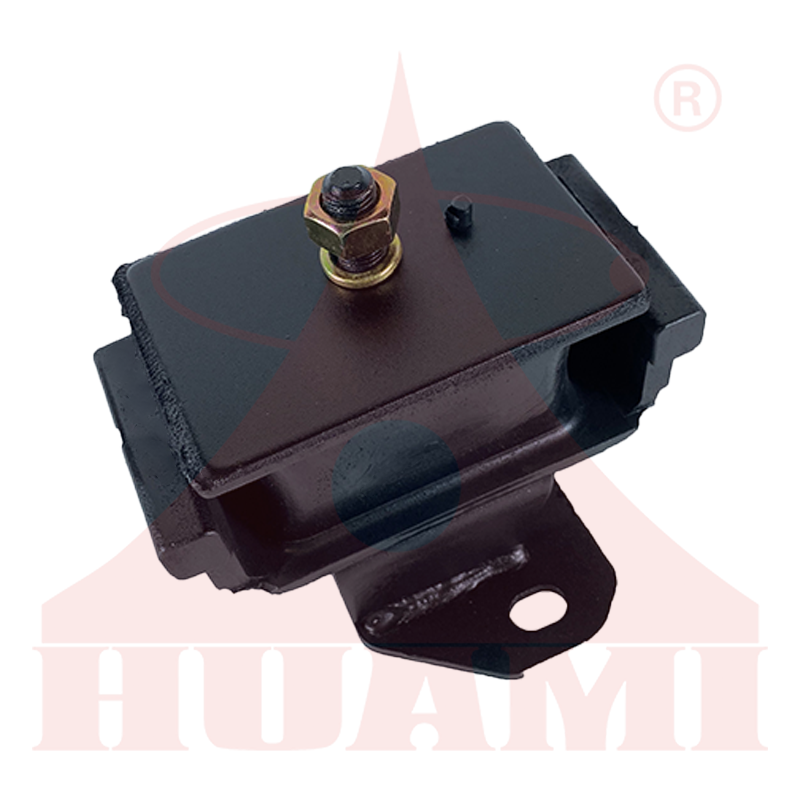
Hebei Huami New Material Technology Co., Ltd. supplies rubber-metal engine mounts (Rubber-Metal Engine Mounts) for global commercial-vehicle aftermarket and OEM/ODM customers. This article targets high-value search intent around Isuzu ELF engine mount, focusing on OEM 8982036340 and covering common use cases for Isuzu ELF 400 / ELF 500 / ELF 600. It explains function, structure/materials, failure diagnosis, installation/maintenance, and sourcing tips—helping distributors, repair shops, and fleet buyers make faster decisions for truck engine mount replacement.
1. What an Isuzu ELF Engine Mount Does (Why It Matters)
An engine mount is not just a “bracket.” It is a critical NVH component—Noise, Vibration, and Harshness—and a key part of powertrain reliability. For city distribution and light/medium-duty trucks such as Isuzu ELF 400/500/600, with frequent stop-and-go operation and variable loads, engine mount performance directly affects comfort, driveline life, and maintenance cost.
1.1 Supports engine weight and stabilizes the powertrain
The engine and accessories (transmission, compressor, alternator, etc.) create continuous loads. The mount—through a metal structure plus a rubber damping body—keeps the engine at the designed position and prevents excessive movement that can cause noise, interference, or hose/wiring strain.
1.2 Absorbs vibration and shock from engine operation and road inputs
Idle, acceleration, shifting, and engine braking create cyclic vibration; potholes and heavy-load start-ups add impact. A high-quality rubber damping element isolates and dissipates energy, reducing vibration transfer to the frame and cab.
1.3 Improves NVH for a better driving experience
When damping and stiffness are properly tuned, cab shake, steering-wheel buzz, and resonance noise are significantly reduced. For aftermarket service, engine mounts are also a common solution for “vibration/noise complaints.”
1.4 Especially important for urban delivery and light/medium-duty duty cycles
ELF trucks often run with high idle time, frequent launches, and low-speed high-torque operation. The mount experiences repeated shear/compression cycles. If fatigue resistance or rubber-to-metal bonding is weak, early cracking or separation may occur and lead to secondary damage (exhaust cracks, hose failure, driveline angle issues, etc.).
2. Product Overview: OEM 8982036340
2.1 OE number and common formats
2.2 Why it fits Isuzu ELF 400 / 500 / 600
The ELF 400/500/600 platform family shares similar powertrain layout and frame mounting points. A mount matching 8982036340 typically meets:
Correct mounting geometry (hole pattern/center distance)
Correct load direction (combined compression + shear)
Suitable stiffness and damping for light/medium-duty NVH requirements
Sourcing tip: engine mounts require both geometry AND stiffness matching—similar appearance does not guarantee interchangeability.
2.3 Typical mounting locations (depending on vehicle design)
Engine mounts may be located at:
Left/right side mounts (side supports)
Front/rear mounts (common on longitudinal layouts)
Used together with a transmission mount (multi-point mounting system)
Different model years/engines/cab-frame variants can differ. Confirm with OE number + vehicle details + photos/drawing.
3. Structure & Materials (What Determines NVH and Service Life)
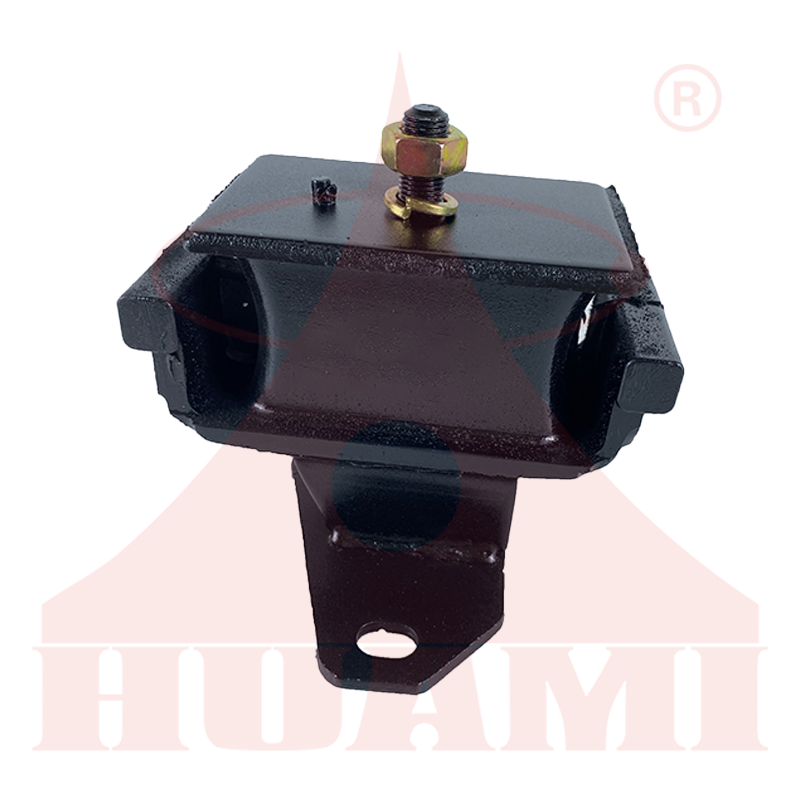
3.1 Basic structure: metal bracket + rubber damping body
A typical rubber-metal engine mount includes:
Metal bracket/housing (strength and positioning)
Rubber damping element (isolation, energy dissipation, travel limiting)
Inner sleeve/connector (bolt interface and load transfer)
Key design points: load direction, effective rubber section, limit stops, and bonding interface quality.
3.2 Rubber material options (NR / NBR / EPDM)
Hebei Huami can select or customize compounds based on duty cycle:
NR (Natural Rubber): excellent elasticity and dynamic performance for vibration isolation and fatigue demands
NBR (Nitrile Rubber): better oil resistance for oily environments or leakage risk
EPDM: strong weather/ozone resistance for harsh environments and wide temperature swings
(Final selection is based on requirements and validation.)
3.3 Shore A hardness range and its impact
Hardness can typically be tuned within Shore A 50–80 (final spec depends on vehicle and loads).
Lower hardness: better isolation, but may reduce support/position control
Higher hardness: stronger support, but may transmit more vibration
A good Isuzu ELF 400 500 600 engine mount balances idle isolation and loaded stability.
3.4 Heat, oil, and fatigue resistance
Engine bay conditions combine heat, oil mist, salt spray, water/mud, and cyclic fatigue. A durable mount should provide:
Thermal aging stability (property retention after heat exposure)
Controlled volume change in oil media (anti-softening/swelling)
Dynamic fatigue endurance (no cracking under repeated shear)
Low compression set (no permanent sagging)
3.5 Corrosion protection for metal parts (coating/plating)
Coating or plating helps resist rust in salt/humidity environments and protects the bonding boundary and assembly strength.
3.6 Rubber-to-metal bonding and vulcanization
Many failures happen at the rubber-metal interface. Stable bonding systems and process control improve:
4. Common Failure Modes & Replacement Signs
4.1 Strong vibration at idle or during launch
Cab/steering vibration becomes worse and stable in frequency—often caused by rubber fatigue, softening, or cracking.
4.2 More shifting shock and “clunk” feeling
During launch, shifting, or aggressive acceleration, impacts become more obvious. A collapsed mount allows excessive powertrain movement and can cause limit-stop hits or driveline angle issues.
4.3 Engine sagging or misalignment
Visual inspection may show engine sag or left-right imbalance. Reduced clearance around fan shrouds/hoses is also a warning sign.
4.4 Rubber aging, cracking, or separation
Surface cracking/powdering: aging
Edge tearing: fatigue accumulation
Rubber-metal separation: bonding failure (replace immediately)
4.5 Quick checks for repair shops
Visual check: cracks, separation, sagging, corrosion
Controlled pry test: (with proper support) check abnormal movement
Road test: reproduce symptoms under launch/shift/engine braking
Safety first: always secure the powertrain before testing.
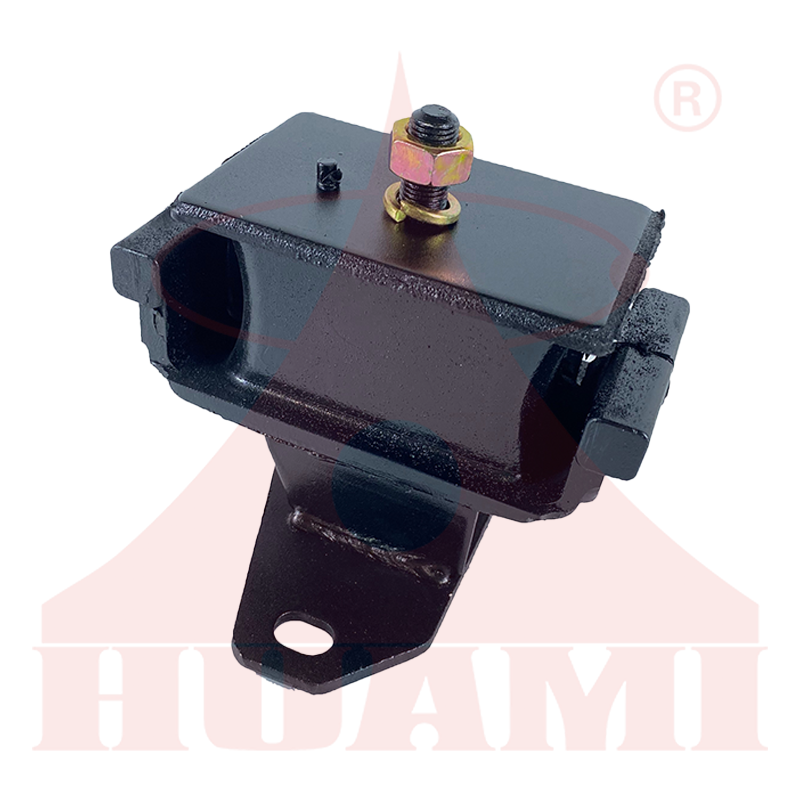
5. Installation & Maintenance Guide
5.1 Safe support and precautions before replacement
Use lifting equipment and stands to secure engine and frame
Disconnect power to prevent accidental start
Avoid pulling hoses, lines, and wiring harnesses
5.2 Key steps (general workflow)
Record orientation and position (take photos)
Gradually unload the mount (slowly support the engine)
Remove old mount and clean mounting faces
Trial-fit the new mount, verify direction and holes
Pre-tighten bolts, then final tighten to spec
Remove supports and re-check clearances/interference
5.3 Post-install checks and road test
Static check: engine position, clearances, re-tightening
Dynamic check: idle vibration, shift shock, abnormal noise
Follow-up: re-check fasteners after 50–100 km (as applicable)
5.4 Tips to extend service life
Fix oil leaks early to prevent rubber exposure
Avoid chronic overloading and harsh driving
Inspect mounts periodically for cracks/sag to prevent secondary damage
6. Why Hebei Huami New Material (Key Manufacturing Strengths)
As an origin manufacturer of commercial-vehicle rubber-metal components, Hebei Huami focuses on consistent quality and customization capability for global engine-mount programs, including Isuzu ELF engine mount applications.
6.1 30 years of manufacturing experience, multi-industry validation
30 years in rubber products and rubber-to-metal parts, serving automotive, commercial vehicles, construction machinery, high-speed rail, and aerospace—industries that demand high reliability and process control.
6.2 Recognized systems and trade compliance
IATF 16949 quality system
TÜV certification support
AEO Advanced Certification for stronger customs compliance and delivery stability
6.3 In-house compound R&D for high damping and durability
We develop and optimize rubber compounds to meet targets for temperature, oil resistance, fatigue life, and NVH—supporting more durable solutions for light/medium-duty duty cycles.
6.4 Precision tooling and automated production for batch consistency
Precision molds and process control help maintain stable dimensions, hardness windows, and bond quality—reducing aftermarket “batch variation” risk.
6.5 Full-process quality inspection + validation testing
Typical testing includes:
Hardness / tensile / tear / compression set / bond strength
Optional project-based validation:
Oil resistance, heat aging, salt spray, thermal cycling, fatigue life
6.6 OEM/ODM support, low MOQ trial orders, stable lead times
Drawing/sample-based development and rapid prototyping
Low MOQ trial orders and long-term supply
Stable production scheduling for distributors and fleet maintenance cycles
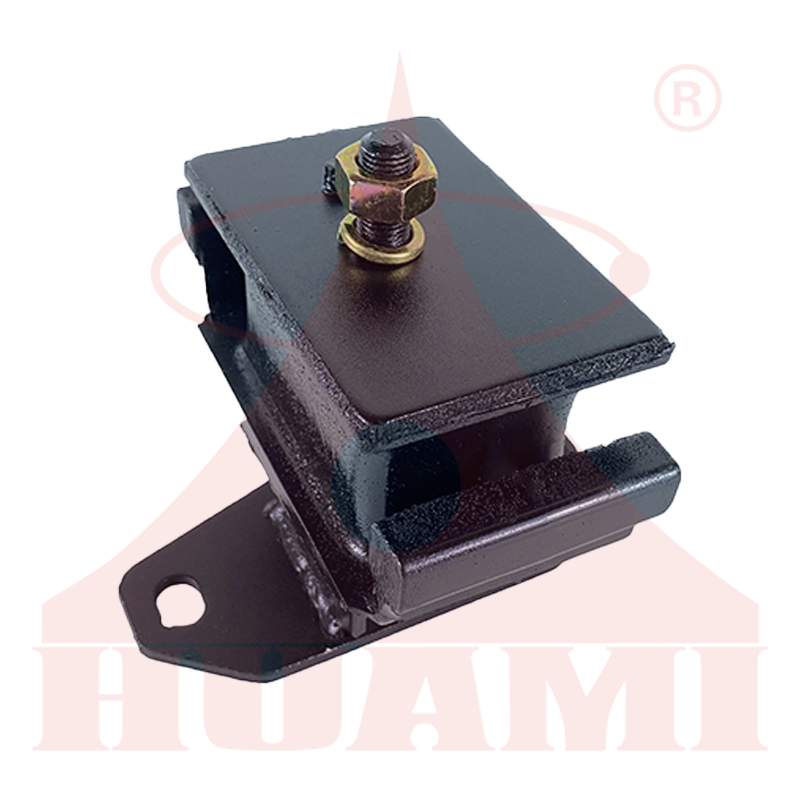
7. Parameters & Specification Table (Template for RFQ)
Note: The following table is an RFQ/record template. Final dimensions/torque/packing can be confirmed by drawing or sample.
| Item | Specification |
| Product Name | Isuzu ELF Engine Mount / Rubber-Metal Engine Mount |
| OEM / MPN | 8982036340 |
| Applicable Models | Isuzu ELF 400 / ELF 500 / ELF 600 |
| Rubber Material | NR / NBR / EPDM (customizable) |
| Metal / Surface Treatment | Steel; coating/plating (as required) |
| Bonding Process | Rubber-to-metal bonding vulcanization |
| Mounting Position | Left/Right/Front/Rear (depends on vehicle design) |
8.FAQ (6–10) with Answers
Q1: Which vehicles does OEM 8982036340 fit?
A: It is commonly used as an Isuzu ELF engine mount for ELF 400 / ELF 500 / ELF 600. Confirm by model year, engine, and mounting geometry.
Q2: How do I confirm I need 8982036340?
A: Use triple verification: OE number + vehicle details + photos/dimensions/drawing. Similar-looking mounts may not match stiffness or mounting points.
Q3: What are the most obvious failure symptoms?
A: Excessive idle vibration, stronger launch/shift shock, abnormal noise, engine sag/misalignment, and visible rubber cracking or separation.
Q4: Which rubber is better—NR, NBR, or EPDM?
A: NR offers excellent dynamic isolation; NBR improves oil resistance; EPDM excels in weather/ozone resistance. Selection depends on temperature, oil exposure, and durability targets.
Q5: Does Shore A hardness matter?
A: Yes. Lower hardness improves isolation but may reduce support; higher hardness increases support but may transmit more vibration. Proper tuning is critical.
Q6: What should I watch during installation?
A: Safely support the powertrain, prevent pulling hoses/wiring, tighten in sequence, and follow the service manual torque specification. Road test and re-check afterward.
Q7: What affects engine mount service life most?
A: Load, temperature, oil contamination, road shock, driving habits, rubber compound quality, and rubber-to-metal bonding stability.
Q8: Do you support OEM/ODM and low MOQ?
A: Yes. We support OEM/ODM, low MOQ trial orders, and drawing/sample-based development with stable lead times.


