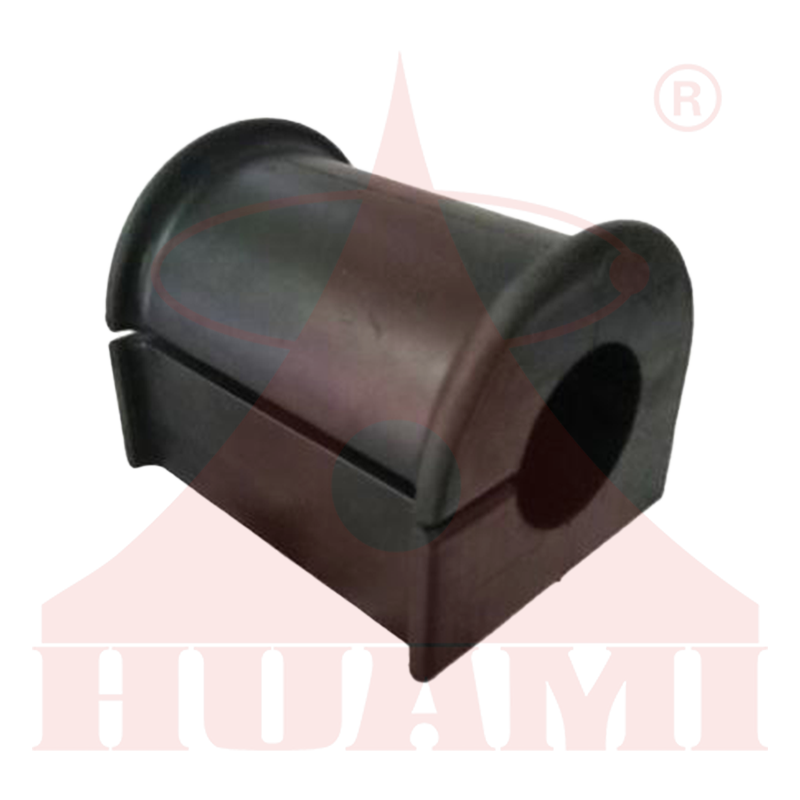
1. The Role of Scania Suspension Bushings in the Chassis System
In commercial vehicle suspension systems, the Scania suspension bushing is typically a rubber-metal composite component that connects key joints such as control arms, suspension links, the axle, and the frame. Although it looks small, it directly affects the vehicle’s overall performance in comfort, handling, durability, and safety, and it becomes even more critical under heavy-load and long-haul operating conditions.
1) Absorb road impacts and vibration to improve comfort
Road shocks are transmitted from the axle and suspension structure to the chassis and cab. The rubber elastomer provides high damping and controlled deformation, reducing high-frequency vibration and buffering low-frequency impacts. This helps reduce steering wheel shake, cab resonance, and structural fatigue accumulation. For fleets, this is not only about comfort—it's also closely related to driver fatigue, NVH performance, and component service life.
2) Stabilize axle/suspension geometry to improve handling and safety
Suspension geometry (camber, toe, caster, etc.) changes dynamically under load. By providing directional stiffness control, a bushing allows necessary movement while preventing excessive displacement, helping the axle and suspension links maintain a predictable trajectory. The results include:
More stable straight-line driving at high speeds and reduced pulling
More linear response in cornering and lane changes
More predictable body behavior during braking and acceleration
This is especially important for heavy-duty trucks, because load variation amplifies suspension forces and the risk of geometry drift.
3) Reduce metal-to-metal contact to minimize wear and noise
At control arm/link and bracket joints, the lack of elastic isolation leads to micro-motion between metal parts, causing wear, increased clearance, noise, and even ovalization of mounting holes. Rubber-metal bushings isolate and maintain preload fit, significantly reducing “dry friction knocking” and “clearance impact,” thereby lowering common chassis noise complaints.
4) Importance in heavy-load and long-haul conditions
Long-haul operations mean high mileage, long-term vibration inputs, thermal cycling, water/mud/sand exposure, oil contamination, and salt-spray environments. If material formulation and bonding processes are not robust, bushings can suffer fatigue cracking, debonding, eccentric deformation, and shear failure, which may lead to abnormal tire wear, poor directional stability, and secondary damage to suspension components. Therefore, selecting a proper rubber metal bushing for Scania truck is essentially reducing total cost of ownership (TCO).
2. OEM: 1919010 Product Overview
1) OE number and common writing formats
OEM: 1919010
Common search formats include: 1919010, OE 1919010, OEM1919010, Scania 1919010 bushing, etc. For cross-platform purchasing and inquiries, it is recommended to provide the “installation position/model information/dimensions or drawing” to avoid mismatch caused by regional variations in numbering.
2) Replacement and compatibility with 469081
Replacement OEM: 469081 (469081 replacement)
In the aftermarket, 469081 is often used as a replacement or cross-reference for 1919010. Actual compatibility depends on dimensional tolerances, sleeve structure, rubber hardness, and directional stiffness design. For distributors and workshops, the safest approach is to use the OEM number as the main reference and confirm installation position, dimensions, and structural drawings.
3) Why it fits Scania truck suspension systems
Scania chassis designs emphasize durability and stability. Suspension joint bushings typically carry:
Longitudinal impacts (braking/acceleration)
Lateral shear forces (cornering)
Torsion and combined loads (road input + structural movement)
Therefore, for bushings like 1919010, the key is the integrated match of controlled stiffness + high bonding strength + excellent anti-fatigue compound. For cross-border aftermarket demand, Hebei Huami New Material can provide neutral packaging solutions to support distributors’ labeling and multi-market distribution.
4) Common installation positions (model dependent)
1919010 / 469081 replacement may be used in the following positions (depending on model/year):
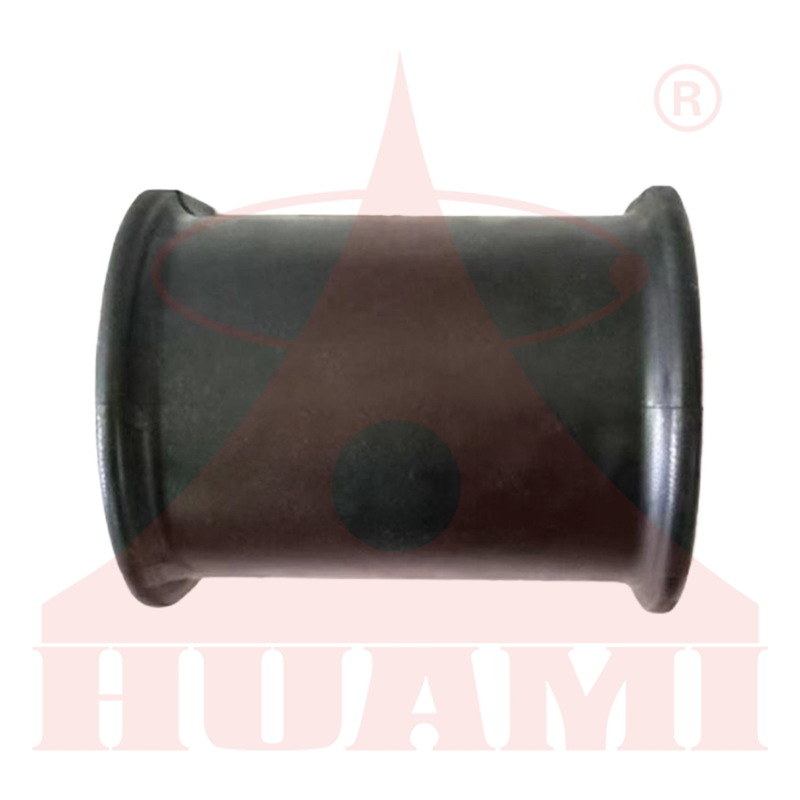
3. Structure and Material Details
1) Bushing structure: inner sleeve / outer sleeve / rubber elastomer
A typical rubber-metal suspension bushing consists of:
Inner sleeve: interfaces with the bolt/shaft, carries clamping force and transfers shear loads
Outer sleeve: press-fits into the control arm/bracket, provides positioning and structural support
Elastomer: provides damping, isolation, and directional stiffness tuning
The design goal is to achieve “soft where it should be soft and stiff where it should be stiff,” preventing excessive displacement and early fatigue.
2) Rubber materials used by Hebei Huami New Material (NR / NBR / EPDM, etc.)
To meet different operating conditions, elastomer systems are selected by environment and load:
NR (Natural Rubber): excellent resilience and fatigue resistance, suitable for high-frequency impacts and durability needs
NBR (Nitrile Rubber): better oil resistance, suitable for oily environments or higher oil-exposure risk positions
EPDM: strong weathering, ozone, and aging resistance, suitable for high temperature/ozone/outdoor exposure environments
Blends and formulation optimization are also available to balance damping, strength, and aging performance.
3) Shore A hardness range and its impact on damping and load capacity
Suspension bushing hardness is commonly specified in Shore A. Generally:
Lower hardness: better isolation, but may allow larger displacement under heavy load/strong lateral forces
Higher hardness: better positioning and load capacity, but may reduce isolation and NVH performance
Hebei Huami New Material can provide approximately 55–85 Shore A (customizable) compound and structure combinations to balance stability and comfort for fleets and workshops.
4) Fatigue, shear, oil resistance, and weathering performance
A high-quality Scania suspension bushing must remain stable under combined loads:
Fatigue resistance: resists crack growth under long-term cyclic loads
Shear resistance: resists shear damage from lateral cornering forces and longitudinal braking forces
Oil resistance: reduces swelling and performance decline caused by oil contamination
Weathering resistance: resists ozone/UV/rain/snow and temperature swings that cause cracking
5) Anti-corrosion treatment for metal parts (coating/plating)
Common anti-corrosion solutions for steel sleeves include:
Plating (e.g., zinc systems): improves corrosion resistance, suitable for salt-spray environments
Coating / painting: enhances surface protection and appearance consistency
Anti-corrosion treatment affects not only appearance, but also long-term press-fit stability and service/maintenance experience.
6) Why vulcanized bonding is decisive for service life
Debonding is one of the most common bushing failures. Service life is heavily influenced by the rubber-to-metal vulcanized bonding system (surface preparation, primer/topcoat, vulcanization window control, etc.). Insufficient bonding strength can lead to:
Relative slip between rubber and sleeves → noise, heat buildup, rapid failure
Eccentric deformation and accelerated cracking → geometry instability and abnormal tire wear
Therefore, choosing a Scania truck bushing supplier with mature bonding process control is often more important than price alone.
4. Common Failure Modes and Replacement Signals
When the bushing for 1919010 or 469081 replacement begins to degrade, typical symptoms include:
Chassis noise and increased vibration: clunking over bumps, low-speed steering noise, increased steering wheel shake
Loose suspension and body sway: reduced high-speed stability, more obvious in wind or lane changes
Vehicle pulling and abnormal tire wear: increased dynamic toe/camber change leading to uneven wear
Rubber aging, cracking, debonding, or eccentric deformation: visible cracks/tears, rubber separation from sleeves, shifted center position
How to quickly judge whether replacement is needed
Visual inspection: cracks, debonding, deformation, eccentricity, rubber powdering
Pry-bar check: observe abnormal free play at joints (must be done properly)
Road test verification: repeatable noise/vibration at specific speeds/conditions
Tire wear and alignment data: use alignment readings to identify geometry drift sources
5. Installation and Maintenance Guide
1) Notes for removal and press-fitting
Use proper press tools to avoid sleeve deformation caused by hammering
Avoid damaging the control arm bore and bracket mating surfaces when removing old bushings
Clean the bore and check for burrs/corrosion before press-fitting
2) Installation direction and centering calibration
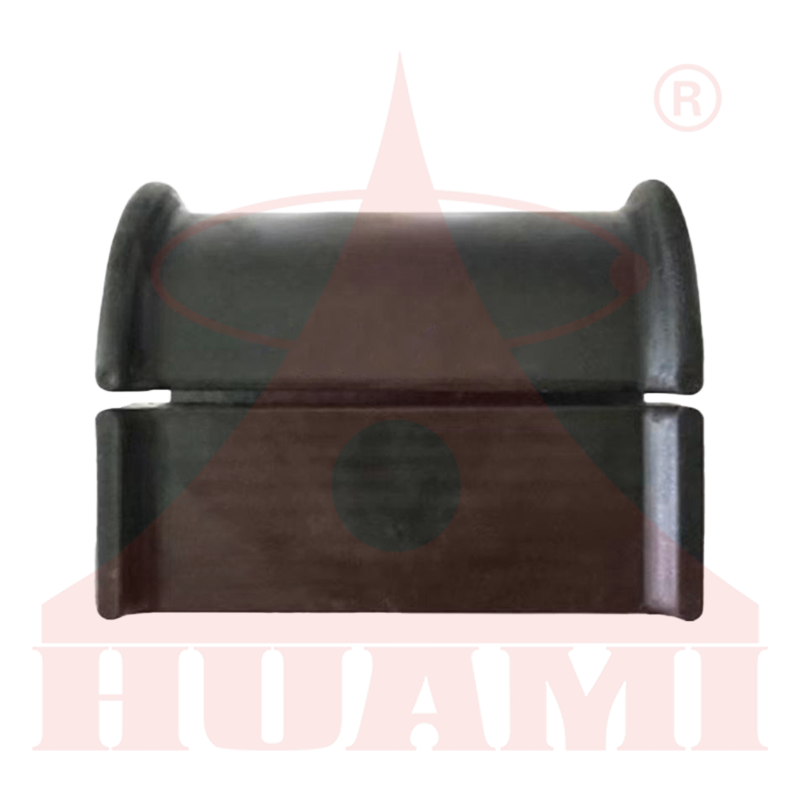
Some suspension bushings are directional (e.g., slots/eccentric designs). Install according to service manual requirements and ensure:
3) Inspection and re-torque recommendations
Recheck after a certain mileage post-installation (per fleet maintenance cycle)
Periodically inspect bushing appearance, noise, and tire wear trends
Follow chassis maintenance and alignment procedures to prevent minor issues from escalating
4) How to extend service life
Avoid long-term overloading and high-speed driving on harsh roads
Fix oil leaks promptly to reduce elastomer exposure
If pulling or abnormal wear occurs, perform alignment in time to prevent continuous abnormal loads on the bushing
6. Manufacturing Advantages of Hebei Huami New Material Technology Co., Ltd.
As a professional manufacturer of commercial vehicle rubber-metal components, Hebei Huami New Material Technology Co., Ltd. provides stable supply and technical support for global aftermarket customers:
30 years of rubber products and rubber-metal manufacturing experience: long-term expertise in heavy-duty durability and complex operating conditions
Broad commercial vehicle application coverage: compatible solutions for major brands such as Scania, Volvo, MAN, Mercedes-Benz (subject to actual fitment)
Quality systems and compliance: supported by IATF16949, TÜV, and AEO Advanced Certification for more stable export delivery and customs clearance
In-house rubber formulation R&D: heavy-duty durable, fatigue-resistant, oil/weather-resistant compounds tailored to regional road and operating conditions
Precision tooling and automated manufacturing: stable process control and high batch consistency
Full-process quality inspection: hardness / tensile / tear / compression set / bonding strength
Durability and environmental validation: fatigue life, salt spray, oil resistance, weathering, high/low temperature testing
OEM/ODM support and small-batch customization: sampling and iteration for project-based development
Neutral packaging: brand-free cartons/labels for distributor channel operations and multi-market distribution
Low MOQ: suitable for aftermarket trial orders, regional distributor ramp-up, and repair chain stocking strategies to reduce inventory pressure
If you are looking for a reliable Scania truck bushing supplier, or need a duty-upgrade solution for 1919010 / 469081 replacement, Hebei Huami New Material offers integrated support from compound to process.
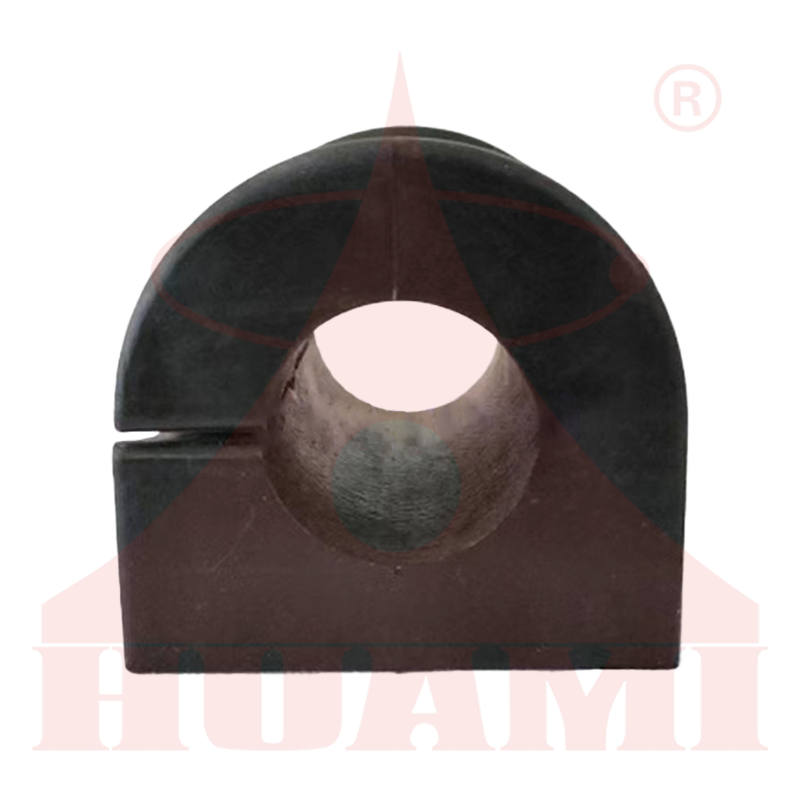
7. Parameter & Specification Table
| Item | Description |
| OEM No. | 1919010 |
| Replacement OEM No. | 469081 (469081 replacement) |
| Material & Shore A | NR / NBR / EPDM (or blends); Shore A: 55–85 (customizable) |
| Applicable Vehicles | Scania Trucks (model/year depends on application) |
| Installation Position | Control arm / suspension link / axle joint, etc. (model dependent) |
| Packaging & MOQ | Neutral packaging; Low MOQ; |
8. FAQ
1) What is OEM 1919010 used for on Scania trucks?
OEM 1919010 is commonly referenced as a Scania suspension bushing used in suspension joints such as control arms, links, or axle/bracket connections (fitment depends on model/year).
2) Is 469081 a direct replacement for 1919010?
469081 replacement is widely cross-referenced with 1919010, but exact compatibility should be confirmed by dimensions, structure, and installation position.
3) Do you offer neutral packaging for distributors?
Yes. We support neutral packaging, suitable for distributors who need brand-free cartons/labels for multi-market channel operations.
4) What is your MOQ policy for 1919010 bushings?
We support low MOQ for aftermarket test orders and initial stocking plans (final MOQ depends on specification and customization).
5) What materials are available for Scania suspension bushings?
Common elastomers include NR, NBR, EPDM (or blends). Selection depends on fatigue, oil exposure, and weather/ozone conditions.
6) What Shore A hardness is recommended?
Typical options range 55–85 Shore A. Lower hardness improves isolation; higher hardness improves positioning and load capacity. Final choice should match duty cycle and load.
7) What are the most common failure signs?
Clunking noise, increased vibration, loose handling, vehicle pulling, abnormal tire wear, visible cracking, debonding, or eccentric deformation.
8) Why is bonding quality critical for rubber-metal bushings?
Poor vulcanized bonding can cause slip between rubber and metal sleeves, leading to noise, heat build-up, rapid fatigue cracking, and premature failure.
9) Any key installation tips?
Use proper press tools, avoid sleeve deformation, align directionality (if any), and tighten bolts to OEM torque spec at the correct ride height.
10) What certifications and tests do you provide?
We can provide testing for hardness, tensile, tear, compression set, bonding strength, plus fatigue, salt spray, oil resistance, aging, and high/low temperature tests.


