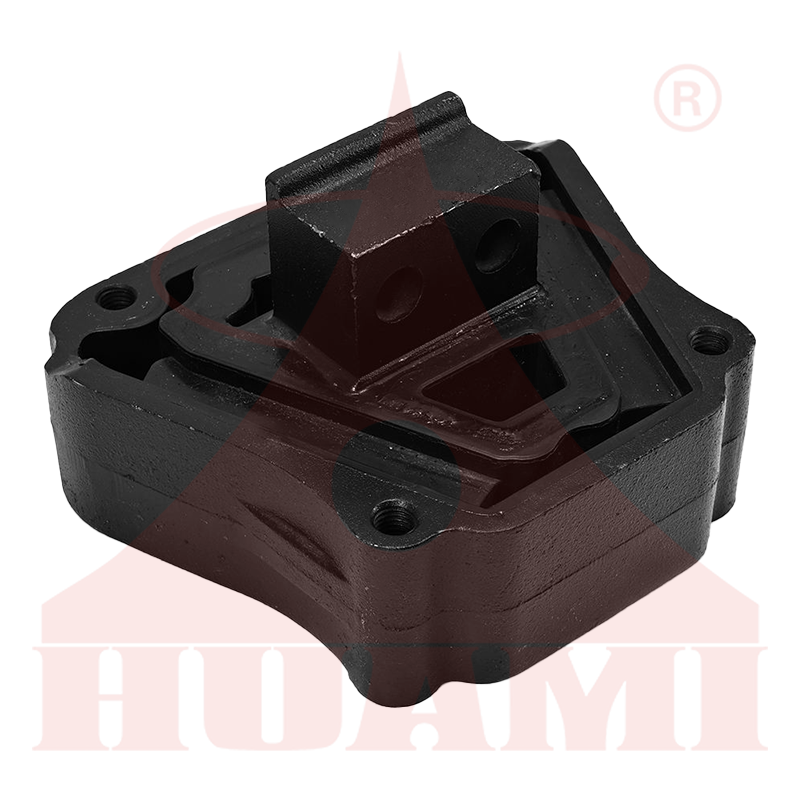
1) Overview: What problem this engine mount solves
In the powertrain system of Iveco Trucks, a Rubber-Metal Engine Mount performs three critical functions:
Load bearing: supports the engine and some auxiliary loads, maintaining a stable powertrain position;
Vibration isolation: reduces engine excitation and road shock transmitted to the frame/cab;
NVH control: minimizes idle shake, resonance noise, and structure-borne noise to improve comfort and reliability.
For B2B buyers, 41272826 engine mount typically fits these sourcing scenarios:
Aftermarket replacement: workshops replace worn mounts to restore drivability and comfort;
Fleet maintenance: preventive servicing for long-haul, high-mileage vehicles to reduce unplanned downtime;
Distributor stock: high-turn items for local repair networks and fast delivery requirements.
2) OEM & replacement cross-reference
To support search and procurement cross-checking, the primary OEM and replacements are listed below (final fitment should be confirmed by drawing/measurements, depending on model):
What “replacement/compatible” means: in most cases it refers to functional equivalence with matching installation dimensions, interfaces, load capacity, and isolation performance for the same or similar vehicle platform. However, commercial vehicle platforms vary—final confirmation should follow the vehicle configuration and drawing/physical measurements.
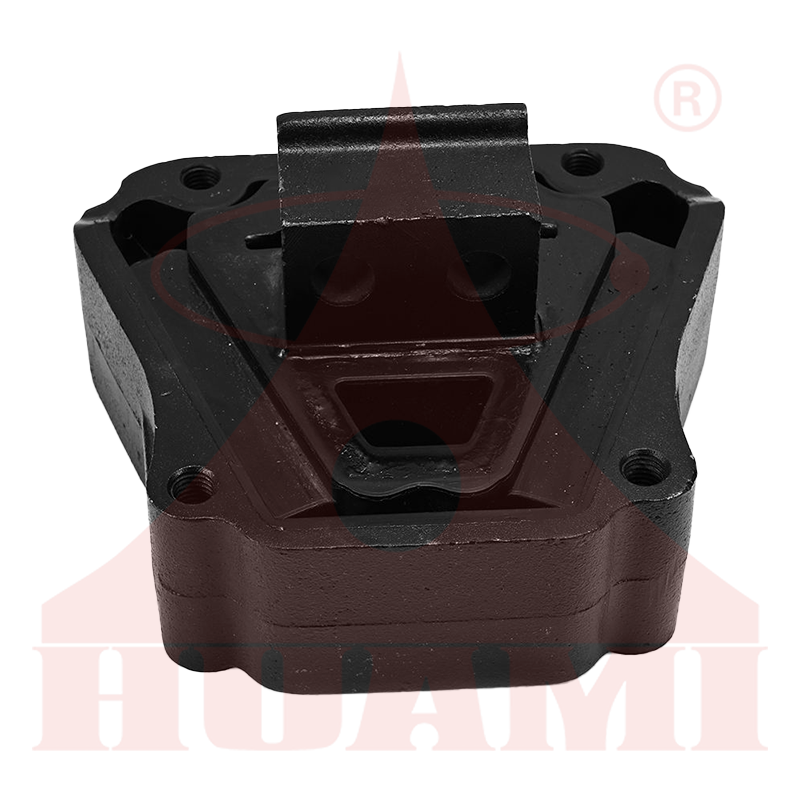
3) Function & working principle
An engine mount is not just a “rubber block.” It is a tuned elastic isolation system:
Supports engine weight and limits displacement: restricts excessive powertrain movement under acceleration/braking/turning and rough roads, helping maintain driveline alignment;
Absorbs engine vibration and road impact: rubber damping reduces high-frequency vibration and converts part of the energy into heat dissipation;
Improves NVH: hardness and structure are tuned to suppress resonance and structure-borne noise in idle and common RPM ranges.
Why long-haul / heavy-load commercial trucks rely more on high-quality mounts
Long-haul duty cycles create frequent thermal cycles, higher torque fluctuations, and more complex road excitation. Mounts face combined challenges of cyclic loads + oil exposure/salt spray/temperature variation. Unstable compounds or bonding accelerate aging, leading to increased vibration, misalignment, and abnormal stress on related components—directly impacting fleet uptime and maintenance cost.
4) Structure & materials
4.1 Structure
A typical Rubber-Metal Engine Mount includes:
Metal bracket/steel sleeve: provides stiffness and accurate positioning;
Rubber damping body: delivers isolation and shares load-bearing duties;
Possible multi-chamber / layered designs: some platforms use multi-chamber or composite geometry to widen the effective isolation band and improve durability (industry-general description; confirm by part design).
4.2 Rubber material options
NR (Natural Rubber): excellent elasticity and dynamic performance; ideal where vibration isolation is the main target;
NBR (Nitrile Rubber): stronger oil resistance; recommended when oil/fuel/lubricant exposure is likely;
EPDM: superior weathering, heat aging, and ozone resistance; suitable for large temperature swings and outdoor exposure.
Recommendation: choose compounds based on real operating conditions (oil, temperature, salt spray, road conditions) and lifetime targets; benchmarking and rig testing are preferred for critical programs.
4.3 Shore A hardness range
A common hardness window for engine mounts is 55–75 Shore A (adjustable based on platform needs).
Lower hardness: better isolation, but reduced load support and deformation resistance;
Higher hardness: stronger support and positional control, but potentially more vibration transfer and harsher NVH.
The key is balancing load-support + isolation + durability, not chasing hardness alone.
4.4 Metal corrosion protection
Commercial chassis environments often involve salt spray and splash corrosion. Metal parts commonly use E-coating / painting / plating and similar systems to improve appearance and service life consistency.
4.5 Why vulcanized bonding matters for durability
Reliable rubber-to-metal bonding depends on surface preparation, adhesive systems, and cure curve control. Insufficient bonding may cause debonding, shear-crack growth, and eventually noise, amplified vibration, and mount failure. For B2B sourcing, verify suppliers’ bond strength and fatigue validation capability.
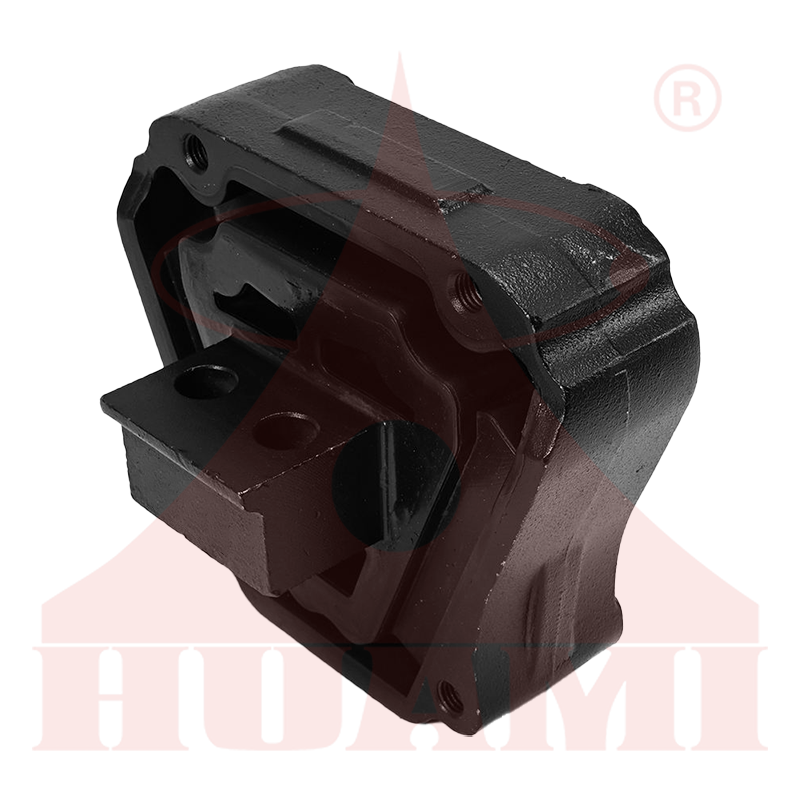
5) Common failures & replacement signals
When an Iveco truck engine mount approaches end of life or is mismatched to duty conditions, typical symptoms include:
Noticeable idle vibration, increased steering wheel/cab shake;
Increased shock during acceleration, shifting, or launch, with more visible powertrain motion;
Abnormal noise: knocking, rubbing, or “clunk” (depending on model);
Engine sagging or offset: abnormal positioning and changed clearances;
Visible rubber cracking / debonding / permanent deformation: cracks, separation from metal, collapse.
Risks of continued operation
Degraded mounts increase vibration transmission and cyclic stress on related joints, which may lead to reduced comfort, accelerated wear of surrounding components, and higher maintenance frequency. When symptoms appear, plan professional inspection and replacement in a timely manner.
Quick inspection ideas
Visual check for cracks, collapse, debonding;
Observe changes in vibration at idle and with light throttle;
Compare left/right or front/rear mount height and clearances (follow service guidance).
6) Installation & maintenance recommendations
Verify OEM/replacement codes and mounting location before installation: cross-check 41272826 with 41213741 / 41219894 / 41272825 / 41288345 / 41272823 / 500364190 / 500364189 against the vehicle configuration. Provide photos and key dimensions, or use drawing confirmation (please confirm by drawing).
Use professional tooling and correct alignment: avoid assembly stress and eccentric loading to improve consistency and service life.
Torque values: follow the vehicle service manual (Torque: refer to service manual).
Routine checks to extend life: avoid prolonged oil soaking, severe impacts, and overload use; include mounts in periodic inspections to reduce unplanned downtime.
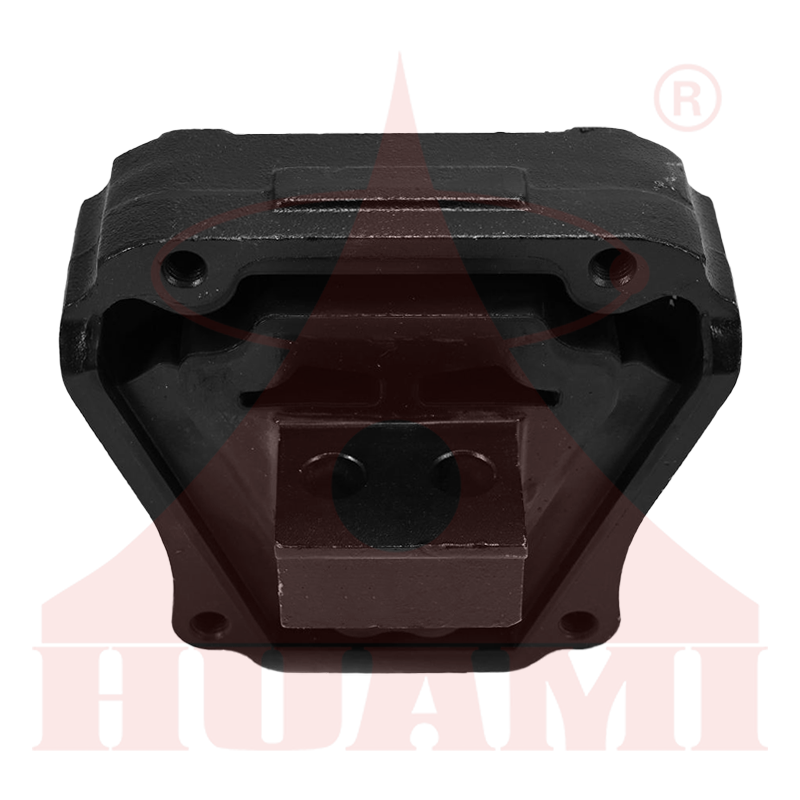
7) Why Hebei Huami New Material Technology Co., Ltd.
For B2B sourcing and long-term supply of Iveco engine mounts, Hebei Huami New Material Technology Co., Ltd. provides manufacturing assurance designed for heavy-duty durability:
30 years of rubber and rubber-metal component expertise across commercial vehicle and industrial applications;
Quality & compliance capability: aligned with IATF 16949 and TÜV requirements, plus AEO Advanced Certification to support smoother export clearance and delivery stability;
In-house formulation R&D and heavy-duty durability solutions: compound/hardness tuning based on oil, temperature, salt spray, and road conditions (NR/NBR/EPDM);
Automation & consistency control: process control from mixing and molding to vulcanized bonding for reduced batch variation;
Full-process testing capability: hardness, tensile, tear, compression set, bond strength, fatigue, and more—supporting traceability;
OEM/ODM support: small-batch trial orders, rapid prototyping, stable lead times—ideal for distributor stock and fleet projects.
8) Specification table (reference; customizable by project)
| Item | Description |
| OEM / replacements | 41272826; 41213741 / 41219894 / 41272825 / 41288345 / 41272823 / 500364190 / 500364189 |
| Vehicle application | Iveco Trucks (exact model/year depends on vehicle configuration; drawing confirmation recommended) |
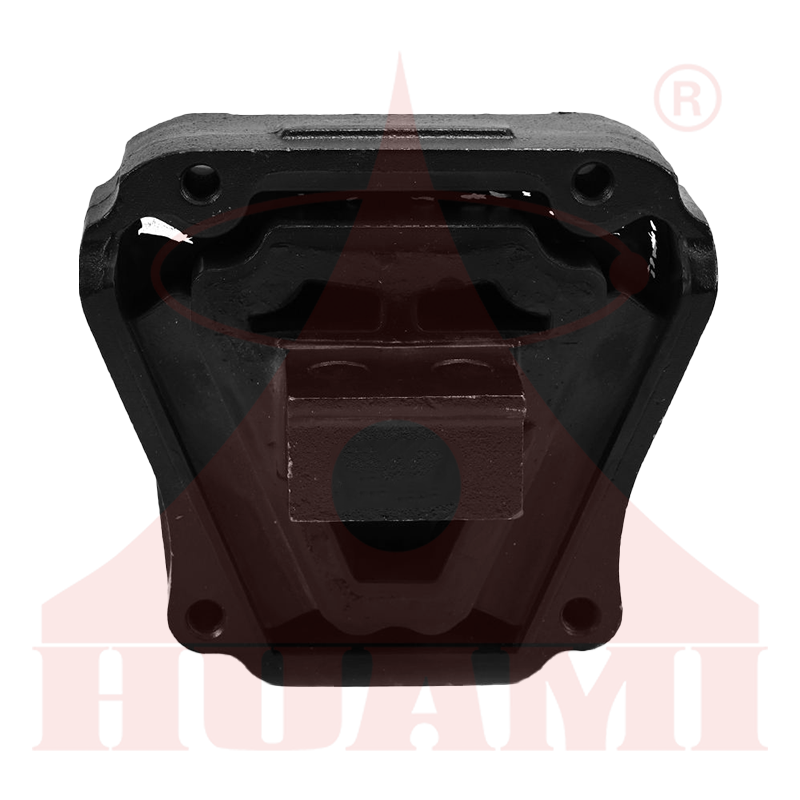
| Product type | Rubber-Metal Engine Mount |
| Materials | Rubber + Metal (NR / NBR / EPDM optional; matched to operating conditions) |
| Hardness range | 55–75 Shore A (adjustable based on NVH/load requirements) |
| Metal protection | E-coating / painting / plating optional |
| Packaging / MOQ | Neutral packing; Low MOQ (supports trial orders and stocking cycles) |
9) FAQ
Q1: Can 41272826 and 41272825 be used interchangeably?
A: They may appear as replacements on certain platforms, but final fitment depends on interfaces and dimensions. Provide photos/dimensions or confirm by drawing (please confirm by drawing).
Q2: What do replacement codes 41213741 / 41219894 / 41288345 / 41272823 mean?
A: They are numbering variants for functionally similar parts across different vehicle configurations or supply systems. Procurement should focus on dimensional and functional equivalence, not code similarity alone.
Q3: What is the typical service life of an engine mount?
A: It varies widely with load, temperature, oil exposure, road conditions, and driving behavior. For long-haul fleets, include mounts in periodic inspections and evaluate using symptoms and visual condition.
Q4: How do I choose between NR, NBR, and EPDM?
A: NR emphasizes dynamic isolation; NBR improves oil resistance; EPDM performs better in weathering and heat aging. Choose based on exposure media and temperature range.
Q5: Why is 55–75 Shore A a common range?
A: It often balances load support, position control, and isolation. Too soft may collapse; too hard may transmit vibration. Final tuning should match platform NVH targets.
Q6: How can I tell if the engine mount is the issue rather than another component?
A: Mount issues commonly correlate with increased idle shake, shift/launch shock, and visible cracking/collapse. If symptoms overlap, a professional inspection should evaluate the whole powertrain and chassis.
Q7: Do you offer warranty?
A: Warranty terms can be defined by order and project requirements. We can also provide verification for key indicators (hardness, bond strength, fatigue, etc.) (depending on project).
Q8: Do you support neutral packing and low MOQ?
A: Yes—neutral packing and low MOQ trial orders are supported, suitable for distributor stocking and repair networks.
Q9: What about lead time and shipping?
A: Lead time depends on quantity, customization, and stock status. Standard export shipping options are available; urgent orders can be discussed for priority scheduling.
Q10: What information is needed for a quote?
A: Provide the OEM code (41272826) and/or replacement codes, vehicle info (if available), and old-part photos/dimensions or drawings. We will confirm compatibility first, then quote and arrange samples.


