1. Introduction
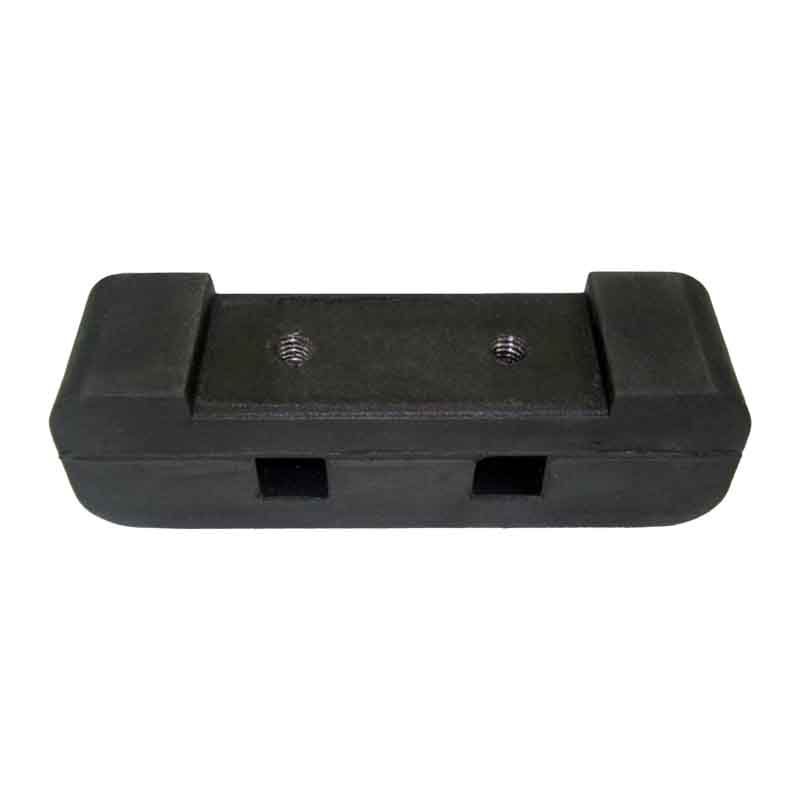
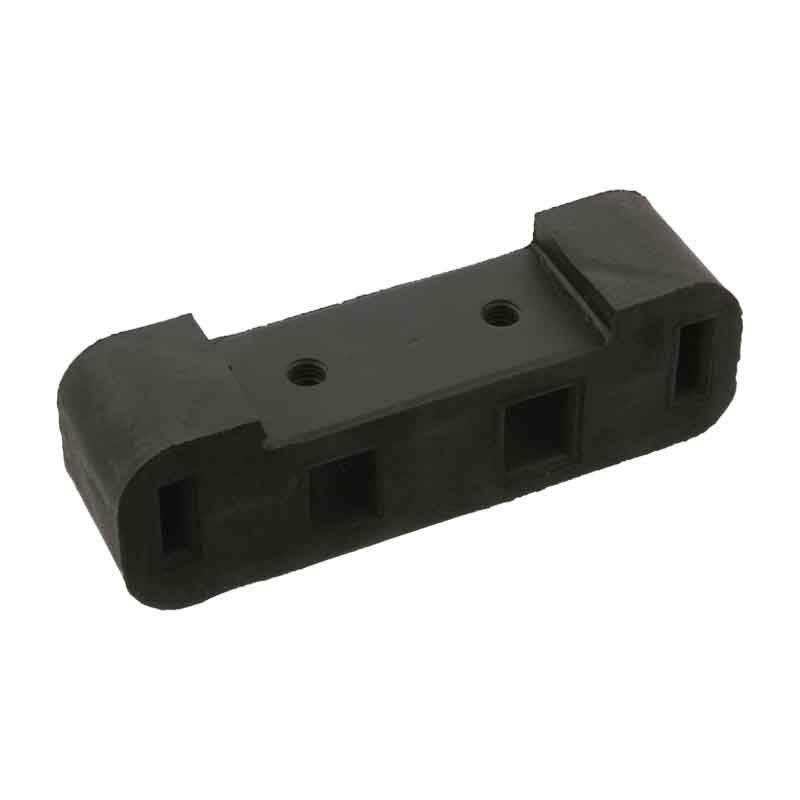
On Mercedes-Benz medium and heavy trucks such as the 1214, 1414, 1418 and 1718, the radiator is never bolted rigidly to the chassis. It sits on rubber mounts — and OEM 3845047112 is the radiator mount that does the work. This rubber-to-metal bonded component carries the full weight of the radiator assembly while isolating it from engine and road vibration. When a Mercedes truck radiator mount fails, vibration transfers straight into the radiator tanks, and what starts as a rattle ends as a cracked, leaking radiator and a truck stranded with an overheated engine. For fleet operators and parts distributors, understanding this small radiator support bracket component means fewer warranty claims and lower total cost per kilometer.
2. Technical Deep Dive: Construction, Material and Performance
Construction. OEM 3845047112 is a classic rubber-to-metal bonded mount: a molded natural rubber (NR) body vulcanized onto a cold-rolled steel insert. The rubber body absorbs and dissipates vibration energy; the steel plate provides mounting rigidity and positioning accuracy. Bonding is achieved during hot vulcanization through a dedicated adhesive system, producing a bond stronger than the rubber itself — in destructive testing, failure occurs within the rubber body, never at the rubber-metal interface.
Material and compound. The rubber body uses an NR-based anti-vibration compound with hardness controlled at 60 ± 5 Shore A. This window is the OEM-validated balance point: softer, and radiator movement exceeds limits and strains hose connections; harder, and vibration isolation drops, feeding fatigue cracks into the radiator tanks. Natural rubber's rebound resilience and fatigue resistance keep the dynamic-to-static stiffness ratio stable across the -40°C to +100°C engine-bay range. The steel insert is zinc-plated Q235 to resist road salt and humidity.
3. Application List
Part number 3845047112 belongs to the Mercedes 384-series (SK/LK medium-heavy truck platform) cooling system mounting group. The application list below is compiled from global aftermarket cross-reference data; year ranges indicate main production/circulation periods. Final fitment should always be verified by VIN against the Mercedes-Benz EPC.
Model | Series / Platform | Main Years | Main Markets |
Mercedes-Benz 1214 / 1214C | LK medium-duty series | 1989–2000s (extended Brazil production) | Europe, Latin America |
Mercedes-Benz 1414 | LK medium-duty series | 1990s–2000s | Latin America, Africa |
Mercedes-Benz 1418 | LK medium-duty series | 1989–2000s | Europe, Latin America |
Mercedes-Benz 1718 / 1718K | LK/LS series | 1987–2011 (Brazil-built) | Latin America, CIS |
Mercedes-Benz SK heavy trucks | SK (NG successor) | 1988–1998 | Europe, CIS |
Mercedes-Benz OF/OH bus chassis | LK-derived chassis | 1990s–2000s | Latin America |
4. Cross Reference Numbers
Sourcing by the OEM master number lets distributors consolidate several cross-reference demands into one SKU:
Number | Type | Note |
3845047112 (A384 504 71 12) | Mercedes-Benz OEM | Master number, radiator side rubber mount |
3845047212 | Mercedes-Benz OEM | Related number in same group (L/R or upper/lower position) |
3905047012 | Mercedes-Benz OEM | Supersession / related number |
6205040112 | Mercedes-Benz OEM | Supersession / related number |
6205040012 | Mercedes-Benz OEM | Related number |
SA 620 504 0112 | SABO (aftermarket brand) | Rubber mounting equivalent |
R372 | REI (Brazilian aftermarket brand) | Radiator mount equivalent |
480164 | Aftermarket reference | Distribution channel cross number |
5. Typical Failure Symptoms
Failure is dominated by rubber aging: ozone cracking, heat hardening, oil-induced swelling, and de-bonding under cyclic load. Inspect and replace the mounts as a set if any of the following appear:
• Knocking or creaking noises around the radiator at idle or on the move, most noticeable over bumps;
• Increased radiator movement — the tank visibly resonates with engine vibration;
• Fatigue cracks or coolant seepage at the lower or side radiator tanks;
• Rubber body cracked, hardened or crumbling, or de-bonded from the metal insert;
• Abnormal clearance between the radiator and fan shroud — in severe cases the fan strikes the shroud;
• Elongated mounting holes and bolts that repeatedly work loose.
Field experience is consistent: a large share of premature radiator cracking cases trace back to failed mounts. Replace the mounts first — then the radiator. Reversing the order only cracks the new radiator the same way.
6. Installation Notes
• Always replace in pairs / as a complete set: when one mount has aged out, the rest have too, and mixing old and new parts creates uneven loading;
• Before installation, clean rust and oil from the bracket seat and mounting holes, and check the frame-side bracket for cracks or deformation;
• Tighten bolts diagonally in stages; refer to the vehicle service manual for torque (typically 40–50 N·m for M10, 70–85 N·m for M12). Never over-torque — it crushes the rubber;
• Keep the rubber away from engine oil, diesel fuel and undiluted coolant; never use mineral oil as an assembly lubricant — use soapy water instead;
• After seating, confirm the radiator sits stress-free with even clearance on all sides and no strain on the hoses;
• Run the engine at idle to check for interference noise, and re-torque the bolts after the first 500 km.
7. Technical Parameters
Typical specifications for this class of radiator rubber mount (reference values); exact dimensions to be confirmed against drawing or sample.
Item | Specification |
Product Name | Radiator Rubber Mount (Support Bracket) |
OEM No. | 3845047112 |
Rubber Material | Natural Rubber NR (NR/SBR blend optional) |
Hardness | 60 ± 5 Shore A |
Metal Insert | Q235 cold-rolled steel, zinc-plated |
Bonding | Hot-vulcanized rubber-to-metal bonding (Chemlok adhesive system) |
Operating Temperature | -40°C to +100°C |
Tensile Strength | ≥ 15 MPa |
Elongation at Break | ≥ 350% |
Bond Strength | Failure occurs in rubber body (R-type failure) |
Dimensions | Developed 1:1 to OEM drawing (sample/drawing verification available) |
Warranty | 12 months or 100,000 km |
Certification | IATF 16949 / TÜV / AEO |
8. FAQ
Q: How do I confirm 3845047112 fits my truck?
A: The most reliable way is a VIN check against the Mercedes-Benz EPC. This number group primarily covers LK-series medium/heavy trucks such as the 1214, 1414, 1418 and 1718, plus related bus chassis. Send us your VIN or a photo and dimensions of the old part and we will verify fitment for you.
Q: What is the relationship between 3845047112, 6205040112 and 3905047012?
A: They are related interchange numbers within the same Mercedes cooling-system mounting group — number supersessions or position variants. In the aftermarket they are generally treated as interchangeable. State your truck model when ordering and we confirm the correct version.
Q: What are the warning signs of a failed radiator mount?
A: Knocking or creaking near the radiator over bumps, visible radiator shake, and cracked or crumbling rubber. If you already see hairline cracks or coolant seepage at the tank, the mounts likely failed long ago — replace the full set immediately.
Q: Why replace mounts as a set instead of one at a time?
A: Mounts installed together age together. Mixing a new mount with old ones creates uneven stiffness, tilts the radiator load path, shortens the new part's life, and guarantees a second workshop visit when the remaining old mounts fail.
Q: What torque should the mounting bolts be tightened to?
A: Always follow the vehicle service manual. Typical reference values: 40–50 N·m for M10 bolts, 70–85 N·m for M12, tightened diagonally in stages. Never hammer them down with an impact gun — over-torque crushes the rubber preload and drastically shortens service life.
Q: What is the expected service life of an NR rubber mount?
A: Under normal conditions, 5–8 years or 300,000–500,000 km. Sustained high temperature, oil contamination and overloading shorten it significantly. Inspect the rubber for cracking and de-bonding at every major service.
Q: How is your product different from cheap cold-bonded mounts?
A: Ours are hot-vulcanized: rubber and metal bond chemically under heat and pressure in the mold, so destructive tests break the rubber body, not the joint. Cold-bonded parts rely on glue and routinely de-bond within months under vibration.
Q: What are your MOQ, lead time and customization options?
A: Common numbers are kept in stock; trial orders are welcome and standard lead time is 15–30 days. We develop custom parts from drawings or samples, offer neutral or private-label packaging, and run full IATF 16949 process control.
9. Conclusion & Call to Action
The radiator rubber mount is one of the cheapest parts in a Mercedes truck's cooling system — and one of the most decisive for radiator life. Choosing a supplier with OEM-grade compounds, hot vulcanization and certified process control saves your customers the recurring cost of replacement radiators. Hebei Huami New Material Technology Co., Ltd. (listed on the Beijing Stock Exchange; IATF 16949 / TÜV / AEO certified) has manufactured rubber damping and sealing components for commercial vehicles for over 20 years. Its wholly-owned subsidiary, Hebei Tongsource International Trade Co., Ltd., serves as the official export arm, supplying OEM 3845047112 and the full range of Mercedes truck rubber mounts to Europe, North America, the CIS and Latin America — factory-direct, with no middleman markup. Contact us today for free samples, drawing verification and a volume quotation: send your part list by email or submit an inquiry at tongsource.com, and we will reply within 24 hours.


